



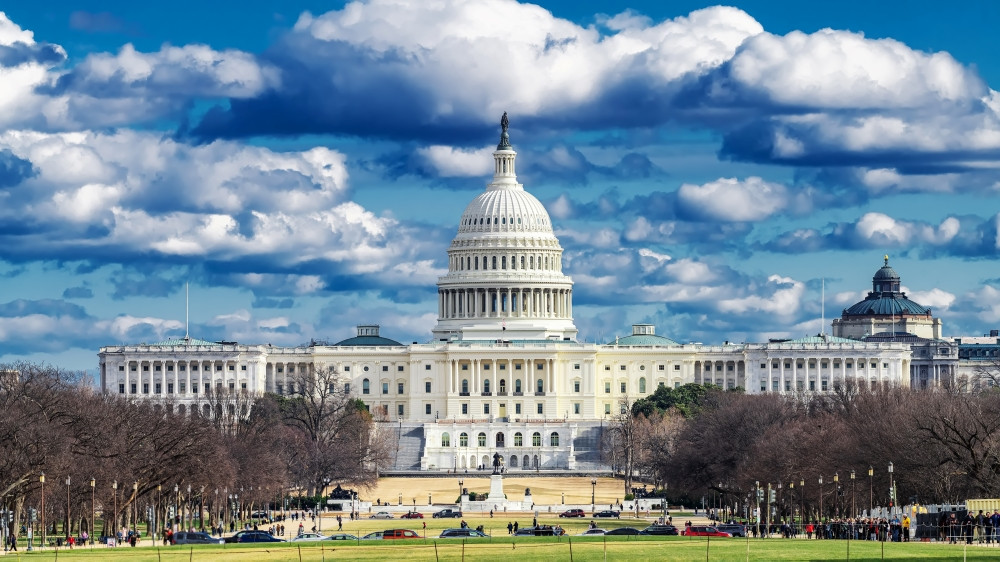
The last week in May saw the Exhibitions & Conferences Alliance (ECA) lobby Congress on the economic importance of the business-events industry and its critical issues that require legislative action, followed by the industry’s heaviest hitters meeting among themselves to discuss their next advocacy actions.
A coalition of associations acting as the unified public-policy voice of the business-events industry, ECA brought 226 industry ambassadors to Capitol Hill on May 28 for the Exhibitions & Conferences Alliance’s annual Legislative Action Day.
Participants met with members of Congress and their staffs to discuss how they can strengthen the business-events industry’s ability to create new jobs, reduce economic uncertainty, safeguard affordability and ensure that the U.S. remains a top global destination for events.
Their message: This industry is a proven engine of economic resilience and growth, and it needs government policies to match.
[Related: ECA Unveils Industry Growth Plans for 2026 and Beyond]
“Business and professional events bring people together, strengthen small businesses, support jobs, and help communities grow,” said Fernando Fischer, president, Americas for RX and chair of the ECA board. “We ensured that our elected officials understand the impact of events as well as the policy choices that will shape those events going forward.”
Underscoring the importance of policy engagement for a global industry that drives commerce, creates jobs, connects markets, and helps solve societal challenges, Legislative Action Day focused on three issues critical to the future of meetings, conventions and exhibitions.
Those issues are international trade and tariffs, future workforce development, and the Terrorism Risk Insurance Act.
“We sent a clear message: The business and professional events industry is engaged, organized, and ready to work with policymakers to support economic growth, job creation, and American competitiveness,” said Mark Bogdansky, vice president, trade shows and community engagement for the Auto Care Association and an ECA board member.
[Related: Convention Services Leaders Discuss Better Planner Partnerships]
Beyond Legislative Action Day, ECA provides opportunities for business-events industry members to make their voices heard throughout the year via the ECA Advocacy Network, its policy-engagement platform.
“Whether meeting with lawmakers on Capitol Hill, contacting Congress from home, or hosting elected officials on the show floor, the more we all get involved, the greater impact we can have,” said Chris Griffin, president and chief executive officer of Crew XP and an ECA board member.
ECA’s member associations include Consumer Technology Association; Experiential Designers & Producers Association; Exhibition Services & Contractors Association; International Association of Exhibitions & Events; International Association of Venue Managers; International Congress and Convention Association; Professional Convention Management Association; and Society of Independent Show Organizers.
Day 2: Serious Discussions Continued
On May 29, the inaugural Global Policy Forum took place, hosted by Exhibitions & Conferences Alliance as well as UFI, The Global Association of the Exhibition Industry; and MAD Event Management.
The invitation-only forum featured 24 industry leaders, public-policy experts, diplomats, and other stakeholders to discuss key cross-border policy issues shaping the future of business events.
“Many of our policy issues are global in nature and require global solutions,” said Tommy Goodwin, president and chief executive officer of ECA. “These conversations highlighted the importance of forward-looking ideas and best practices to inform policymakers around the world who impact our industry.”
The program focused on two topics with significant implications for business events across the globe: trade and tariffs, with an emphasis on the United States-Mexico-Canada Agreement; and sustainability.
The group also examined other transnational challenges and how cooperation, alignment and constructive public-sector engagement can keep the industry growing.
“The discussions reinforced the critical role that exhibitions, trade shows, and conferences play in driving economic growth, innovation and international collaboration,” said Chris Skeith, managing director and chief executive officer of UFI.