


Born in Los Angeles, once residing in San Diego and with family in San Francisco, I have traversed most of California—except for Sacramento, which elusively never rang my “mission” bell despite its alluring Gold Rush history and gateway access to the Golden State’s 450-mile-long agricultural heartland, the Central Valley.
Good things reward those who wait. Answering the call of California’s capital on a culinary-driven press trip last September was a feast of discovery, from Michelin-rated restaurants and farm tours to two signature annual events, Legends of Wine and the Tower Bridge Dinner.
Like the hundreds of vegetables, fruits, nuts and specialty crops that flourish year-round in the Central Valley’s expertly engineered fields and Mediterranean climate, Sacramento’s group market is basking in the sunshine of a visionary rebranding strategy championed by Visit Sacramento President and CEO Mike Testa. Centered on culinary events, the bold repositioning and diversification plan has more than doubled visitation to the city over the past five years alone.
[Related: Sacramento and Lake Tahoe Offer Two Distinct California Experiences for Groups]
In the following Q&A, Testa, celebrating 25 years with Visit Sacramento this year, shares the roots, growth and bounty produced by identifying Sacramento as “America’s Farm-to-Fork Capital.” It’s serious food for thought for any destination looking to leverage a core identity into event development.
Jeff Heilman: How has the Sacramento region’s powerhouse agricultural industry historically correlated with food-driven tourism, events included?
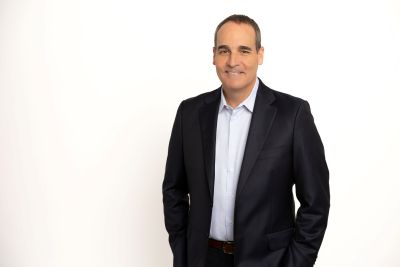
Mike Testa: We like to say that Sacramento was farm-to-fork long before the concept had a name. Though, while most of us took the concept of having access to such fresh, amazing food for granted, the outside world had no idea what was happening here from a culinary and agricultural standpoint.
In 2012, restaurateur Josh Nelson from the Selland Family Restaurant Group approached me with the idea that Sacramento should call itself “America’s Farm-to-Fork Capital.” What resulted was more than a decade of effort from Visit Sacramento and our entire community to establish a true culinary identity for Sacramento. Through strategic programming, storytelling, events, media relations, partnerships and marketing, we changed the core of our tourism offerings and have become a renowned food destination.
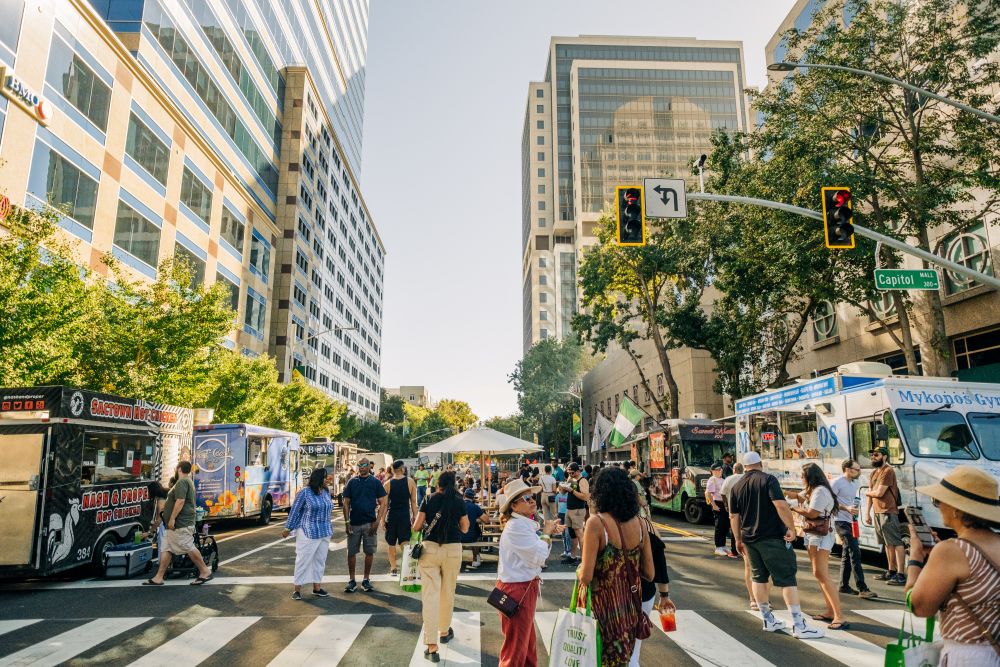
Farm-to-fork has found its way into every area of our community. Many places beyond our restaurants, including our NBA arena, our convention center and one of our biggest hospitals, have made fresh food central to what they do. Spotlighting locally sourced fresh food has helped it become synonymous with every facet of daily life in Sacramento. Even if here for a day or two, visitors can get a true sense of our genuine farm-to-fork landscape wherever they go.
The seed was truly planted...
As a marketer, my first reaction to Josh’s idea was, “How did I not think of that?” Sometimes the most obvious things are the things that we miss, and yet they can be the most powerful. Recognizing Sacramento as America’s Farm-to-Fork Capital sent us on a journey of due diligence, and what we found exceeded our expectations. Surrounded by 1.5 million acres of active farmland, Sacramento leads the nation in the production of everything from domestic sushi rice to caviar. We export produce across the world and grow much of the food that feeds America.
Eureka. How did you turn that enlightenment into action?
Visit Sacramento set about creating a program that told the story of our farm-to-fork community and how that set the destination apart from everywhere else. Central to that was establishing a series of annual events that celebrate the different areas of our food production.
These include our former Farm-to-Fork Festival, which celebrated food and community. Legends of Wine celebrates wine grapes, the largest commodity coming out of Sacramento County. Many grapes used to make Napa wines are grown in our region. Spotlighting our region’s farmers, farm workers and chefs, our famed Tower Bridge Dinner allows diners to celebrate the fruits of our collective farm-to-fork labor.
[Related: How Groups Can Pair Wine With Fine Dining in Napa Valley and Sonoma County]
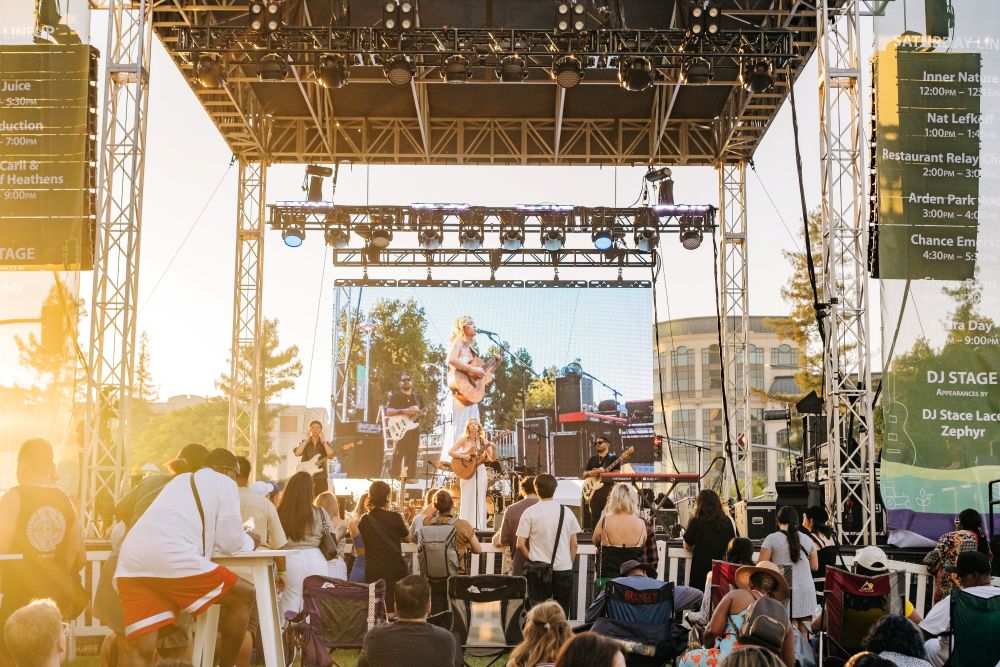
So much has coalesced around our identity as America’s Farm-to-Fork Capital over the past 14 years. Michelin includes Sacramento in its guide. New restaurants continue to open. Our global music festivals feature local restaurants, wineries and breweries. In 2025, we partnered with Slow Food International to host the inaugural Terra Madre Americas—the first U.S. iteration of one of world’s biggest food events. And we expect to keep this trajectory moving forward as a true culinary destination.
How has the strategy changed visitor perception of Sacramento and benefited your broader tourism goals?
Culinary travel serves as an inviting gateway to Sacramento for first-time visitors. Whether people read about our food scene in national and international media, attend an event like Terra Madre or come to dine at one of our Michelin-rated restaurants, food can be a true door-opener. And their broader experience of Sacramento as a destination while here often inspires return visits.
The same is true in reverse with culinary as a differentiator. Planners may be looking at several similar cities for their convention or event. When they come here and discover our culinary story, food is frequently the decider that puts Sacramento over the top. Flourishing dining options help us go toe-to-toe with other often larger markets that lack our culinary attributes and a story as compelling as ours for conventioneers or general visitors.
How has the Farm-to-Fork identity helped to attract other events and group business?
In short, success begets more success. We did not attract the Michelin Guide or Europe’s largest food event to our market because we are charming people. They chose Sacramento because of the attributes that they discovered in our city. When event operators and promoters see successes such as the incredible run of the Farm-to-Fork Festival, the consistent popularity of our Tower Bridge Dinner and new events like Terra Madre Americas thriving in the market, they want to be a part of it.
[Related: 4 Destinations in California’s Wine Country Offering a Feast for the Senses]
Moreover, Sacramento offers authentic experiences that other destinations cannot replicate. We are a genuine mix of a friendly and come-as-you-are culture combined with elevated thinking and some of the best and freshest food anywhere. As we often hear from planners, they feel that energy and want their attendees to feel it for themselves.
Four Days of Food-Fueled Energy
Based at the group-capable Kimpton Sawyer Hotel in the mixed-used Downtown Commons entertainment district, here are highlights of my energizing four-day tour.
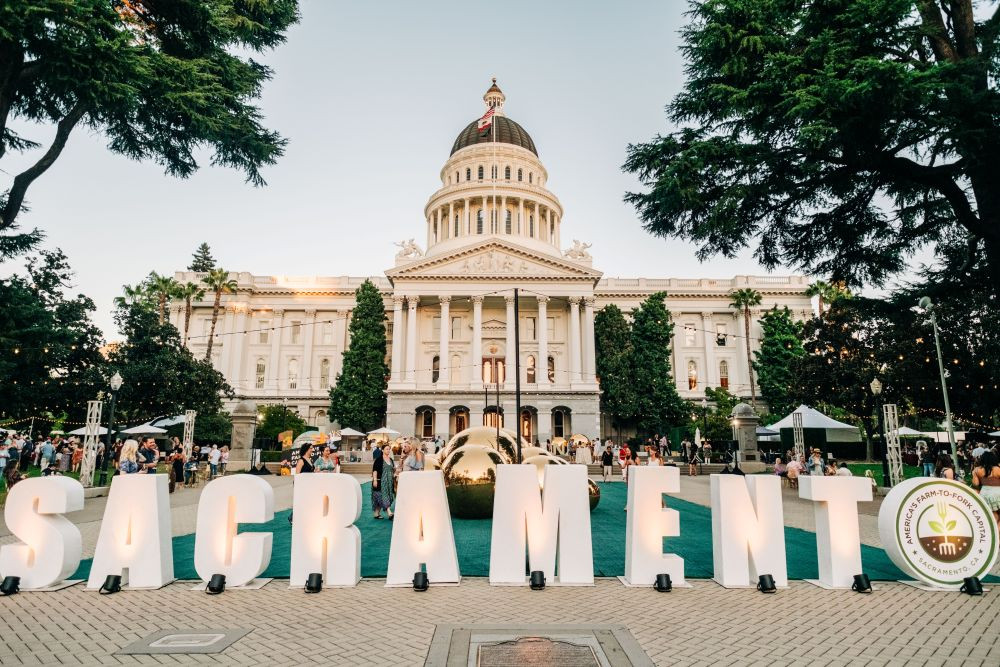
Launched by Visit Sacramento in 2013, Legends of Wine takes place each September on the front lawn of the California State Capitol. The ticketed public tasting event features varietals from 40-plus regional wineries accompanied by bites from local restaurants.
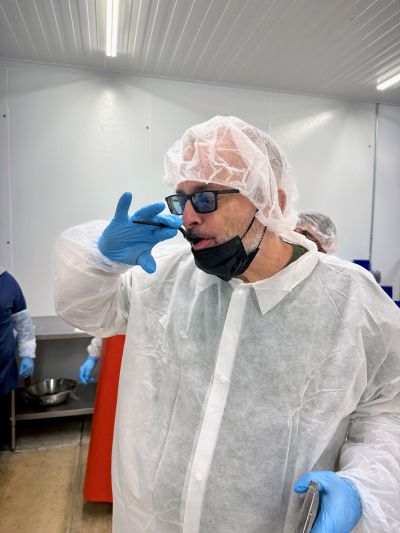
The Sacramento region produces 80% of the nation’s caviar. Market leaders include Tsar Nicoulai. Suited in protective gear, our guided tour of their unique eco-certified production facility, 25 miles south of Sacramento, was an education in sustainable aquafarming. Tickets go fast for the twice-yearly public farm tour and caviar dinner. Tsar Nicoulai’s ultra-premium caviar is found in top restaurants and other culinary capitals nationwide—including Providence, Rhode Island, where Tsar Nicoulai caviar was the first course at an exclusive dinner during the Providence Culinary Collective festival in March.
[Related: Rhode Island Provides Many Flavors of Event Excellence]
In 2019, Testa secured Michelin coverage of Sacramento, which hosted the inaugural California Guide that year. Event-capable Mulvaney’s B&L was among the first honorees. Co-owner with his wife Bibbin, Patrick Mulvaney is a prominent local and national farm-to-fork champion. Named after Bailey Bros. Building & Loan from It’s a Wonderful Life, the restaurant, reviving an 1893 firehouse, pays homage to California farmers and producers. Unique programs include mozzarella-making classes and weekend farmers-market visits followed by an interactive meal made with the fresh produce picked up along the way.
Following the 2025 round, also hosted by Sacramento, 15 local establishments made the latest Michelin guide.
In 2013, Mulvaney and five other chefs co-founded the Tower Bridge Dinner in partnership with Visit Sacramento. Staged on the gold-painted Tower Bridge from 1935, the inaugural event was a dinner for friends. Today, it’s a fast sellout for 800-plus diners seated at long tables enjoying a multicourse dinner featuring locally sourced fare prepared by Sacramento’s top chefs.
As Testa noted, farm-to-fork reaches community-wide. Prep site for the 30-plus-strong Tower Bridge culinary team, Central Kitchen prepares 43,000 farm-to-fork meals for 80 Sacramento schools every day. Golden 1 Center sources 90% of its culinary ingredients from within a 150-mile radius of the venue, with a “Fork-to-Farm” food recycling program.
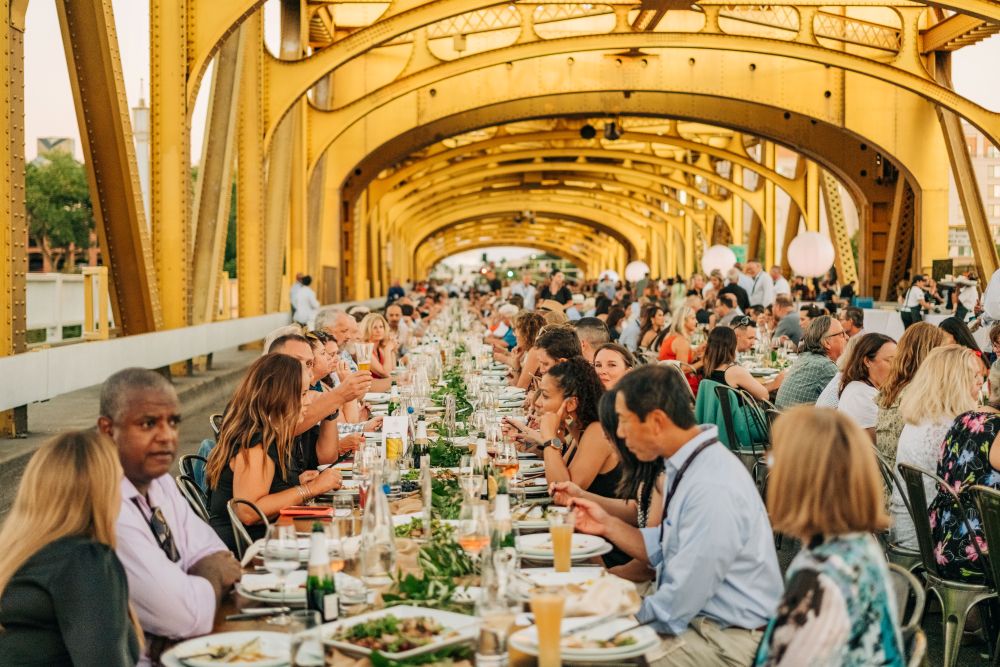
Success truly begets success. Integrating the former Farm-to-Fork Festival, Terra Madre Americas, the new North American counterpart to Slow Food’s International’s world-renowned biennial Terra Madre Salone del Gusto in Turin, Italy, is a huge win that is already paying dividends. Commencing a 10-year run last September, the first edition of the free-admission, biennial three-day event attracted 800-plus participants and more than 165,000 global attendees.
Planner's Perspective
Marcia Durst, Founder and Owner, Durst Event Strategies, El Dorado Hills, CA
Founder and owner of El Dorado Hills, California-based Durst Event Strategies, Marcia Durst has been planning events in Sacramento since starting her company more than 20 years ago. In this Planner’s Perspective, she discusses Sacramento’s enduring appeal for her clients—the food scene included.
Jeff Heilman: What is your strategic approach to planning events?
Marcia Durst: I’ve been an independent planner for 20-plus years, but when people ask me what I do for a living, I say that I am a social engineer. Because at the end of the day, we meet to connect—connect with a brand, a message, a cause or each other. I always keep that goal in mind while making planning decisions along the way.
What originally attracted you to Sacramento?
I’m local and admittedly have a bias. When a destination is right, though, it’s right. Offering amenities like a vibrant downtown with a real sense of place, Sacramento is more approachable than some larger destinations, with a better price point and more relaxed feel.
What do you and your clients enjoy most about meeting in Sacramento?
My groups love the food scene. “Farm-to-fork” is not just a slogan but an authentic description of place. It is in the region’s DNA, reflected by chefs that know how to highlight some of the best ingredients in the world produced right in their own backyard.
What was your most recent Sacramento booking?
I have a client that relocated their annual user conference in Sacramento for the first time last fall. The move was a considerable success, expanding their program to nearly 2,000 attendees from all over the world. With available meeting space for growth across the street from the SAFE Credit Union Convention Center at the Hyatt Regency and Sheraton Grand hotels, they have already rebooked for multiple years ahead.
Anybody in Sacramento that you’d single out for special mention?
The convention center team is one of the best I have ever worked with. They generously share what has worked well—or not—with other groups. They experience the venue in action every day and I consider their operational perspective to be invaluable. And personally, I think the in-house Starbucks that lets you order on the app is brilliant. I can order coffee when walking to the venue and it is waiting for me when I get there.