

I first set eyes on Las Vegas in 1971 on a movie screen in London, where we had moved from Los Angeles the year before.
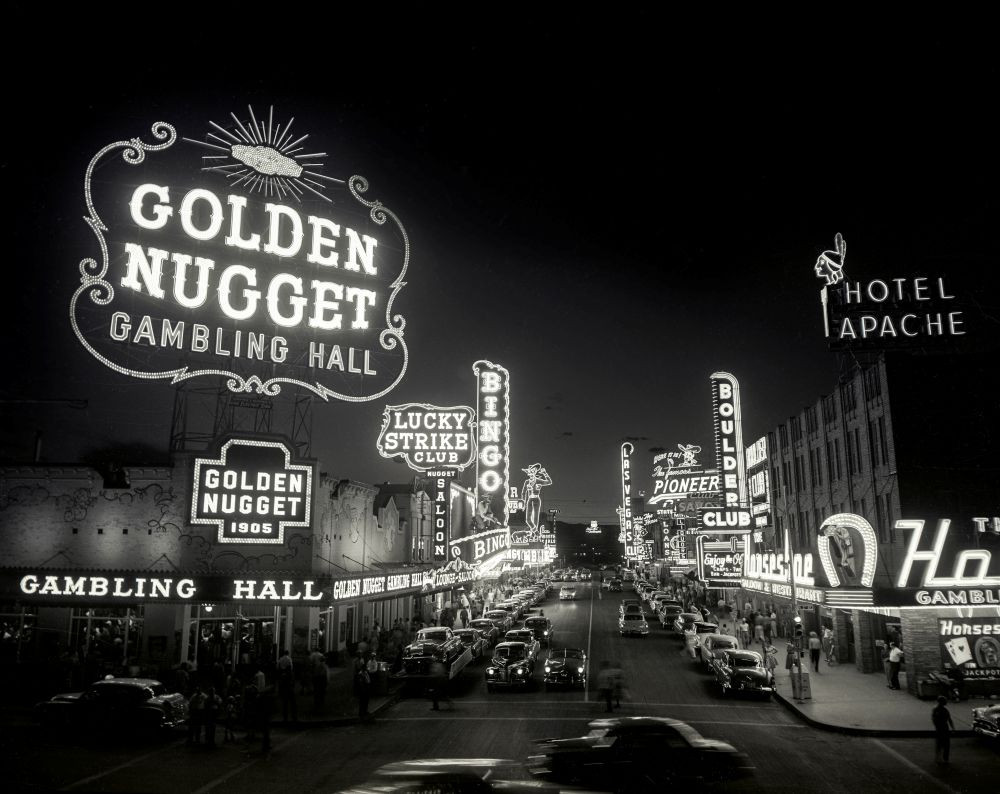
Centered in Vegas, Sean Connery’s return as 007 in Diamonds Are Forever included a thrilling car chase amid Fremont Street’s glittering casino marquees and neon signs.
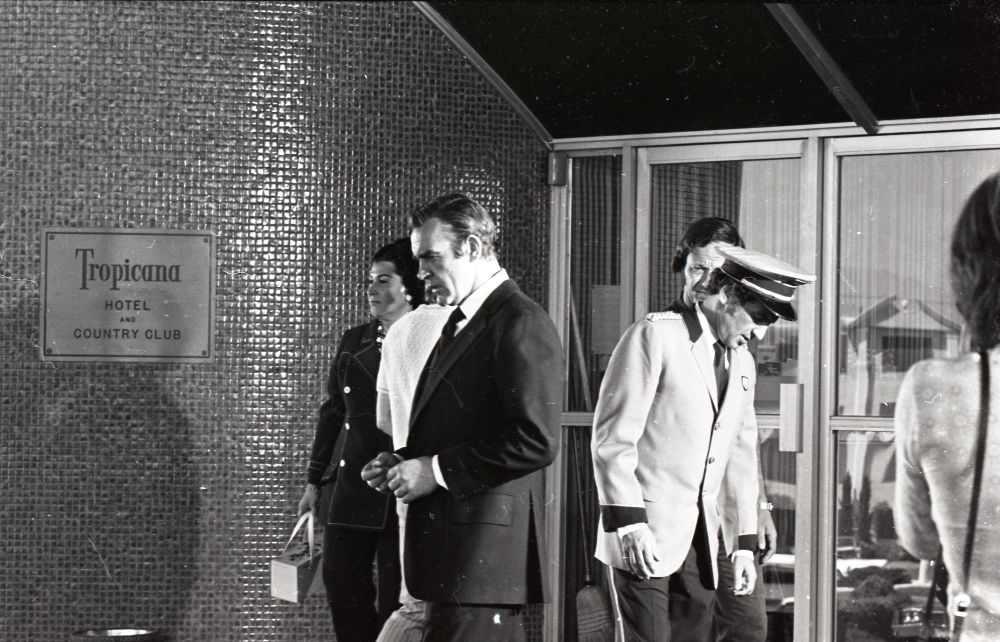
With other locations that included the Las Vegas Hilton, Circus Circus, Riviera and Tropicana, my first look at this all-American desert fantasy cast a spell.
My Vegas dream became reality 40 years ago this August on my inaugural visit, a sleepless overnight stop while driving cross-country from San Diego to Massachusetts with my college roommate Space.
[Related: Major Meetings Milestones Marking the Evolution of Las Vegas]
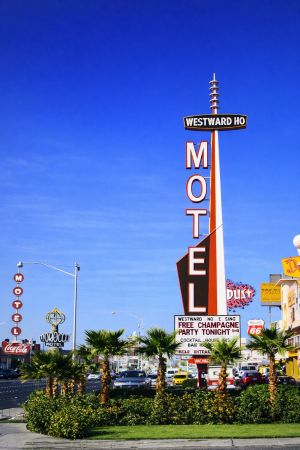
After checking into the former Westward Ho motel, which stood between the Stardust (now Resorts World Las Vegas) and Slots-A-Fun, we roamed the Strip until dawn. Circulating in and out of bygone icons including Algiers, Stardust, Frontier, Riviera, Desert Inn and Sands, we closed out at Flamingo Hilton, where the excitement included playing blackjack at the same table as legendary late actor Telly Savalas.
Departing early the next morning, my senses spinning like a roulette wheel from all the noise and lights and energy, I could not wait to return.
Fast-Forward to Today
Forty years and dozens of visits later, Vegas still casts a spell. In a place that feels like a second home, returning feels more like time travel with each passing year. Save Circus Circus, Caesars Palace and the Flamingo, every property I touched that night is gone.
[Related: From Elvis to Sphere, Las Vegas Just Keeps Rolling]
The roll call of resorts that later arose on the foregoing and other sites is head-spinning. Over subsequent visits, I saw the following rise in various stages of construction: Fontainebleau. Wynn and Encore. Venetian and Palazzo. Treasure Island. Mirage. Bellagio. Paris. Rio. Palms. The Cosmopolitan. ARIA and Vdara. Monte Carlo. New York-New York. MGM Grand. Excalibur. Luxor. Mandalay Bay. The Stratosphere. Circa. Allegiant Stadium. T-Mobile Arena. Sphere.
In Vegas, where implosions are the way forward, survival is no small feat. Yet, amid perpetual evolution and makeover, vanguard properties continue to master the test of changing times, as evidenced by the roster of properties celebrating major milestones throughout 2026.
The following story is devoted to those anniversaries, alongside transformative projects that make Vegas the place where the past, present and future coexist like nowhere else.
[Read More Las Vegas Meetings and Events Content]
Standing Tall On and Off the Strip
Originated in 1937 by William “Bill” Harrah as his eponymous Bingo Club in Reno, Nevada, Caesars Entertainment, 90 next year, headlines the birthday party on the Strip with two crown jewel properties, Flamingo Las Vegas and Caesars Palace.
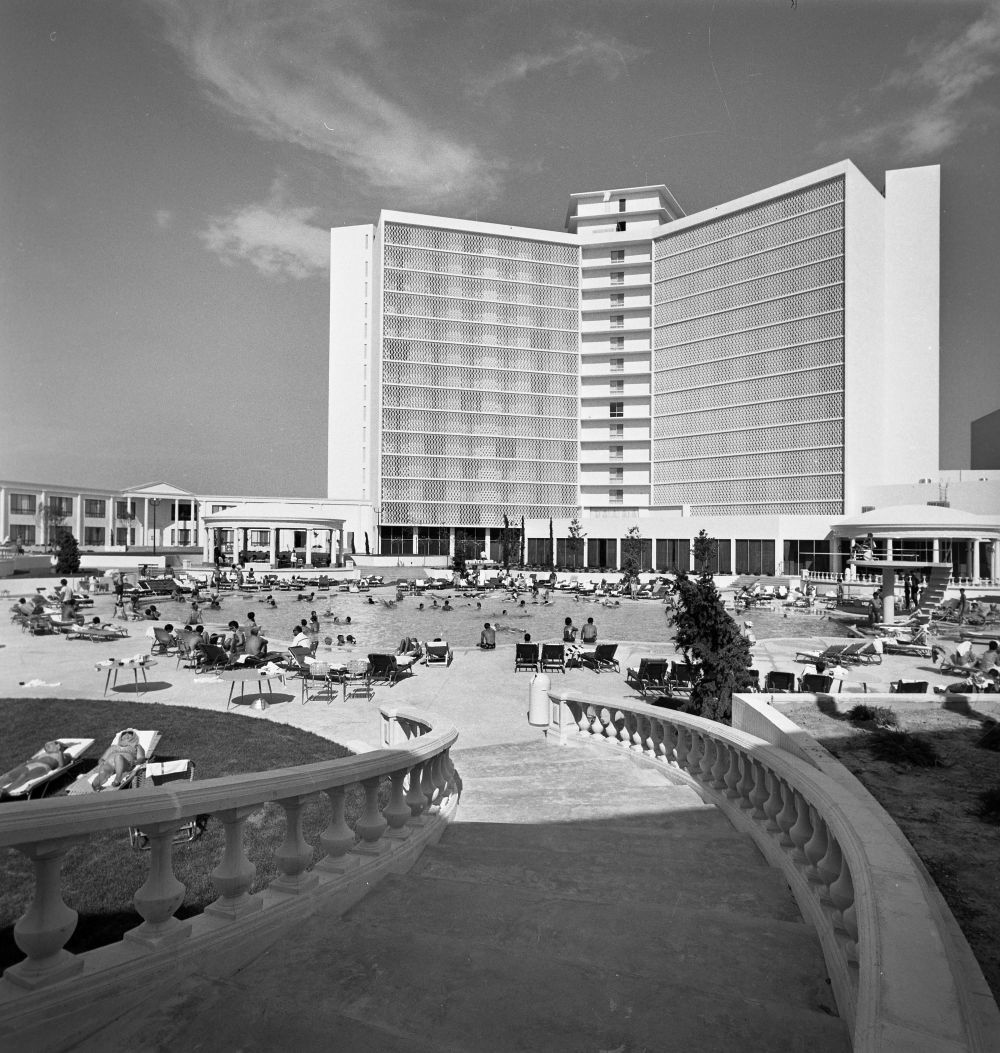
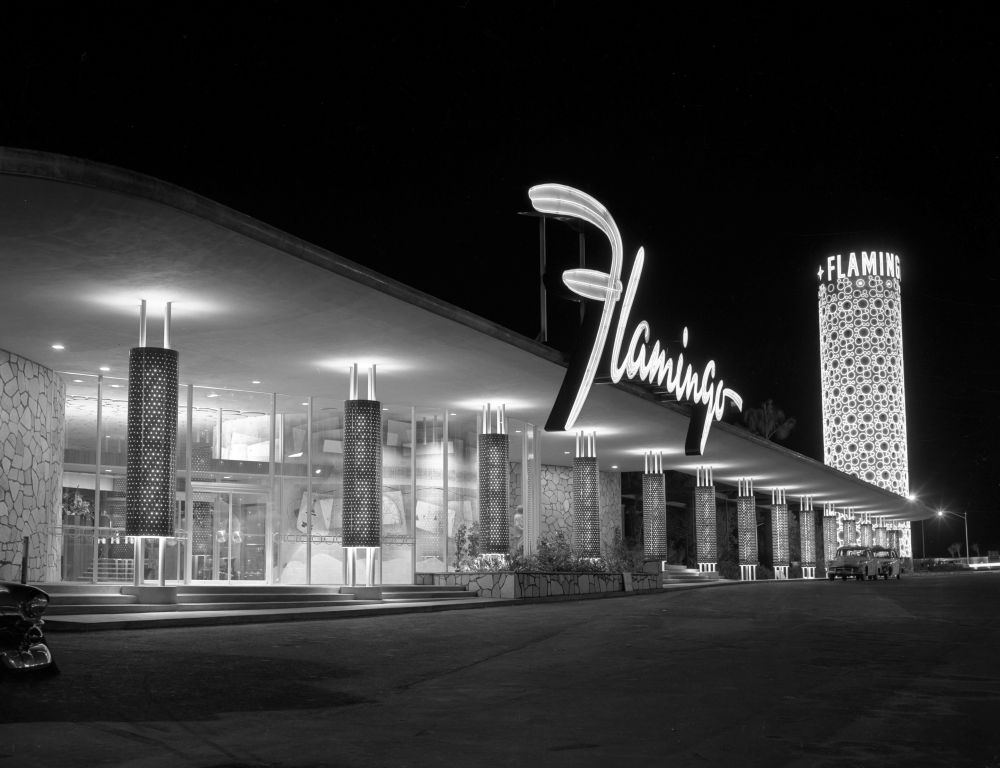
Opened on December 26, 1946, by mobster Bugsy Siegel, the Flamingo, reputedly named after his long-legged mistress Virginia Hill, broke Vegas’ original Western-themed stylistic mold by introducing a glamorous new Hollywood-style high‑roller design.
The first of several remodels through the decades included the famed Champagne Tower. Installed by the legendary YESCO company in 1953, the 80-foot-tall structure featured neon-illuminated circles that simulated Champagne bubbles in a glass.
One of the first large-scale neon signs on the Strip, the tower appeared in the Elvis Presley-Ann Margret hit Viva Las Vegas. Later updates included a spectacular 130-foot pylon with pink-and-orange plumes that fanned out at the top (1968) and an animated entrance sign featuring a three-dimensional bouquet of neon flamingo feathers (1976).
Turning 80 this year, the Strip’s oldest surviving resort offers 3,460 guest rooms, many featuring a recent retro-chic redesign. The 73,000-square-foot Corporate Convention Center and Executive Conference Center offers dozens of versatile spaces, ranging from 500 to 20,000-plus square feet. Bugsy & Meyer’s Steakhouse offers a vintage dining experience, including The Count speakeasy.
On August 5, 1966, hotelier Jay Sarno templated a new era of Vegas glitz with his visionary Roman-inspired Caesars Palace. Originally called the Desert Cabana, the 14-story, 700-room hotel debuted with a $1 million party attended by Johnny Carson and other celebrity guests. Sarno’s legacy includes the Strip’s third-oldest resort, Circus Circus (1968)—and a cameo appearance in Diamonds Are Forever in scenes filmed at the property.
From Evel Knievel’s ill-fated motorcycle jump over the hotel’s fountains in 1967 (successfully completed by his son Robbie in 1989) to Robert Redford riding his horse through the casino in 1981’s Electric Horseman, to the outdoor NHL game in 1991 between the New York Rangers and Los Angeles Kings in the resort’s parking lot, Caesars Palace has been center stage for spectacles, shows and superstar residencies for decades.
Since expanded to 3,980 hotel guest rooms and suites in six hotel towers on 85 acres, this seminal Center Strip megaresort offers 300,000 square feet of versatile meeting and event space. Notable group clients include the annual Houston-based Trauma, Critical Care & Acute Care Surgery (TCCACS) Conference. Booking the property every year since 1967 and counting, it’s the second-longest-running conference in town.
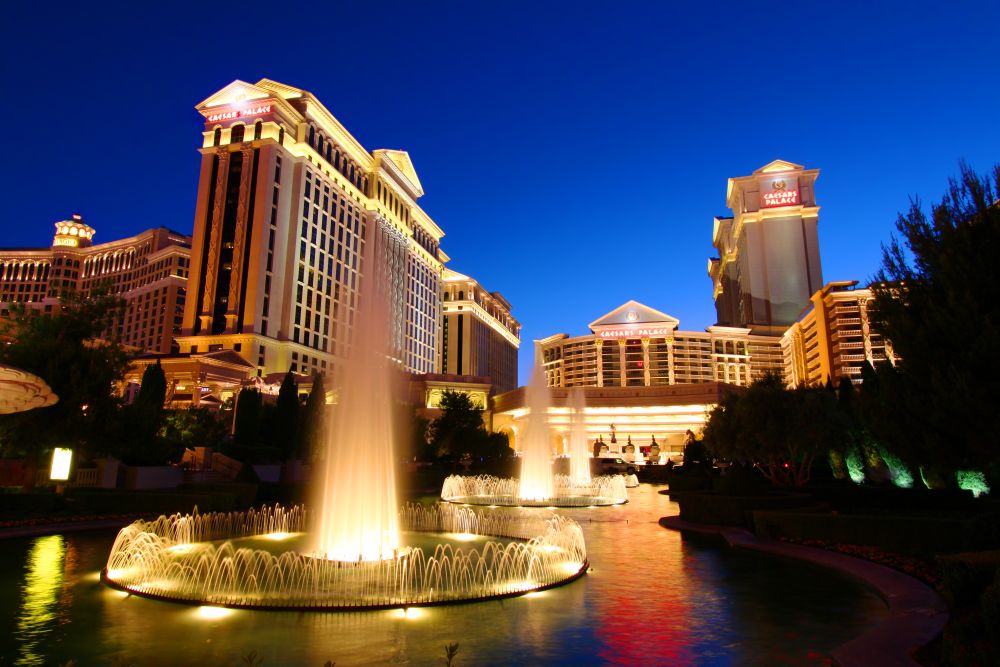
Abundant amenities include the 4,300-seat Colosseum, featuring A-list entertainment, the multilevel Forum Shops, celebrity chef-led dining and nightlife fun.
“Las Vegas is celebrating an extraordinary milestone year, and it’s especially meaningful to honor Flamingo Las Vegas and Caesars Palace,” said Caesars Entertainment SVP of Sales Kelly Gleeson Smith. “These two Strip icons cement Caesars Entertainment’s enduring role in shaping the Las Vegas landscape while signifying our innovative mindset that keeps these landmarks at the forefront.”
Ingrained in Caesars Entertainment’s culture, that mindset is evident in bold, category‑defining venues and collaborations that continually redefine new possibilities on the Strip.
“Our Center Strip portfolio pairs heritage with constant reinvention and the pursuit of excellence,” Gleeson Smith continued, citing brand-new offerings such as the exclusive AAA Five Diamond Villas and Omnia Dayclub & Skybar at Caesars Palace as examples.
“Ultimately, bringing the vision of our incredibly talented clients to life keeps us agile leaders,” she said. “We harness deep expertise, innovation, talent and technology to bring bold ideas to life and deliver experiences that keep planners returning year after year.”
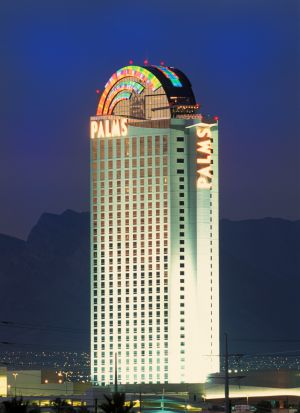
Just west of the Strip on Flamingo Road, Palms Casino Resort redefined Vegas nightlife at its celebrity-studded ribbon-cutting on November 15, 2001. Purpose-built as “the ultimate party hotel in the world,” Palms was party central for most of the decade.
In 2002, Palms became the first Las Vegas casino-resort to be fully owned and operated by a Native American tribe, the California-based San Manual Band of Mission Indians, which has since established the property as a distinctive destination for personalized smaller meetings, conferences and events.
The luxurious Ivory and Fantasy Towers offer 766 rooms, including 10 themed “experiential” suites and prized Sky Villas with sweeping Strip and Valley views.
Groups have 20,000-plus square feet of newly renovated conference space and 150,000-plus square feet of special event space. Stellar venues include 52nd-floor Moon & View venue, famed 55th-floor Ghostbar nightclub and 2,000-capacity Pearl Concert Theatre. The superior restaurant collection includes Scotch 80 Prime, one of the best steakhouses in town, with live entertainment at the Pearl Concert Theatre.
Back on the Strip, the Monte Carlo Resort & Casino opened on June 21, 1996, on a slice of the former Dunes golf course, now book-ended by Bellagio and New York-New York, with ARIA Las Vegas and The Cosmopolitan of Las Vegas among the resorts in between.
Inspired by the namesake casino in Monaco, the resort brought Old World European elegance to the Strip in the heart of the theme era.
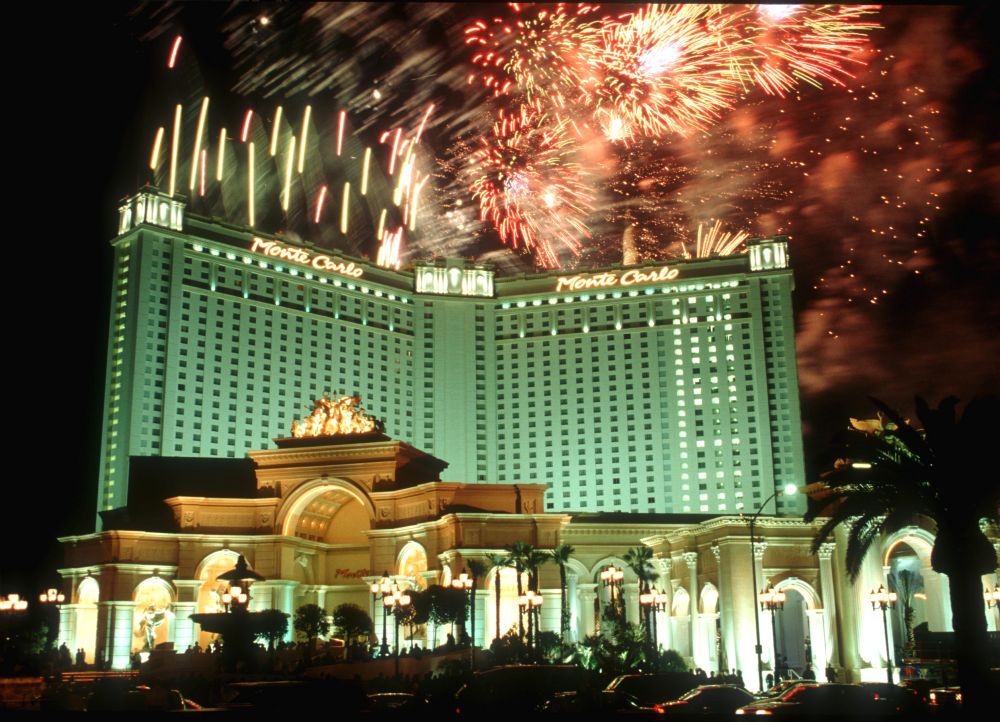
Rebranded Park MGM in 2018 and reimagined with a modern European feel, the 2,435-room property incorporates the 293-room Reserve at Park MGM hotel on the top four floors. Groups have 77,000 square feet of flexible, eco-friendly indoor and outdoor meeting space, with ready access to the attached 5,200-seat Dolby Live theater and neighboring outdoor Park and T-Mobile Arena, the latter turning 10 this year.
Another 30-year celebrant is the STRAT from old school Vegas showman Bob Stupak, whose other claims to fame include commissioning neon cowgirl Vegas Vickie (originally Sassy Sally) for his Glitter Gulch casino on Fremont Street. The iconic sign now decorates her namesake lobby bar inside downtown’s Circa Resort & Casino.
In 1979, the Pittsburgh-born “Polish Maverick” renowned for his publicity stunts opened his outer space-themed hotel-casino, Bob Stupak’s Las Vegas World, just north of Sahara Avenue on Las Vegas Boulevard.
Inspired by Sydney Tower, the Empire State Building and Seattle’s Space Needle, he later rebuilt the site as the Stratosphere. Opened on April 30, 1996, his 1,149-foot-tall landmark, renamed the STRAT, remains the tallest freestanding observation tower in the U.S.
Offering 2,427 guest rooms and 25,000-plus square feet of panoramic high-altitude meeting space, the resort’s rotating Top of the World steakhouse is one of the top-grossing restaurants in the nation. Four exterior amusement rides at the pinnacle—including SkyJump, an 855-foot bungee jump-style controlled freefall at speeds over 40 mph—introduced thrill-ride culture to Vegas.
Stupak’s son, Nevada, continues his father’s legacy by showing clients the town through his corporate event planning company Stupak Las Vegas.
Downtown Preserves the Original Spirit of Las Vegas
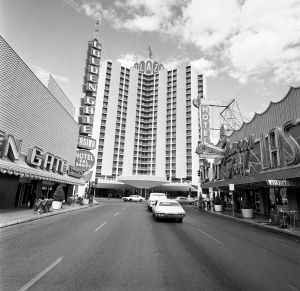
Early in the Diamonds Are Forever car chase, Connery U-turns in front of the darkened construction site of the Union Plaza Hotel and Casino. Opened on July 2, 1971, the day the film premiered, it was the world’s largest hotel-casino at the time.
Fifty-five years later, the renamed Plaza Hotel & Casino features nearly 1,000 modernized rooms and suites, along with 30,000 square feet of refurbished group space, including Downtown’s largest ballroom.
The car chase features other classic properties. Left and right of Union Plaza at 1 and 2 Fremont Street, respectively, stood Golden Gate Hotel & Casino (1955) and Las Vegas Club (1908).
Opened on January 13, 1906, as Hotel Nevada and first renamed the Sal Sagev (“Las Vegas” backwards) in 1932, the Golden Gate is Las Vegas’ first hotel and casino. Turning 120 this year, the landmark offers 10 original 1906 rooms.
In 2006, Michigan-born brothers Derek and Greg Stevens purchased the Golden Gate, followed in 2011 by Fitzgerald’s (1980), which they rebranded D Las Vegas. Between 2015 and 2016, they acquired the Las Vegas Club, then part of an eight-property parcel. After demolishing the block, they built a luxurious new 35-story, billion-dollar tower on the site.
Opened in late 2020, adults-only Circa Resort & Casino, offering 618 rooms and suites, refocused attention on Downtown for tourists and groups. The dedicated 35,000-square-foot conference floor includes nine breakout rooms, a spacious prefunction area, outdoor terrace and the divisible 14,456-square-foot Galaxy Ballroom.
With value-driven advantages such as savings of 30% or better from in-house AV services, event-ready spaces include the tiered amphitheater-style outdoor Stadium Swim pool complex, hosting up to 3,000 attendees. The rooftop Legacy Club is another highly sought-after venue. Regularly hosting up to 400-capacity corporate groups, this sophisticated cocktail lounge’s outdoor patio offers one of the best sunset vantage points in the city.
The metal busts of 11 Vegas “founding fathers” lining the Legacy Club entrance include Bob Stupak, Jay Sarno and Benny “Cowboy” Binion, the larger-than-life Texan who revolutionized the Vegas hotel-casino model in 1951 with Binion’s Horseshoe. The pioneering property introduced casino floor carpeting (replacing sawdust), generous comps for regular players and high‑limit action.
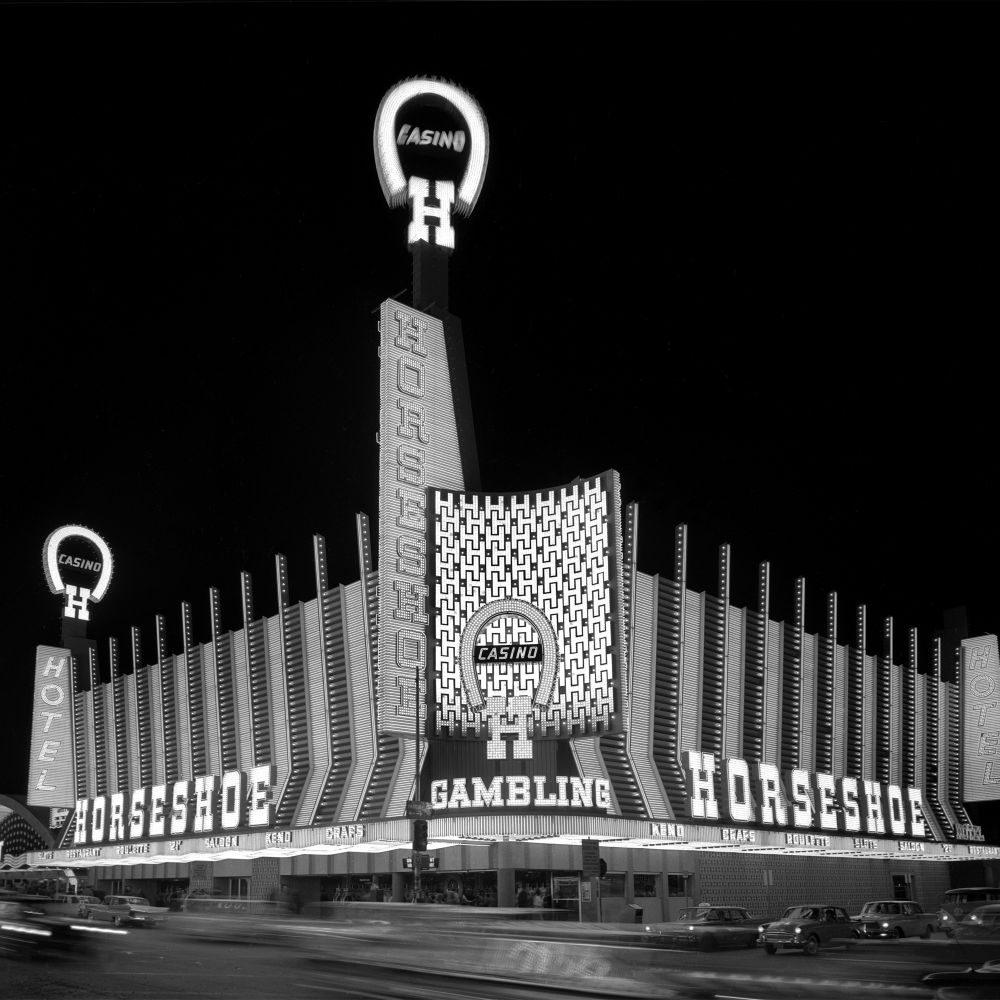
Binion also transformed Vegas by founding the World Series of Poker in 1970 and successfully lobbying the Professional Rodeo Cowboys Association (PRCA) to move the National Finals Rodeo from Oklahoma City to Vegas in 1985. The “Super Bowl of Rodeo” celebrated its 40th anniversary in Vegas last year. Announced in February 2026, Sylvester Stallone and two co-producers are planning a TV series based on Binion’s life.
Renamed Binion’s Gambling Hall in 2005, the 75-year-old landmark houses a true hidden gem, the Top of Binion’s steakhouse. Originally “Top of The Mint,” this 1965 hideaway on the 24th floor is pure old school, with transporting views.
Two other Fremont Street heirlooms, Four Queens and Fremont Hotel & Casino, celebrate their 60th and 70th anniversaries this year, respectively.
Holding the same Fremont East location since 1941, El Cortez Hotel & Casino celebrates its 85th anniversary this year as the longest continuously operated hotel-casino in Vegas.
Briefly owned by mobsters Bugsy Siegel and Meyer Lansky before they opened the Flamingo, this 363-room Spanish Colonial Revival landmark was revived by founding father Jackie Gaughan. The penthouse apartment where Gaughan and his wife Bertie once lived is now a prized time capsule rental for small events.
Born in 1941, the year El Cortez opened, Kenny Epstein, who began his Vegas career in 1966 as a baccarat shift boss at brand-new Caesars Palace, has owned the property since 2008. Upholding the long-standing commitment to value and putting guests at the center of every decision, groups included, Epstein’s most recent investment was a $20 million modernization and expansion project unveiled in February 2025. The wing of faithfully restored “Original 47” rooms from 1941 is another reason to book.
50 Years of Local Flavor
Another visionary Texan enshrined at the Legacy Club is Galveston-born Frank Fertitta. Landing in Vegas in 1960, Fertitta worked his way up in escalating roles at properties that included the Tropicana, Stardust, Circus Circus, Sahara and Fremont. On July 1, 1976, seeing the opportunity to serve the locals market, he opened The Casino just west of the Strip.
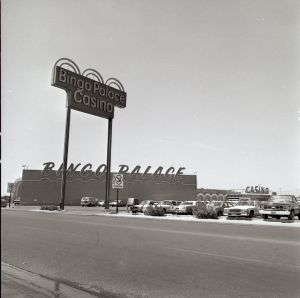
Renamed Bingo Palace a year later, his pioneering property, prioritizing affordable eats and drinks, entertainment, giveaways and above all, putting guests first, effectively launched the distinct locals’ market in Vegas. Becoming Palace Station in 1983, the flagship anchors the company that emerged from Fertitta’s vision, Station Casinos.
Under parent organization Red Rock Resorts, the company, run today by his son, CEO and Chairman Frank Fertitta III, owns and operates 18 strategically located off-Strip casino and entertainment properties across Las Vegas Valley.
The portfolio includes three luxurious group destinations. Durango Casino & Resort opened in 2023. Red Rock Casino, Resort & Spa turned 20 this April. Green Valley Ranch Resort, Spa and Casino in Henderson fetes its 25th anniversary this December.
Celebrating 30 years this December, 886-room Orleans Hotel and Casino, just west of the Strip, offers 60,000 square feet of versatile group space. Room renovations are slated for completion this summer, followed by a modernization project next year. The Big Easy-themed property is operated by Boyd Gaming, launched by founding father Sam Boyd and his son Bill in 1975.
Hosting around 200 concerts, sports tournaments and other programs every year, the 9,500-seat Orleans Arena offers another 10,000 square feet of space.
Signature festivities include the four-day Viva Las Vegas Rockabilly Weekend. Attracting upward of 20,000 attendees, the event turns 30 in 2028.