


The Garden State is forefront in this summer’s two signature events, America’s 250th anniversary celebrations and the FIFA World Cup.
Recognized as the “Crossroads of the Revolution,” New Jersey saw more sustained Revolutionary War action than any other colony, enduring 600-plus battles and skirmishes.
Few moves were as critical in winning the war and American independence than George Washington leading the Continental Army across the Delaware River in Trenton on December 25, 1776.
[Related: N.J. Meadowlands on Track to Welcome $3 Billion Convention Center Project]
Considered the “Turning Point of the Revolution,” Washington’s daring maneuver preceded a surprise attack on enemy Hessian forces. Two victories in Trenton, plus a third in Princeton, are remembered as the “ten crucial days” for boosting the nation’s sinking morale and reenergizing for the fight ahead.
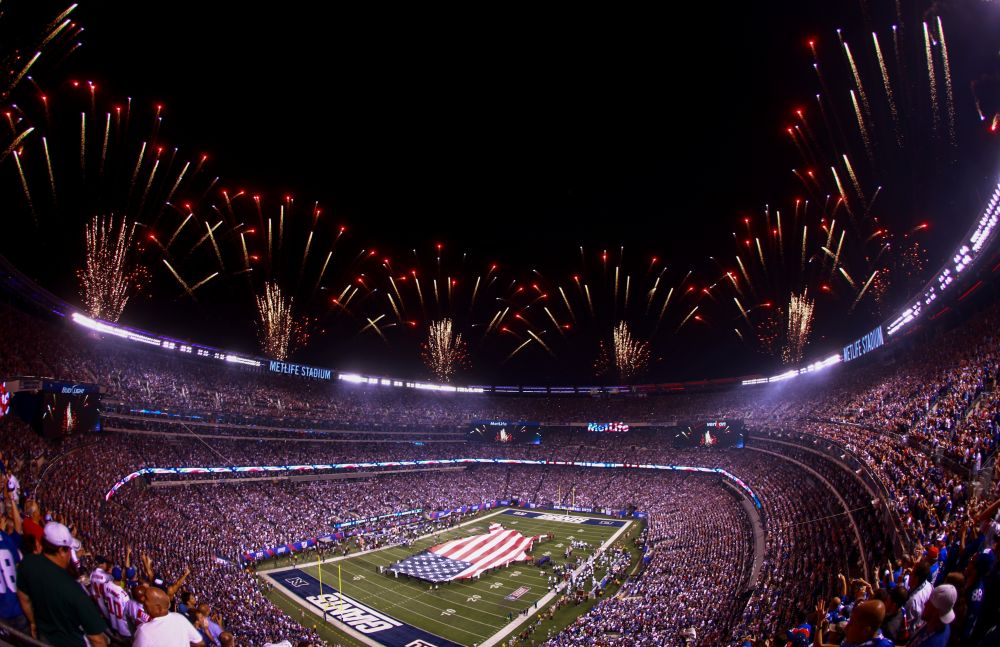
On the sporting side, MetLife Stadium in East Rutherford, New Jersey, is hosting eight World Cup matches, including the final, signifying a true homecoming for the “Beautiful Game” of soccer—which is actually called “football” everywhere else in the world.
First played locally by the Lenape Indians in the 1600s, U.S. soccer’s origins also include the factory teams of English, Scottish and Irish immigrant workers living in northeastern New Jersey manufacturing towns during the 19th century.
[Related: Why New Jersey Is a Sporting Events Champion]
In 1885, Kearny, New Jersey-based Clark Thread Company’s all-Scottish “Our New Thread” squad won the inaugural Challenge Cup of the American Football Association, the first soccer association outside of England. Kearny also produced three stars of the U.S. national team that competed in America’s first World Cup in 1994: Tony Meola, John Harkes and Tab Ramos.
During the World Cup bid process, the New York-New Jersey Host Committee hosted FIFA delegates at a waterfront Jersey City hotel. In a crowning move, the curtains parted to reveal a view of the Statue of Liberty, underscoring the region’s history of welcoming immigrants and visitors.
The contributions of new arrivals to the New Jersey way of life, interwoven with the state’s rich history, allow for unique discoveries by business groups.
[Related: These New Jersey Wineries Offer Scenic Event Settings for Groups]
Authentic Tastes of the Bel Paese in Atlantic City
In December 2025, UNESCO inscribed Italian cuisine onto its World Intangible Cultural Heritage list. The landmark recognition, the first for a national cuisine, is also significant for the U.S., where four million-plus Italians arrived between 1880 to 1920, most starting new lives in major East Coast port cities—bringing their culinary traditions with them.
[Related: Atlantic City’s Dynamic Growth Strategy for 2026 and Beyond is Money in the Bank]
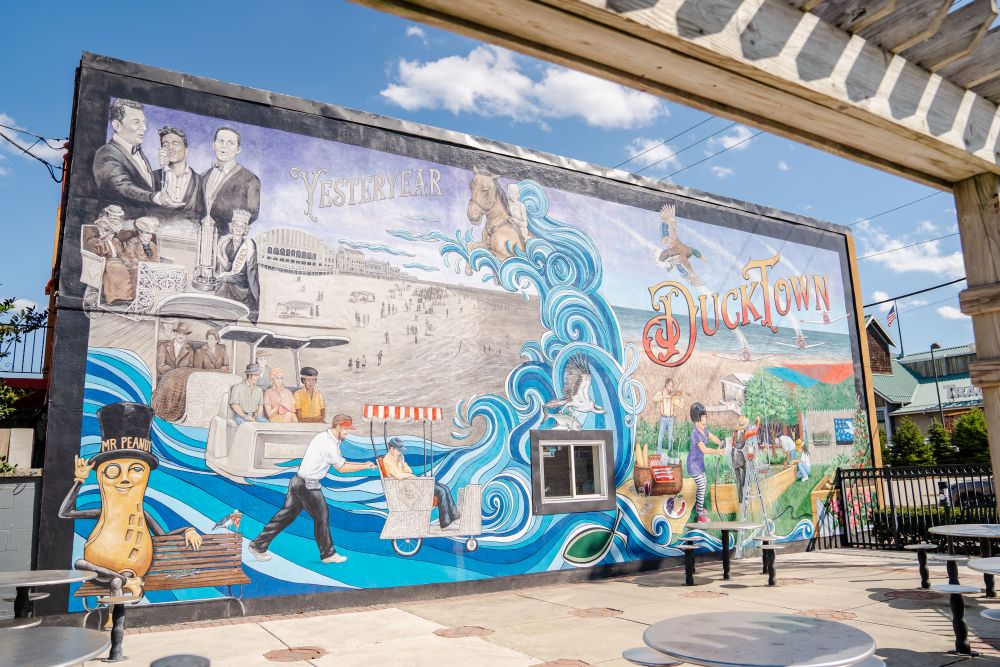
Named for the Italian immigrants who hunted duck in the local marshes and area duck farms, Ducktown, Atlantic City’s historic Little Italy, reflects a broader ethnic mix today.
Amid other international cuisines, old-school Italian anchors still serve authentic tastes and atmosphere of the Bel Paese, or “beautiful country.”
Located in a private home on a residential street, 1921 time capsule Chef Vola’s operated as a speakeasy during Prohibition; come 2011, it received the prestigious James Beard Foundation America’s Classic Award. The homestyle menu features classics such as chicken parmigiana, pasta with a specialty clam sauce and regular patron Frank Sinatra’s favorite, banana cream pie.
At neighboring Tropicana Atlantic City, top-rated Il Verdi, from 1981, is Atlantic City’s second-oldest Italian resort restaurant, with ocean views complementing the elevated coastal Italian menu. Tropicana is also home to an outpost of New York City import Carmine’s.
[Related: How Atlantic City Continues to Strengthen Its Group Appeal]
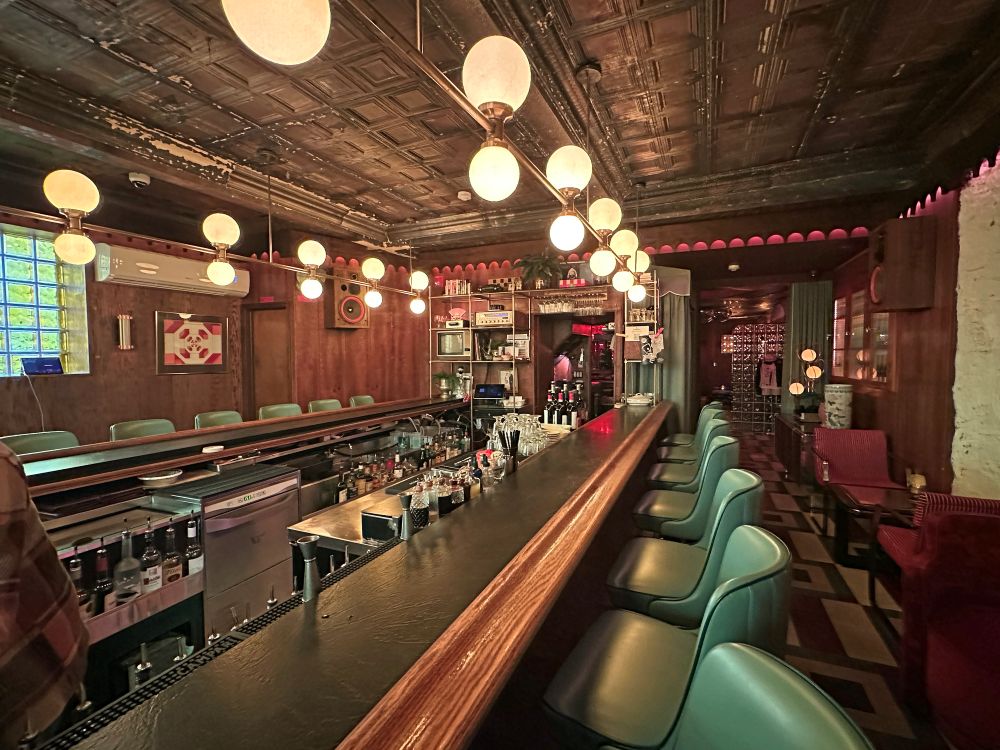
One block from Tropicana, Café 2825 celebrates 40 years as one of the hottest reservations in town. With expanded space for groups, this still-intimate Brooklyn family-run institution from 1986 is renowned for its scratch-made Southern Italian menu.
Opened in 1929, the 4,300-seat Warner Theater was once Atlantic City’s premier show palace. Located next to Caesars Atlantic City, the former “Wonder Theatre of the World” now integrates two group-capable imports from Vegas-based theatrical producer Spiegelworld. Featuring acrobats, contortionists and circus performers, The Hook pairs risque entertainment with imaginative Italian-American cuisine at adjacent Superfrico.

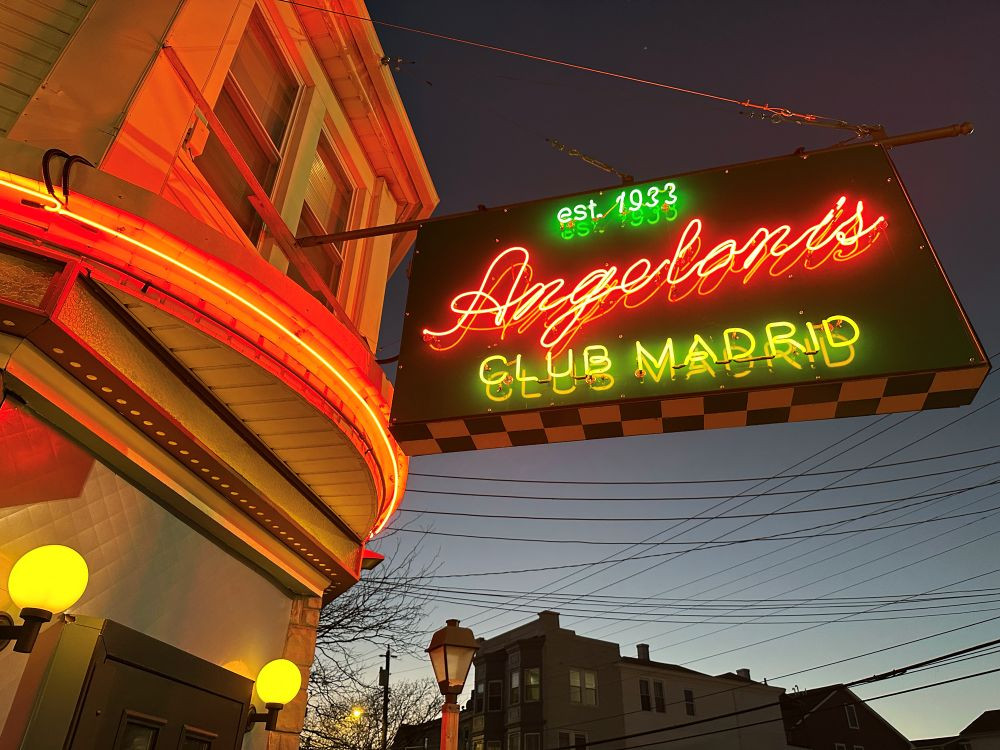
Steps from the Ducktown mural, Angeloni's Club Madrid is straight out of a Martin Scorsese film. Relocated from Philadelphia in the 1920s, hopping Club Madrid was reimagined in 1981 as Angeloni’s II Restaurant & Lounge. Revived in 2023, this 1933 gem features original architectural details, vintage decor, private dining and upscale fare including another Sinatra favorite, clams casino.
In 1978, the historic Chalfonte-Haddon Hall hotel became Resorts Casino Hotel, Atlantic City’s first gaming property. The ribbon-cutting included Capriccio. This nationally acclaimed Old World establishment combines ocean views with fine Italian cuisine for memorable group dining.
Other highly rated Italian kitchens in town include Il Mulino at Hard Rock Hotel Atlantic City, Angeline at Borgata and Ocean Casino Resort’s playfully named, ocean-facing Linguini by the Sea.
Discover the Past, Protect the Future
In 1830, farmer John Estaugh Hopkins unearthed strange bones in Haddonfield, New Jersey, less than 10 miles from bustling Philadelphia. Excavating the site in 1858, amateur paleontologist William Foulke and University of Pennsylvania anatomist and paleontologist Dr. Joseph Leidy unearthed the first nearly complete dinosaur skeleton in North America. Named the state fossil, Hadrosaurus foulkii put New Jersey on the global paleontology map.
About 13 miles south of Haddonfield is an active four-acre quarry that to date has yielded 100,000 fossils representing 100-plus species of marine and land animals, including the remains of bus-length mosasaurs, marine crocodiles, sea turtles, shark teeth and much more. Each descending step into the pit goes back 400,000 years in time. The bottom is 66 million years old, dating back to the age of dinosaurs.
Opened last year on a ledge overlooking the quarry, the Jean and Ric Edelman Fossil Park & Museum of Rowan University (EFM for short) is a first-of-its-kind museum that immerses visitors in scientific discoveries of the past.
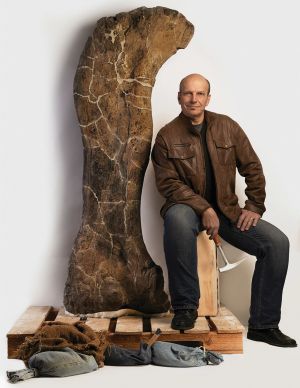
Dr. Kenneth Lacovara, EFM’s founding executive director, is a world-renowned paleontologist and geologist who has unearthed some of the largest dinosaurs ever to walk the earth, including the massive 65-ton Dreadnoughtus from Patagonia. Joining pioneers including Neil Armstrong, Jane Goodall and Sir Edmund Hillary as a recipient of The Explorers Club Medal—the highest honor in exploration—Lacovara was instrumental in creating EFM.
“Southern New Jersey is a hotbed of dinosaur discovery,” said Lacovara. “As a shallow marine environment at the time, it provided ideal conditions for fossilization. Additionally, the world’s first tyrannosaur skeleton was discovered less than two miles from EFM.”
As Lacovara explained, the Edelman Fossil Quarry is the only location in the world with fossilized evidence of an entire collapsed ecosystem from the asteroid that struck 1,535 miles away in Mexico 66 million years ago. Known as the Fifth Extinction, the strike wiped out all dinosaurs and three-quarters of all species worldwide. As exhibits in the museum make clear, the human-driven Sixth Extinction is actually underway.
“Every fossil found on the property is a victim of the asteroid strike, as we continue to discover and identify more creatures that perished following the extinction event,” he said.
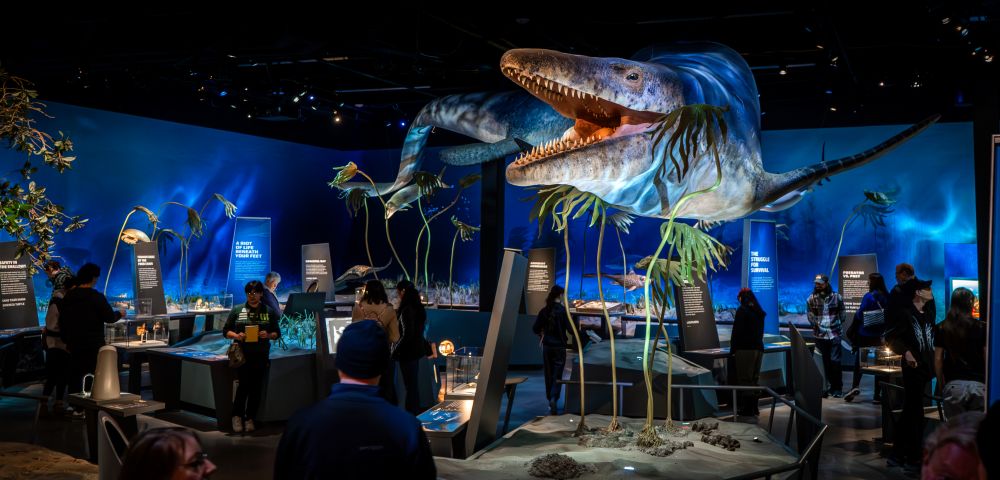
Ranked second in USA TODAY’s 2026 10 Best Readers’ Choice Awards for Best New Museum, EFM is ready made for unique group encounters.
“We use the awe-inspiring story of the rise and fall of the dinosaurs to study the past, contextualize our present and prepare for our planet’s future that we all must protect,” Lacovara said. “Meeting at EFM engages clients in that dialogue while providing world-class spaces and services that leave visitors with hope for our collective future.”
Rental possibilities include the exhibit halls, multipurpose theater, outdoor veranda or full buyouts.
“We can tailor our spaces for groups of all sizes and purposes,” said Deputy Director Nick Sena. “Additionally, our paleontologists and visitor-experience guides can provide tours, educational programming and guided activities, including our unique Quarry Dig Experience. Guests can dig for 66-million-year-old fossils and take them home. Planners can use this as a teambuilder or add-on to their meeting.”
[Related: Atlantic City’s Borgata Continues Its Hot Hand]
Golden Memories and Future Goals
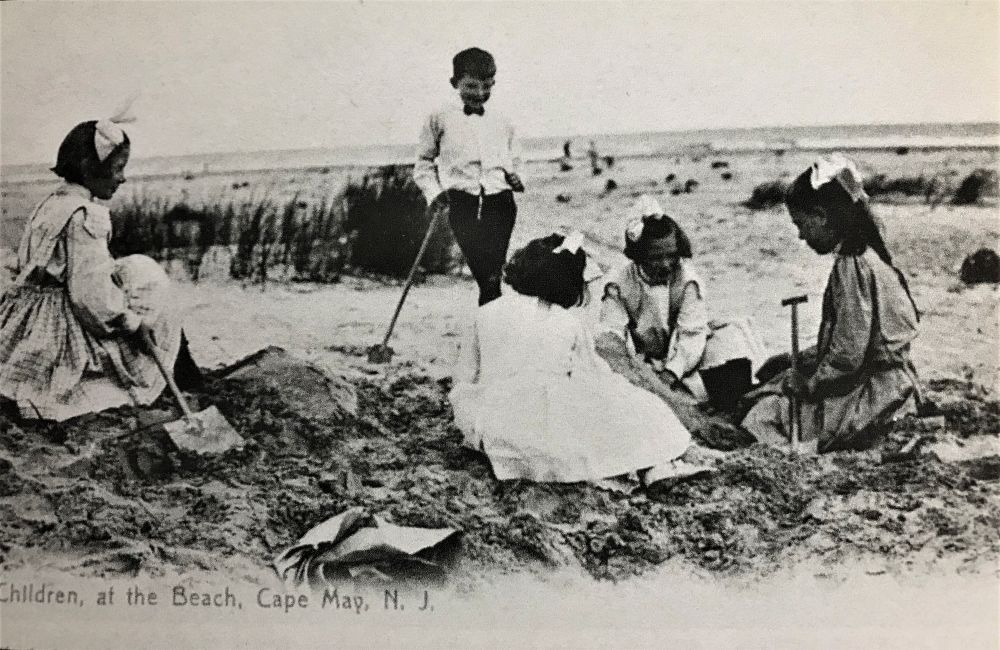
Cape May, at New Jersey’s peninsular southern tip, is America’s oldest seashore resort. Marking the 175th anniversary of its incorporation and 50th anniversary of its designation as a National Historic Landmark, the city’s concentration of Victorian architecture is second only to San Francisco in the nation. Event-capable resorts include Congress Hall, an 1806 venue.
Serving in World War II, the Korean, Vietnam and Cold Wars, and Middle East conflicts, USS New Jersey is the most decorated battleship in U.S. Navy history. Anchored on the Camden waterfront right across from Philadelphia where she was built, this heroic ship now serves as the group-capable Battleship New Jersey Museum and Memorial.
Meanwhile, 80 miles to the northeast and just eight miles from Manhattan, the Meadowlands sports, entertainment and hotel complex is focused on “unleashing a new era of success” by advocating for a new convention center (see page 79 for more).
“Adding a multi-use convention center will anchor large-scale events, attract national and international visitors and catalyze year-round economic activity, including creating thousands of jobs,” said Jim Kirkos, CEO of the Meadowlands Chamber & Meadowlands Live! CVB. “Having presented a market analysis and economic impact study that found that a convention center could generate $30 billion in economic impact over 30 years, we are finalizing a scope-assessment report to present to New Jersey Governor Mikie Sherrill and the state legislature. Our vision is local, regional and statewide impact for the next 30 years and beyond.”
Hungarian-American Pioneers of Liberty and Legacy
In 1777, Hungarian soldier Michael Kováts de Fabriczy wrote Benjamin Franklin seeking to join the fight for American independence. Commissioned as a Continental Army colonel, Kováts co-founded the American Cavalry before perishing in action in 1779. Since then, generations of Hungarian Americans have shaped the U.S. experience across multiple fields of endeavor.
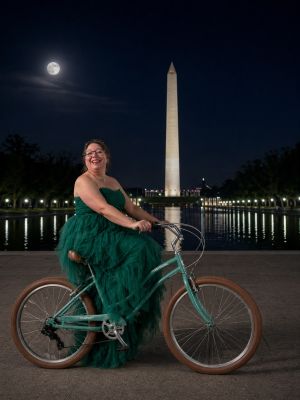
Their names could fill a book, which is what Melissa Katkó Pepin, executive director of American Hungarian Foundation (AHF) in New Brunswick, New Jersey, did as co-organizer of the Hungarian American Coalition’s United States of America 250th gala at the Library of Congress in Washington, D.C. this April.
“We devoted 94 pages of a commemorative book for the gala to high achievers and cultural icons,” said Pepin, whose Hungarian great-grandparents came to the U.S. in 1918. “Hungary, the size of Indiana, has punched way above its weight in America for 250 years.”
The roll call is dazzling.
War photographer Robert Capa, who captured the Normandy landings. John von Neumann, “Father of the Computer.” Steven F. Udvar-Hazy, whose namesake Smithsonian Institution Air and Space Museum is a top choice for Virginia groups. Fashion designers Calvin Klein and Estée Lauder. Graphic designer Milton Glazer, of “I Love NY” fame. Super Bowl legends Joe Namath, Don Shula and Larry Csonka. Paramount and Fox founders Adolph Zukor and William Fox.
Twenty-seven stars on the Hollywood Walk of Fame, 19 Noble Prize winners and dozens more.
Founded in 1955, AHF safeguards the largest Hungarian archive in the U.S. and keeps young and old connected to their homeland. Pepin’s many hats include year-round event planning, from exhibitions and cultural programming to the 15,000-strong Hungarian Festival in New Brunswick each June.
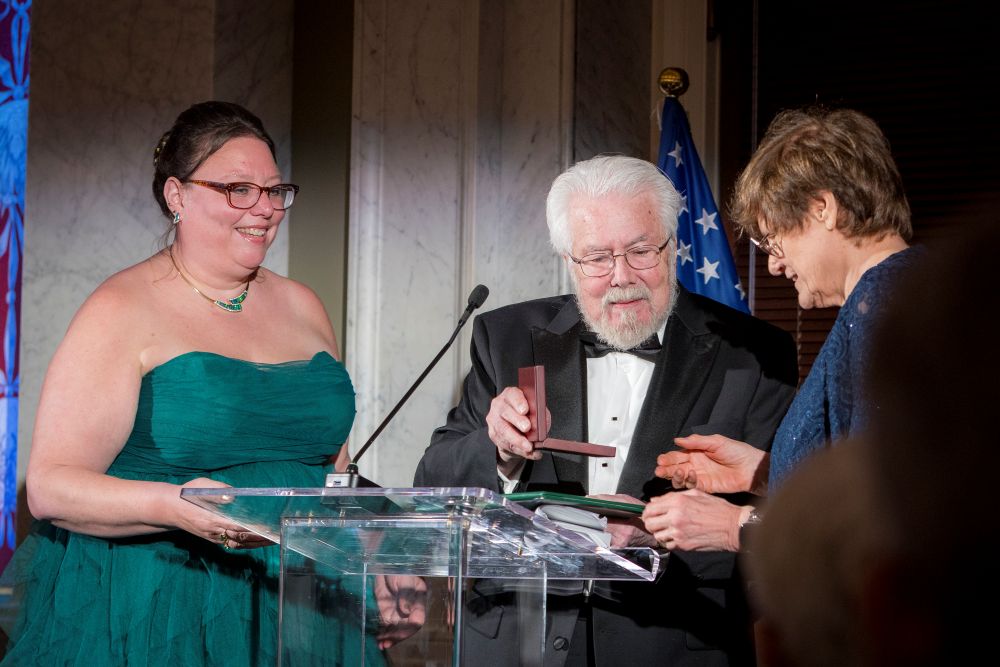
Co-organized by Hungarian American former New York Governor George Pataki, the gala honored Dr. Katalin Karikó, co-winner of the 2023 Nobel Prize in Medicine for her breakthrough contributions to mRNA technology and COVID-19 vaccines, and Dr. Charles Simonyi, who oversaw the creation of Microsoft Excel.
“The night was joyous,” said Pepin of the sold-out 440-person gala. “Hungarians have always held immense pride in becoming American citizens and contributing to the nation and the world.