


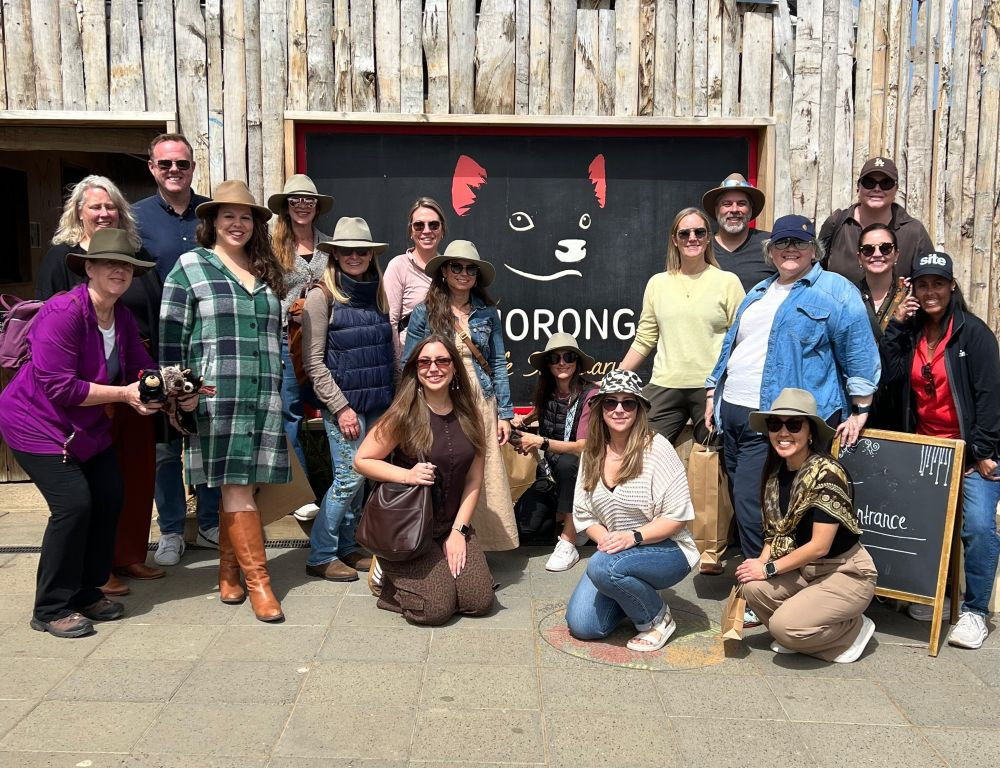
Last December, Business Events Tasmania welcomed me and 13 event planners from across North America to Tasmania (Lutruwita) for a two-day post-fam following Tourism Australia’s signature incentive showcase Australia Next.
Designed to highlight the breadth of Tasmania’s group offerings, the post-fam program included everything from nature-based excursions and immersive cultural experiences to meals featuring local ingredients from across the state and, of course, a pitstop for some face-to-face time with Tasmanian devils.
Day One: Group Offerings Tell the Tale of Tasmania
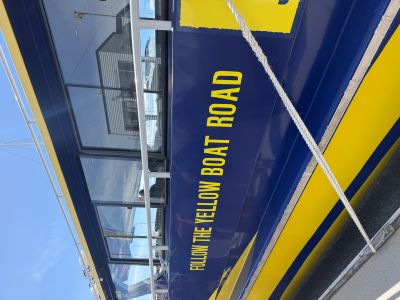
We arrived in Hobart early in the morning and went straight from the air to the water, kicking off our Tasmanian adventure with Pennicott Wilderness Journeys, the award-winning local tour company that’s been operating in southern Tasmania since 1999. Managing Director Robert Pennicott himself took us on a ride along Tasmania’s coastline, sharing interesting facts and even a few personal stories along the way. Planners can visit the company’s website to search for tour availability or contact staff directly to book group experiences.
With Pennicott Wilderness Journeys, we “[followed] the yellow boat road” to Peppermint Bay’s award-winning restaurant and events space in the rural town of Woodbridge, which is roughly 35 minutes south of Hobart by car. Groups and guests are invited to arrive at the waterfront venue on the banks of the D’Entrecasteaux Channel via road or aboard Peppermint Bay’s luxury catamaran (up to 160 guests).
Following a traditional Welcome to Country experience with Nita Education, specialists in Aboriginal culture, we gathered for lunch in Peppermint Bay’s event space (180 seated, 300-plus cocktail), with acoustics that projected the music from the cellist in the corner through the room and outside to where we were standing before. We snacked on spiced nuts, marinated olives and house focaccia and enjoyed a locally sourced meal featuring seasonal ingredients and served family-style at a table that stretched from one end of the room to the other.
It was off to Willie Smith’s Apple Shed after that. The 115-acre farm in the Huon Valley—a once-thriving apple-growing region that exported apples throughout the world and earned Tasmania its “Apple Isle” title—has been organic since 1997 and offers local ciders, wine and craft beer in a heritage setting that is also home to Charles Oates Distilling. We took a quick tour of the orchard and tried some ciders for ourselves before sitting down for the biggest slice of fresh apple pie I have ever seen. The old apple packing shed onsite was built in 1942 and can accommodate 140 seated or 200 for a cocktail reception.
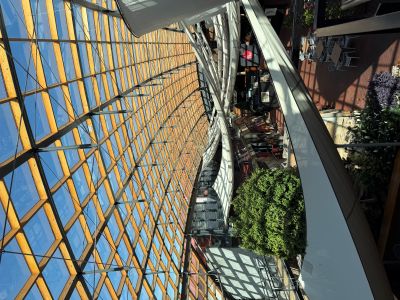
The 30-minute bus ride back to Hobart was just long enough for a quick power nap before our guided walking tour of the area, courtesy of MACq 01 Hotel, which included a history lesson on H. Jones & Co., the renowned Tasmanian jam manufacturer established by Henry Jones in 1891. The company operated as a massive industrial hub before transforming into the luxury Henry Jones Art Hotel in 2004, which preserves the original 19th-century warehouse architecture and the stories that come with it.
On our tour, the 56-room historic property showcased its rough-hewn timber and hand-cut convict stone walls, which are adorned with more than 400 Tasmanian artworks that continuously change to exhibit new art, heritage, tradition and nature throughout interior and exterior spaces. The onsite IXL Atrium is one of the largest glass atriums in the Southern Hemisphere, with space for up to 350 reception-style or 250 banquet-style. The Atrium Courtyard is ideal for cocktail-style events for up to 100.
Across the street, MACq 01 Hotel offers 87 luxury guest rooms and 27 suites along Hobart’s waterfront, each reflecting one of the five Tasmanian character traits—Colorful and Quirky; Grounded Yet Exceptional; Fighting Believers; Curious and Creative; Hearty and Resilient—through its design and story.
Our tour ended at The Tasman, a Luxury Collection Hotel, Hobart, our host property for our time in Tasmania. Opened in December 2021, the 152-room hotel features three distinct architectural styles—heritage (1840s), Art Deco (1940s) and contemporary—across 14 room types. The property puts guests in the heart of Hobart, in between its Central Business District, the Derwent River harbor, the Museum of Old and New Art Ferry terminal and the iconic Salamanca Place and Battery Point neighborhoods.
The hotel has approximately 2,000 square feet of event space, including the 110-capacity Drawing Room and The Printing Room, with sandstone walls, original windows and a fireplace that transports guests to the 1840s. We gathered for dinner in the space, seated at a long 24-person table, and enjoyed a meal from the hotel’s onsite Italian restaurant Peppina. Our menu featured buffalo mozzarella, pizza fritta with whipped buffalo ricotta, wood-fired meatballs made with pork and wagyu beef, pork and fennel sausage, wagyu scotch fillet and tiramisu “modo mio” (my way) with savoiardi (ladyfingers), coffee mousse, liqueur and mascarpone cream.
[Related: Tourism Australia’s Signature Incentive Showcase Shows Off Melbourne]
Day Two: Immersive and Memorable Destination Experiences
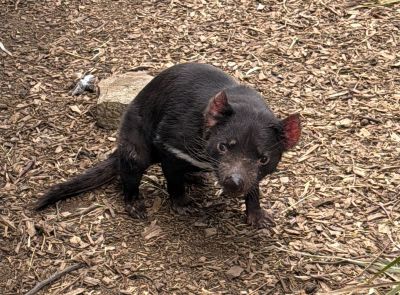
After breakfast at The Henry Jones Art Hotel and a walk along the harbor, we made our way to Bonorong Wildlife Sanctuary for a private guided experience featuring close-up encounters with kangaroos, wombats and yes, Tasmanian devils!
We met Popcorn the wombat first, who was rescued from her mother’s pouch after her mother was killed by a car (Bonorong operates Tasmania’s largest 24-hour wildlife rescue service). Just around the corner, the Tasmanian devils were waiting. They don’t spin like vortexes like the character in Looney Tunes, but they do grunt and growl, and seeing one up close was the highlight of my trip.
For most incentive programs, those hands-on animal encounters tend to be what attendees remember and value most about their time in Tasmania. Information about private tours, animal encounters and more group offerings is available on Bonorong’s website.
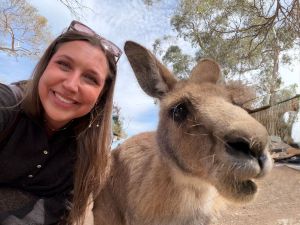
A couple kangaroos and one short-beaked echidna later, and we were back on the bus for a ride to LARK Distillery in Pontville, 30 minutes north of Hobart. The iconic home of Australia’s oldest single malt whisky is housed in buildings from the early 1800s, where Tasmania’s only working whisky village makes for an immersive distillery experience like no other.
We took a tour of the location and walked through the whisky-making process, tried a taste for ourselves at the Cellar Door and were guided across the grounds to a massive metal shed full of whisky barrels, and where our lunch was served on a long table running through the center of them all. LARK’s Pontville location can accommodate 100 for a cocktail reception or 40 seated.
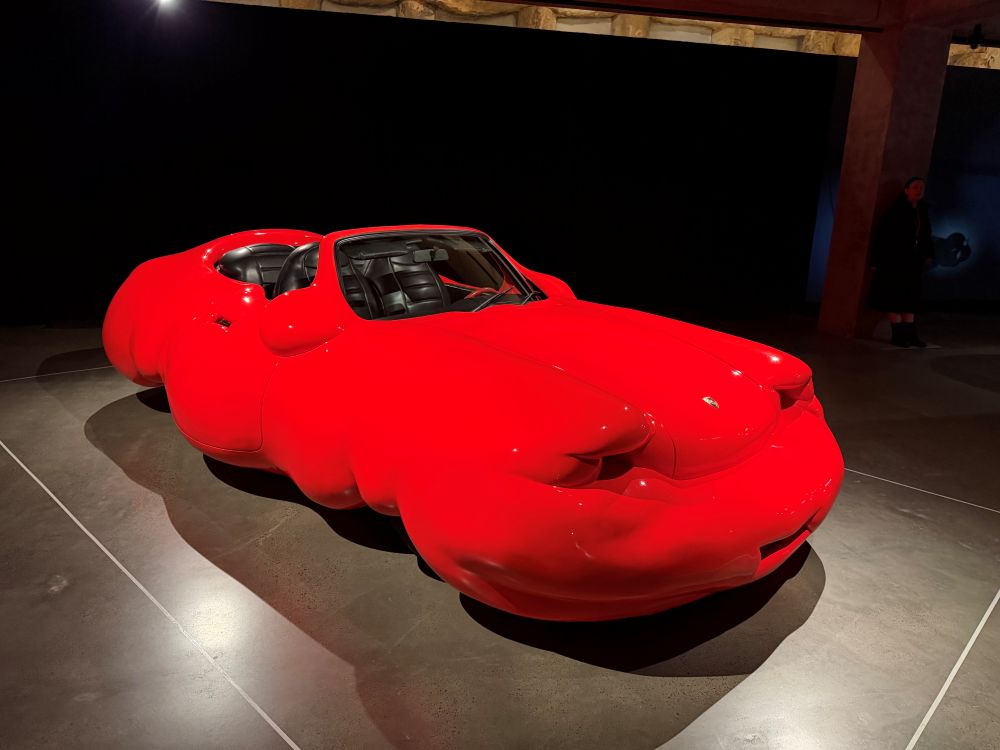
Our afternoon continued at the Museum of Old and New Art (Mona), a “space of wonder and experiment” by Tasmanian David Walsh, who wrote on the museum’s website, “Trying to pin down Mona’s purpose is like trying to bottle a whimsy.” Quite possibly the quirkiest museum I’ve ever been to, Mona is 15 minutes from central Hobart and offers a variety of unique offsite venues, including The Void (250 standing), The Nolan Gallery (450 standing) and functions on the Mona Ferry for up to 250.
We freshened up after a ferry ride across the harbor and a short walk back to The Tasman, and then were off to dinner at Callington Mill Distillery’s Hobart Whisky Lounge & Dining Room at MACq 01 Hotel. Located right on the waterfront and with floor-to-ceiling sliding doors that let the evening breeze in, the venue was the perfect picture setting for our final dinner together. The menu featured scallops, barbecue eel, baybug dumplings, kingfish, ribeye and more, complemented by Tasmanian whisky, signature cocktails and live acoustic entertainment.
On our last morning in Hobart before heading to the airport, I took advantage of the short time I had to explore the Salamanca Market, held every Saturday at Salamanca Place. Established in 1972, the market is now the most-visited tourist attraction in Tasmania, with more than 300 stalls featuring local produce to pottery and everything in between.
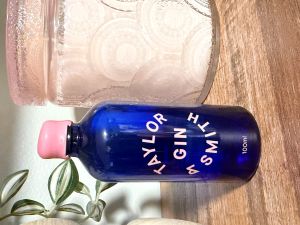
I walked away with the perfect souvenir for my travel trinket shelf: a mini bottle of Taylor & Smith Distilling Co. small-batch handmade gin, made with Huon Valley apples and named too perfectly to pass up.