

Key Takeaways:
- Meetings budgets battle climbing costs
- Biggest career threats for meeting planners
- Hot event offsite options
New wrinkles influence the business events industry each year, from the Covid meltdown at the start of the decade to major U.S. policies, such as tariffs and aggressive immigration actions, rising to the fore in 2025.
This year's Meetings Today Trends Survey resulted in nearly 700 responses, thus providing a clear vision of the most important issues on the minds of our meeting planner audience. New for this year, we conducted a separate survey regarding budgets (page 34) which generated 210 responses.
As with last year, we harnessed ChatGPT to present "AI Takeaways" summarizing open-ended response options.
After the survey, we reached out to respondents for the "Planners' Takes" boxes, and each editor also chimed in with his or her own take.
[Related: Top Takeaways and Planner Insights From the 2025 Meetings Today Trends Survey]
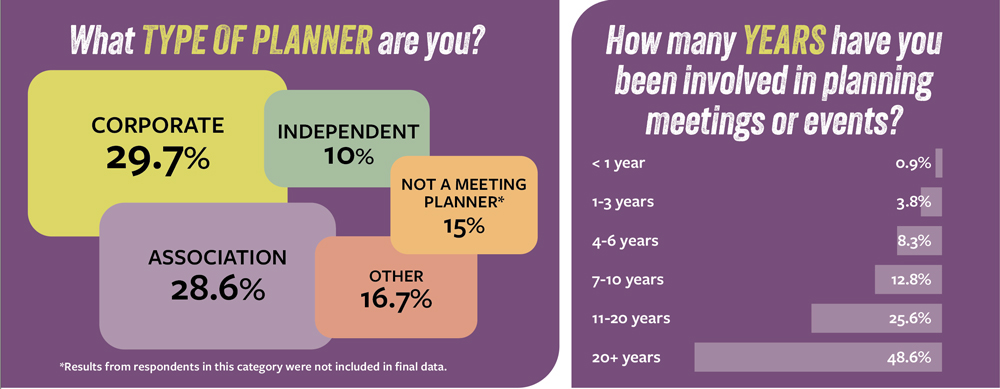
Respondent Key Demographics
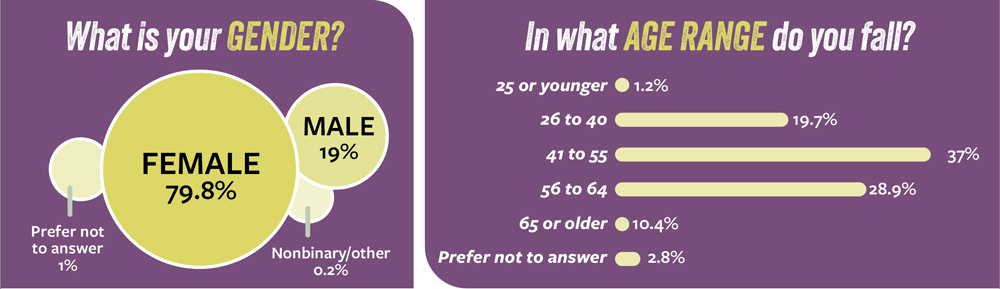
Type of Planner Respondents
[Related: Industry Intelligence: Meeting Trends and Event Data Every Planner Needs to Know]
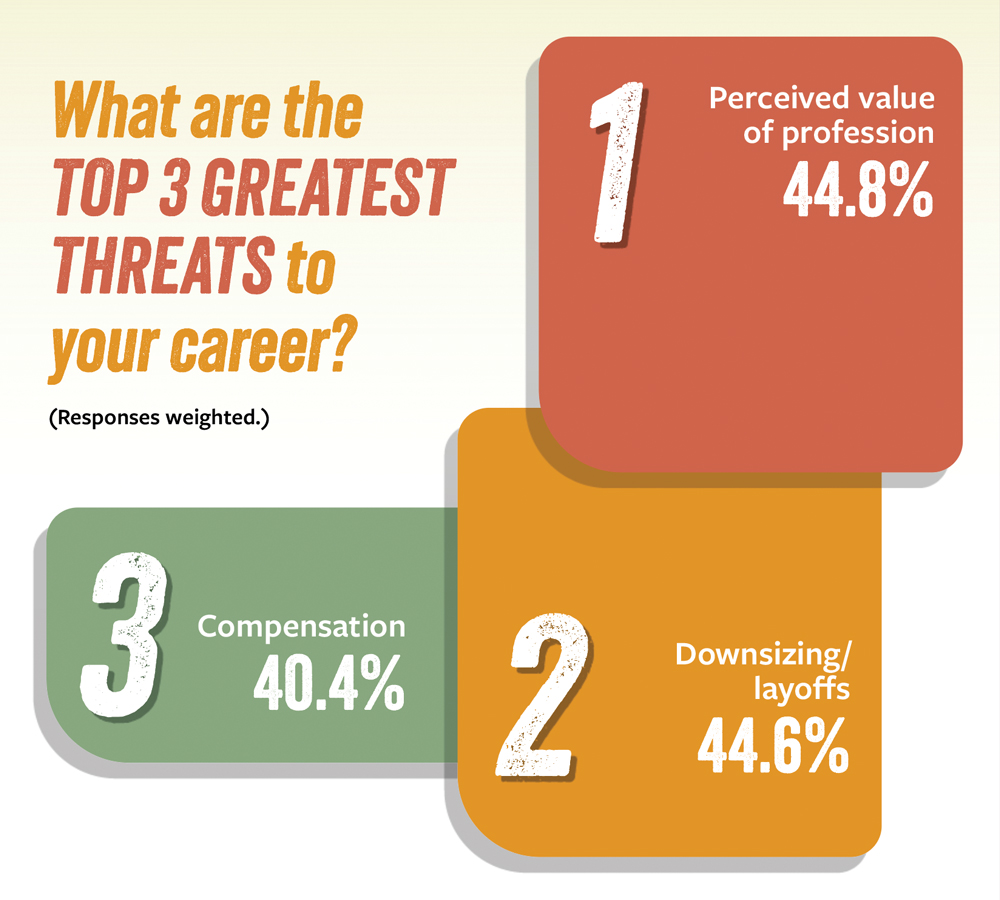
What Are the Top Three Greatest Threats to Your Career? (Responses weighted)
[Related: New Hilton Survey Reveals Attendee Anxieties and Preferences]
Editor's Take:

Tyler Davidson, Vice President & Chief Content Director
"Not a lot of mystery in these findings: pay, respect and downsizing are concerns in most industries. How the three work in conjunction, though, is what gives this trio a multiplier effect. Add intangibles such as the adoption of AI for more basic job functions and you have a recipe for angst, especially for planners just entering the profession."
AI Takeaways:
- Shrinking budgets and rising costs: Tighter budgets combined with inflation are limiting staffing, reducing attendance, cutting educator and member funding, constraining donor/sponsor pools and making it harder to secure speakers, venues and needed resources.
- Industry instability and market shifts: Factors such as economic uncertainty, layoffs, reduced pipelines, shifting client contacts, volatile funding and changing event formats are creating unpredictable workloads and revenue.
- Work overload: Burnout, understaffing, aging workforce and limited career growth are major personal and professional threats, alongside concerns about compensation ceilings and being replaced by inexperienced or internal teams.
- Declining perceived value of in-person events and associations: Younger generations’ reduced interest, increased virtual alternatives, attendance drops and misconceptions about event planning expertise are major factors.
- External forces and global risks: Pandemics, geopolitical or world events, government actions, accreditation demand and technology changes continue to threaten event success and long-term stability.
Planners' Takes:

Desireé Dolecki, Director of Conferences, American Nuclear Society
"Key threats include rising costs, staffing shortages, increased complexity and the misconception that technology can replace strategic event planning. I feel less concern this year, having moved into the growing nuclear industry. We are seeing strong momentum, increased conference demand and expanded opportunities."
Hayley Landingham, Program Manager, Emerging 1
"Lack of knowledge of the importance of the industry and experience within the industry. We make things look easy when they’re the result of years of experience and knowledge. I hear of more DIY events and admin-run events, and that’s OK until something goes wrong, or there’s a desire for deeper meaning to events such as outcomes and follow-ups with attendees. It’s not party planning; it’s strategic event management."

Jessica Faust, Events and Marketing Manager, International Association of Industrial Accident Boards and Commissions
"The focus is more on the bottom line than on the people and the impact events can have, and reductions in grants and funding that associations rely on. I feel about the same level of concern about my career working for a great nonprofit association."
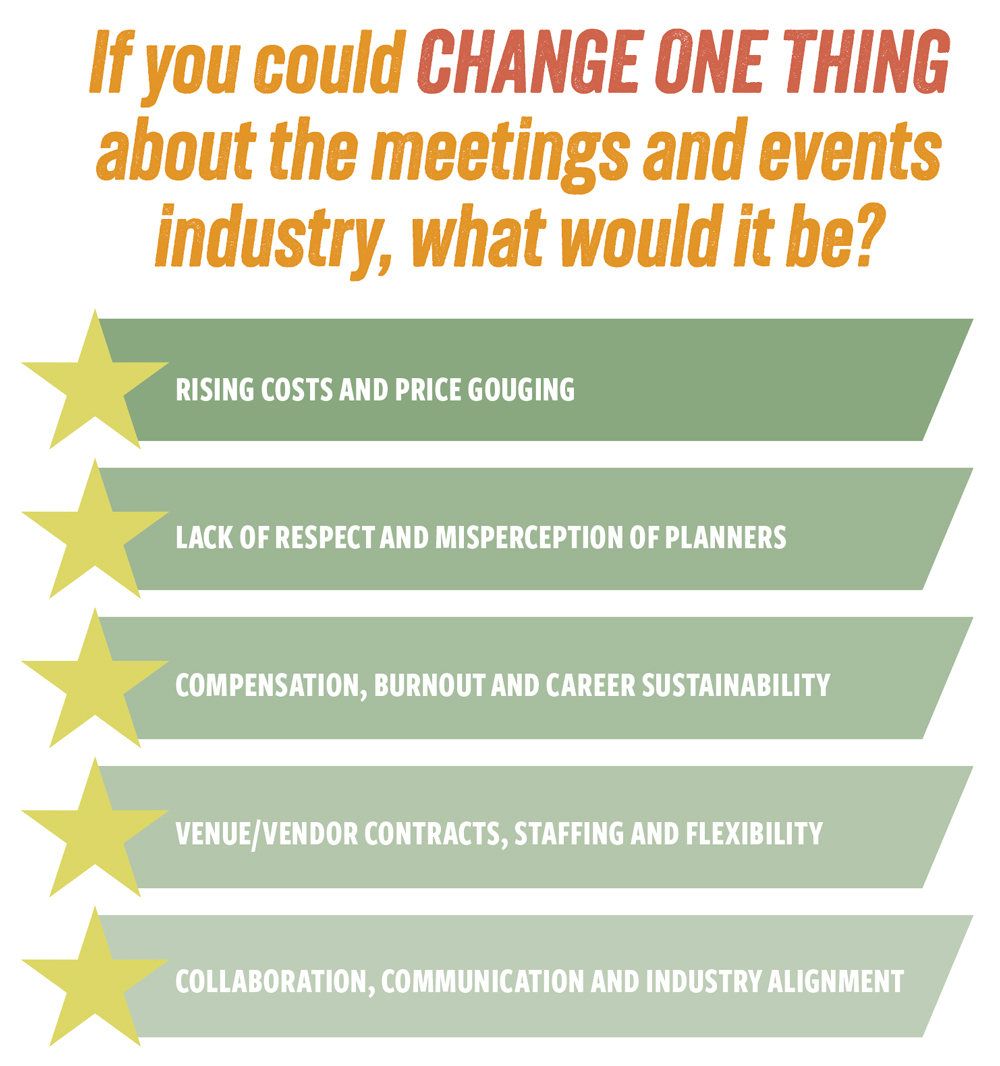
What Would You Change About the Meetings Industry?
Editor's Take:

Madeleine Willis, Content Developer, Departments & Social Media
"I remember hearing a story from one of my event management professors who was labeled as a "party planner." Like many in this industry, her diverse skillset was overlooked. In reality, the life of a planner is far less glamorous than any roaring party portrayed in The Great Gatsby. To sum up these concerns, planners' voices need to be heard, yet they often go underappreciated by the stakeholders in this industry."
AI Takeaways:
- Rising costs and price gouging: Respondents repeatedly cite escalating costs across hotels, F&B, AV, Wi-Fi, coffee, resort fees, service charges and hidden add-ons. Many describe pricing as opaque, excessive and unethical, especially for nonprofits and associations, forcing compromises in program quality.
- Lack of respect and misperception of planners: Many planners feel misunderstood, labeled as “party planners” or viewed as doing “easy” or “fun” work, while the strategic, financial and operational complexity of the role is ignored.
- Compensation, burnout and career sustainability: Respondents frequently mention being underpaid relative to responsibility, long hours, stress and lack of work-life balance, leading to burnout and early exits from the industry.
- Venue/vendor contracts, staffing and flexibility: Planners express frustration with one-sided contracts, rigid policies, ghosting RFPs, understaffing and inflexible hotels. AV monopolies are a major subtheme, along with attrition policies, room block minimums and lack of personalized service.
- Need for better collaboration, communication and industry alignment: Many responses call for better communication, shared understanding of realities, standardized practices, mentorship and stronger professional communities.
Key Signals:
We crunched planners' open-ended responses with ChatGPT and identified these specific themes:
1. Rising Costs and Price Gouging
- Coffee, AV, Wi-Fi and F&B pricing outrage
- Nickel-and-diming, resort fees, service charges
- Budgets shrinking while expectations rise
- Attendance decline due to affordability
2. Lack of respect, misperception and undervaluation of planners
- “People don’t understand what it takes”
- Lack of recognition for expertise and pressure
- Underappreciation by C-suite, clients and attendees
- Desire for professional legitimacy and advocacy
3. Compensation, career sustainability and burnout
- Low compensation vs. workload
- Burnout culture and constant urgency
- Limited upward mobility and retention issues
- Need for better career paths and fair pay
4. Venue, hotel and vendor challenges (contracts, staffing, flexibility)
- One-sided contracts and attrition clauses
- AV monopolies and forced in-house services
- Understaffed venues and slow communication
- Lack of flexibility for small/mid-sized groups
5. Need for better collaboration, communication and industry alignment
- Poor communication and siloed work
- Desire for partnership vs. transactional relationships
- More mentorship, peer support and resource sharing
- Alignment on scheduling, expectations and standards
[Related: Maritz COO on 5 Ways to Play Recent Meeting Trends]
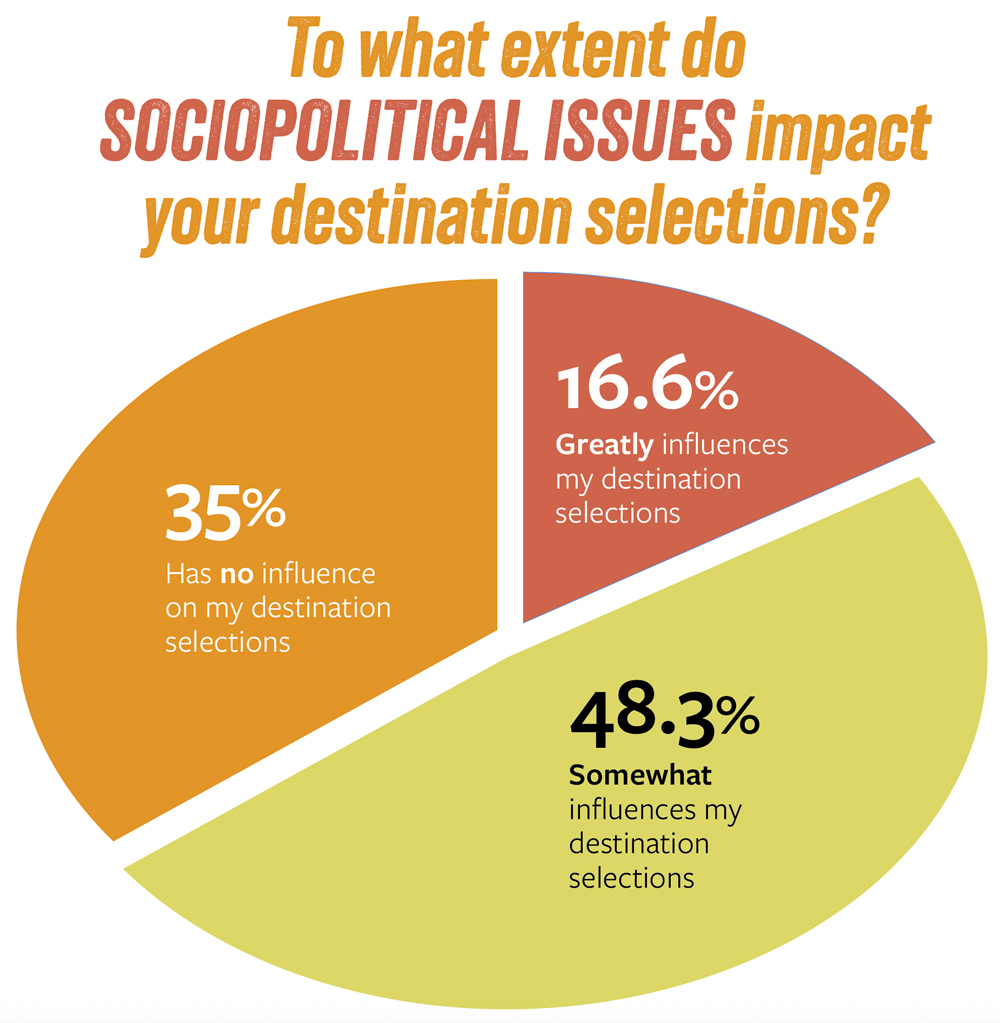
Do Politics and Social Issues Impact Your Choices?
Editor's Take:

Tyler Davidson, Vice President & Chief Content Director
"One of the most challenging aspects of producing top-tier events during this period of divisiveness is selecting a destination that doesn't offend a large number of attendees and stakeholders, especially when larger meetings and events are planned years out. While issues such as destination bans appear to be on the wane—until the next dust-up inevitably rises!—sociopolitical concerns still weigh on the minds of planners when they're selecting host cities."
AI Takeaways:
- Safety, comfort and inclusivity are top priorities: Many planners avoid destinations perceived as unsafe, discriminatory or politically extreme, especially for LGBTQ+ groups, marginalized attendees or diverse audiences.
- Sociopolitical issues matter, but impact varies: Some organizations strictly avoid certain states or countries, while others remain neutral or unaffected due to mandates, fixed locations or limited regional scope.
- Organizational values and attendee expectations drive decisions: Groups often choose destinations that align with their mission, human-rights stance, diversity commitments or membership preferences.
- Practical factors still outweigh politics for many: Budget, contracts, venue availability, logistics and overall destination appeal frequently take precedence unless safety or legislation directly conflicts with policy.
- Instability and global political conditions create planning challenges: Protests, civil unrest, international travel barriers, government funding shifts and geopolitical tensions can reduce attendance or force destination changes.
Planners' Takes:

David Twigger, Creative Director/Founder, Vermilion Events and Design LLC
"This has grown as more of an issue over the past year. On both sides of the sociopolitical spectrum, planners now have lists of cities and states 'not to source,' and for no other reason besides the locations being “red” or “blue.” I’ve been three-quarters of the way through planning a meeting and an executive will step in and say, 'We are absolutely not going there.'"

Molly C. Marsh, Director of Education and Events, AMR Management Services
"Associations have recognized that avoiding a location does not drive positive change. Rather, using the event to raise awareness or contribute financially to local programs actively fighting discriminatory legislation (through programs like Social Offset) helps associations lean into their missions in a real way. We've moved from performative statements to genuine engagement."

Ali Collins, Director of Meeting Planning, Goldman Management
"We have always been aware that certain cities are less favored by our attendees for sociopolitical reasons. It’s become worse in the last year because the National Guard is being called into cities. This affected a meeting we had in D.C. in September. I am now using new contract language."
Are Your Budgets Keeping Up With Inflation?
Editor's Take:

Rob Carey, Content Manager, Features & News
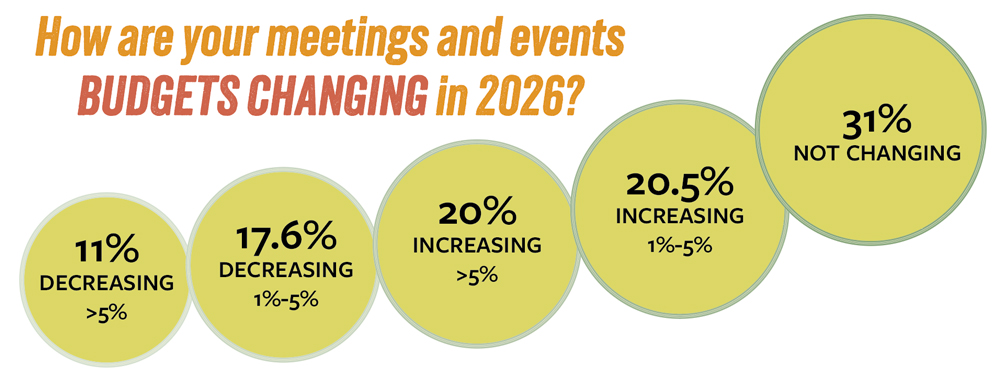
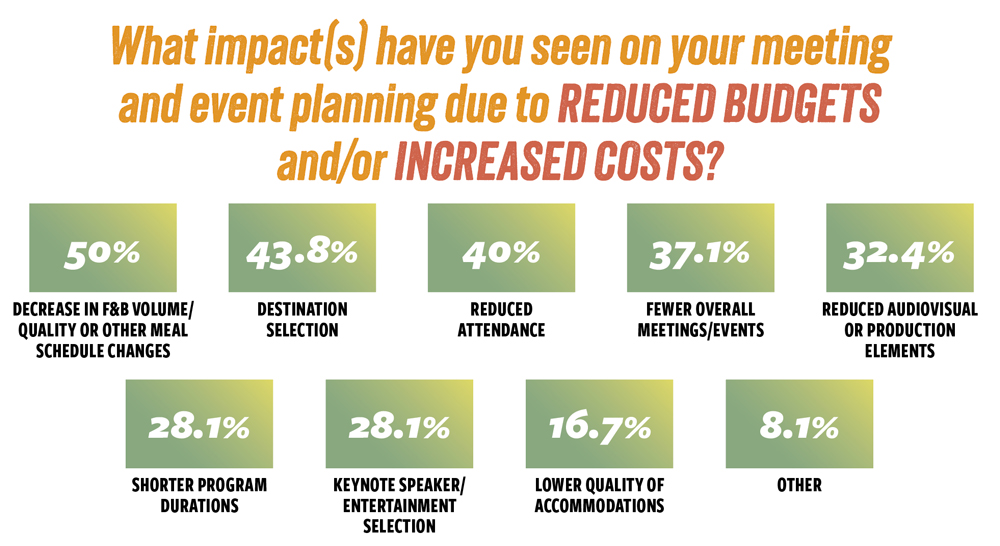
"A historically high percentage of planners are seeing budget increases—but mostly because event costs have risen well above the rate of inflation in the past year, so the increases simply maintain meeting quality. This squeezes associations most; raising registration fees would hurt attendance. Using second- or third-tier destinations, using airport hotels and scaling back F&B offerings and event production are more common now. To fulfill event objectives yet stay on budget, read proposed contracts closely and negotiate creatively."
AI Takeaways:
- Costs are rising faster than budgets: Event costs—especially F&B, AV, labor, freight, hotels and service charges—have increased sharply, often outpacing inflation, while many budgets remain flat or have been cut.
- Shift toward virtual and hybrid formats: To manage lodging, food, travel and venue expenses, some organizations are back to using hybrid or virtual events, with fewer fully in-person and fewer total events overall.
- Hard trade-offs to preserve attendee experience: Organizations are cutting “extras” (gifts, decor, entertainment, enhanced F&B) and simplifying events to control costs, while trying to protect core attendee-facing elements.
- Higher prices affect attendance and site choices: Rising registration fees, travel costs and taxes are limiting who can attend, reducing audience size at some events and forcing tough decisions on attendees and planners alike.
- Increased pressure to be innovative with fewer resources: Planners are being asked to deliver equal or greater value with less money, navigate tariffs and vendor price hikes, negotiate harder and rethink location, sourcing and event design to maintain quality.
Planners' Takes:

Annette Gregg, CEO, Society for Incentive Travel Excellence
"For our own global events, the effect is more about recalibrating scope. Agendas are being tightened, some experiences and gifting elements simplified, and there’s greater scrutiny on what truly drives engagement, education and networking value. At the same time, we continue to prioritize high-impact moments and authentic local experiences, reflecting research that finds meaningful, memorable elements are critical to program success."

Deanna Griffith-House, Account Manager, MGME
"I believe you can still create a meaningful, high-quality experience [within budget]. I’ve leaned into being flexible with dates or patterns, prioritizing high-impact elements over “nice-to-haves,” simplifying menus and leveraging relationships with suppliers. When those partners understand the big picture, it’s easier to find solutions—adjusting room sets, rethinking decor, finding more efficient AV options, etc. In the end, the experience is still the priority. Attendees remember how they felt, not whether we had an upgraded package or expensive centerpieces."

Annette O’Mahoney, Director, Conventions and Events, Konica Minolta
"A great planner knows how to minimize financial risk while still delivering unique meetings that pique the soul. Delivering such experiences on a lean budget is a skill that sets great planners apart."
What Activities Are Incorporated Into Your Meetings?
What Types of Offsite Venues Are You Using?
Editor's Take:

Taylor Smith, Content Manager, Destinations
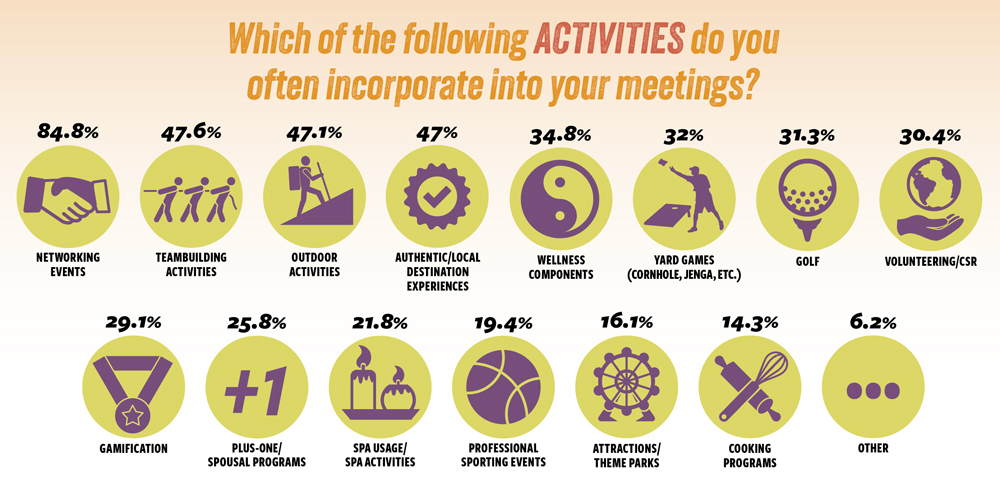
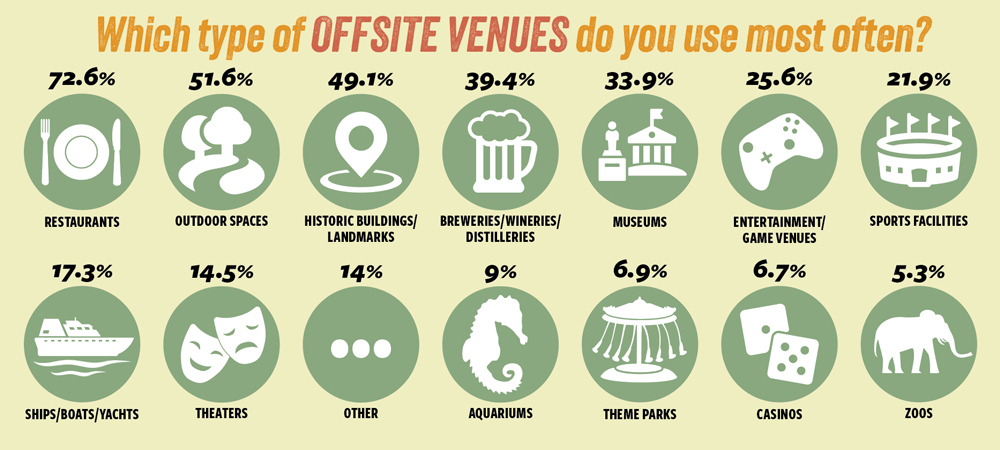
"Connecting people is our purpose in the meetings industry, so networking events and teambuilding activities topping this list is no shocker. And if there's one thing that can turn strangers to colleagues and friends in a matter of hours, it's good food. Plan networking events at restaurants to craft an ideal environment for human connection, and try to get people moving and interacting with other attendees via food stations or a "dine-around" activation."