

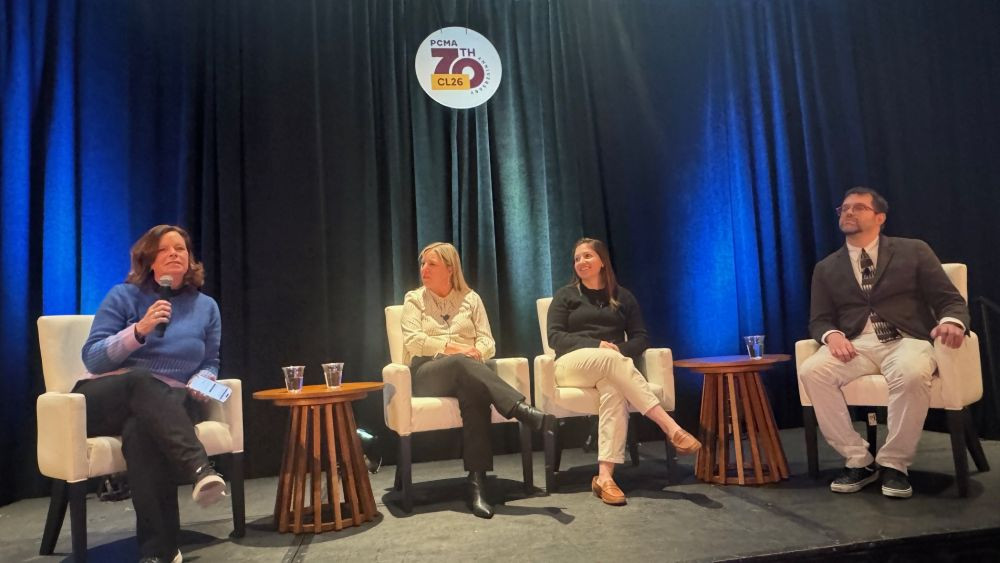
To help medical and pharmaceutical meeting planners navigate some of the big issues impacting their highly regulated business segment, PCMA held a “medical meetings townhall” during its Convening Leaders 2026 event in early January, bringing together four veteran planners to field questions from their colleagues.
The panelists:
- Molly Holt, director of meetings and events for the Heart Rhythm Society (HRS)
- Joshua Britton, associate director of meetings for the American Association for Cancer Research (AACR)
- Tanya Lowery, director, conventions and events for the American Academy of Family Physicians.
- The moderator was Debra Rosencrance, vice president, meetings and exhibits for the American Academy of Ophthalmology
Here are their top takeaways for planners in the life-sciences field.
[Related: Medical & Pharma Meetings: Straight Talk From 4 Veteran Planners (Part 2)]
Have any of you tried expanding your event audience beyond your base? Was it successful? If so, what would you recommend to others?
Joshua Britton, American Association for Cancer Research
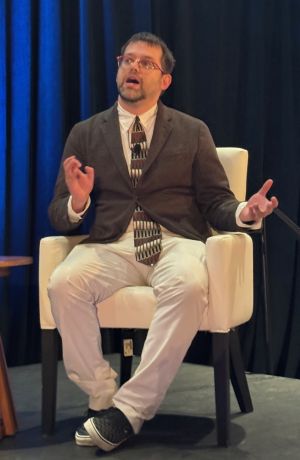
We've made a very concerted effort to draw in groups other than research oncologists and clinicians. For the past few years, we’ve offered a scientist/survivor program, which pairs research scientists with survivors of various different types of cancer. We have sessions where they work together over the course of three or four days of the annual meeting, and it's a really wonderful thing to see survivors come up with posters—they actually do their own presentations. It’s grown from maybe a few dozen people the first year to over 60 in our last annual meeting.
We also introduced a program to drive a little bit more investment, because that's what a lot of our research scientists are looking for—to be connected with investment firms and other drivers of science. So, we started a program that attaches to the [front] end of our annual meeting where we have scientists give a quick five-minute talk on their research to an audience of investors.
[Related: A Medical Meetings Expert’s Take on New Challenges Facing That Industry Segment]
Debra Rosencrance, American Academy of Ophthalmology
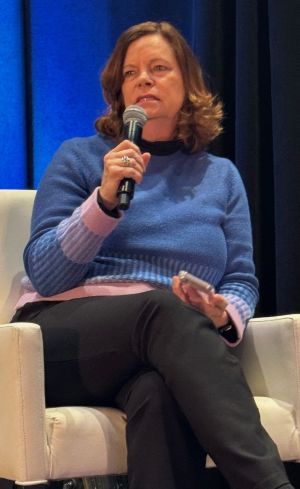
We have an innovation day ahead of our meeting held twice a year. It's trying to bring together the companies, the investors, the ophthalmologists. There's a lot of them who are chief medical officers trying to make new devices. We’ve tried to expand that.
We market to our database. But we've been marketing to the same people, so how do we find new people? We've been trying to do ad retargeting for people who simply come to our website. We also have a new social media manager who really understands it, and has been doing targeted ads on LinkedIn and Instagram.
We're trying new things, but I'm not sure that we're there yet. And I also think the social media outcome can be hard to measure. But on the other hand, it doesn't take a lot of money, so it's just another tool in the chest.
What percentage of your meetings content is suggested by external sources/members, and by those in your organization? Then, how do you form your program?
Molly Holt, Heart Rhythm Society
I would say almost 95% of our content comes externally, and the 5% that’s “internal” actually still comes from the committee of doctors. It's just led by our clinical docs team or our journals team, but it's still practitioners creating content.
[Related: How the Trump Administration May Impact Medical Meetings]
How are medical-event planners using AI?
Molly Holt, Heart Rhythm Society
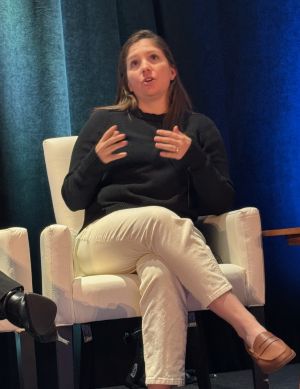
Externally, we've integrated it into our website, into our event website, into our mobile app. Attendees can ask simple things like, “What session would be under (some specialty)?” or as simple as, “Where is this session?” and get answers. Internally, we had some pilot groups test out various forms of AI, and we landed on Copilot just because it integrates with all of our platforms, and that is being rolled out this year.
Joshua Britton, American Association for Cancer Research
We use Copilot as well; it just integrates perfectly. As Molly said, the way I'm using AI is less as a time saver and more as a supplement for knowledge. One way I'm using it right now is for sourcing. I'm sure budget is kind of a pain point for everybody; we're looking at cities where we can't spend $339 a night anymore for rooms. So, if I need to go into Copilot or Destinator from PCMA and say, “What are the meeting hotels with at least 20,000 square feet of meeting space and one ballroom with 15-foot ceilings in Cleveland or Milwaukee?”…it saves me a couple hours of research on the internet.
And then I really use it for contracting. AACR has our own standard contract for a lot of the smaller meetings …and what I've found is a really useful [tactic] is to put in our original clause with all the identifying information stripped out, then put in the clause that the hotel suggested. Then ask: “What is the difference between these two, and what's the risk for us?” It's really helped me understand things that I didn't understand [regarding] legalese.
Debra Rosencrance, American Academy of Ophthalmology
One of the things we did this year is [launch our AI program] Cornelia. It is a customer service bot we debuted during the annual meeting. I think it answered over 4,000 questions. [But] our IT department was monitoring it while it was going to make sure there wasn't any “hallucinating.” One of the interesting things is that the bot could answer questions in like 15 different languages, so people were asking in different languages.
[More Medical Meetings Coverage]
Are attendees expecting to integrate AI, or are they using it once you have it?
Debra Rosencrance, American Academy of Ophthalmology
It depends on your audience. Ophthalmologists are known to be very techy. We felt we had really good adoption the first year. But I understand from other people that technology is not necessarily their friend. So, it comes down to knowing your audience.
Joshua Britton, American Association for Cancer Research
In oncology, AI is huge right now; it's one of the key growth areas. We're actually having small, targeted, specialty conferences specifically on AI oncology now, and I think it's going to become a bigger thing overall. So, we'll need to do a better job of integrating it into our meetings in a way that makes sense.
What are you doing about the last-day traffic issue in your exhibit hall?
Tanya Lowery, American Academy of Family Physicians
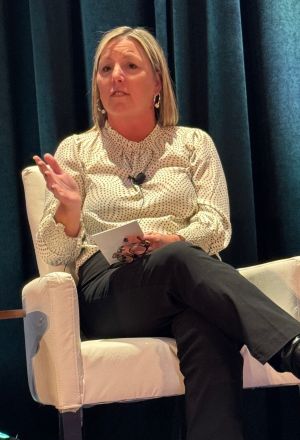
Food is a driver for our attendees, so we put a brunch on our floor. We do a resident and student conference in addition to our annual meeting, and it's becoming almost as large as our annual. It is a driver for residents and students who want to come and see those residency programs, and we're really trying to entice our exhibitors not to tear down, so that those people will want to come to the floor as well. We credit exhibitors with extra points for not breaking down.
Molly Holt, Heart Rhythm Society
We're really struggling with this at HRS. Could we shift the pattern? But then we realized it doesn't make sense physically to shift; it would cost [exhibitors] a lot more money. We are trying to figure out ways to drive attendees to the floor. We have done breakfast. We've added the programming. We’re trying to encourage our program committee to build a more enticing program for the last day. So, we are struggling with it, but I think we've gotten them on board now…So, the committee is looking to shift some what would previously have been exciting programs on our first day to our last day.
Joshua Britton, American Association for Cancer Research
Our doctors love coffee, so we make sure the exhibit hall is pretty much always stocked with coffee, even on Wednesday, the last day. The other thing is poster sessions. We have posters in the exhibit hall, and we have a poster session on the last day in the morning to try to get some traffic in…for a few last-minute connections.
How are you helping exhibitors get more traffic, or the right traffic?
Debra Rosencrance, American Academy of Ophthalmology
We realized—and maybe some of you had the same issue before the pandemic—if somebody came and said they wanted to buy a booth, we're like, “Fine, we'll sell you a booth.” But then we were also noticing a lot of these first-time exhibitors maybe weren't that relevant to the tradeshow, and then they weren't happy. It still hasn't rebounded to the pre-pandemic level and, in accordance, our exhibit hall shrank as well. Now we're being very specific about making it very relevant and to ensure that we have the density and that people are happier. I think the density of the exhibit floor has become even more important after the pandemic.
Tanya Lowery, American Academy of Family Physicians
We're kind of in the same boat; we really looked at our density. We've had to sell that case to our CFO to understand why we don't want, don't need, more exhibitors. We need more attendees for that density purpose, and to fill that hall and make it seem full. The other piece we're instituting this year is an escape room [activation] on the exhibit folder, which will be kind of fun. It's another driver to get people to the floor.
We're kind of struggling with the traffic drivers. Are they more distractors versus attractors? My exhibits manager would say it’s a distraction, just giving them intentional locations to go to. Driving them to education is another thing we put on the floor. Again, it could be a distractor, but it's getting them on the floor. Our attendees are looking more at education versus CME [continuing medical education]. They're looking at it holistically, in a different realm. And so we're trying to make sure we put as much splash on the floor as we can.
Molly Holt, Heart Rhythm Society
I think my job is to get them to the floor, and then it's the exhibitors’ job to pull them into the booth, right? Our team has done a fantastic job building exciting things on the show floor—the Puppy Park is a huge hit and it's sponsored. We have a career center, we have our products, theaters, our posters, we have our skills-training area—we’re just really building a show floor that's constantly alive and constantly something drawing them in.
From the data perspective, when you ask about the right attendee, we constantly communicate data to our exhibitors. We send out registration reports every two weeks, and we send out post-event reports—some of the information is stripped, just to comply with data firewalls—but they really do understand, at least from a title and a company perspective, who's at the meeting.
And they have started to see education as a really big driver. So, we partner with them on that, so they can host education in their booth to some extent, and then we offer a sponsorship where they can publish that education in our mobile app.
Do you have a “secret sauce” to determine fair market value for attendees; fees that are within compliance rules but not breaking the attendee’s bank?
Joshua Britton, American Association for Cancer Research
Our finance department has a very complicated formula. They set registration on a yearly basis. We do probably 15 to 18 small meetings a year in addition to our big annual and another smaller annual. Those small meetings typically lose money every year. It's an unfortunate fact.
We set registration to not bar access, especially because so many of our attendees are early-career professionals coming to present a poster and network with colleagues. So, we obviously want to be conscious of that, but at the same time we try to limit the amount we lose on a given small, special-topic meeting. Our CFO is our contract signatory, so we work very closely with [that office], but they're ultimately the ones that have the secret sauce that we sometimes get a little sniff of, but we don't always necessarily know. I wish I had secret sauce!
Read part 2 of this Q&A here: Medical & Pharma Meetings: Straight Talk From 4 Veteran Planners (Part 2)