

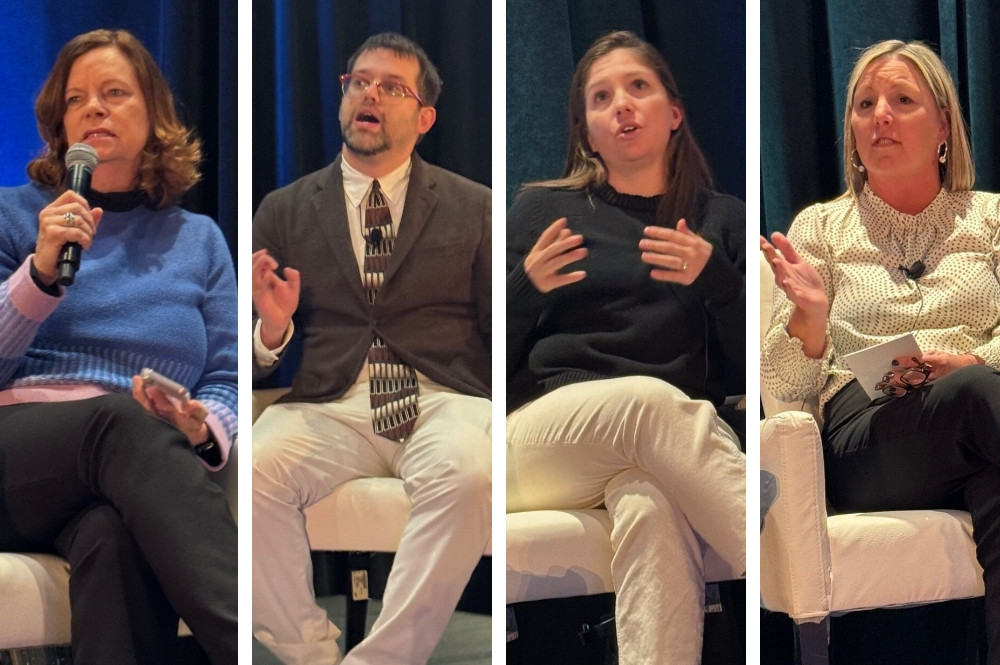
To help medical and pharmaceutical meeting planners navigate some of the big issues impacting their highly regulated business segment, PCMA held a “medical meetings townhall” during its Convening Leaders 2026 event in early January, bringing together four veteran planners to field questions from their colleagues.
The panelists:
- Molly Holt, director of meetings and events for the Heart Rhythm Society (HRS)
- Joshua Britton, associate director of meetings for the American Association for Cancer Research (AACR)
- Tanya Lowery, director, conventions and events for the American Academy of Family Physicians.
- The moderator was Debra Rosencrance, vice president, meetings and exhibits for the American Academy of Ophthalmology
We shared half of their top takeaways for planners in the life-sciences field in part one of this article. Read the remaining in part two below.
[Related: Medical & Pharma Meetings: Straight Talk From 4 Veteran Planners (Part 1)]
How involved are you in your budget process?
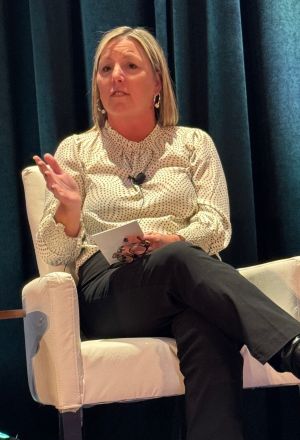
Tanya Lowery, American Academy of Family Physicians
I'm highly involved in our budget process; I am the owner of our budget. For all of our meetings, we start at a net-zero budget every year; every meeting is different, every city is different, and trying to explain that to all of our key stakeholders—our leaders, C-suite—things like that, to help them understand that and really challenging our teams to think differently. What can we cut? What can we add? How can we do the different things?
Joshua Britton, American Association for Cancer Research
At the beginning of budget season in April or May, we get a list of the meetings that we have to budget for. We get the number of people, the number of posters, in a rough location. We try to come up with a per-person, magic number that we're going to spend, that we stick to, whether we have 175 or 75 attendees. At the end of the day, if we can hit that—hit that per person number—that we come up with, then we succeeded.
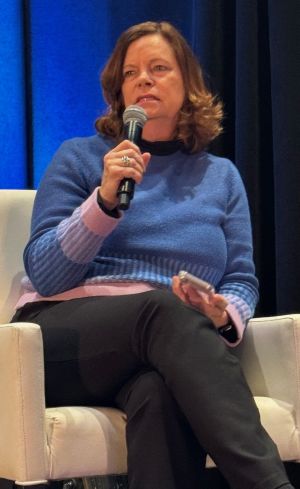
Debra Rosencrance, American Academy of Opthalmology
We get to create our own budget, and it does depend on where we travel—about three or four cities. In some cities, the labor is more expensive. In some cities, other things come into play—cancelation, insurance and stuff. I'm very blessed by being able to come up with [a budget], and if they need more money, they come back and say, “Can you raise it a little bit?” We just sit down and figure out the registration fees to make the revenue that we need.
[Related: A Medical Meetings Expert’s Take on New Challenges Facing That Industry Segment]
Do you have digital posters, or printed, or both?
Molly Holt, Heart Rhythm Society
We tried digital posters and there was a revolt, and then we went back to paper posters. So, we are back to boards, and it's in the hall. But we did try digital for one year. It technically worked, for two or three years, really well, but the attendees and exhibitors just really, really missed walking up to the posters for that whole experience. So, no digital posters.
Debra Rosencrance, American Academy of Opthalmology
We actually dropped printed posters in 2019, and when we came back from the pandemic, we didn't bring them back. What we have realized, though, is that we are missing the interaction. So, we have poster podium discussions. And to be 100% honest, I'm still not quite sure what the difference is between the two of them, but they are very popular.
We started opening those up on the first day last year and had standing-room-only. But what we're also hearing is, for the younger people, it has to be in-person in order for them to be able to come.
[More Medical Meetings Coverage]
What are the biggest challenges you are currently facing?
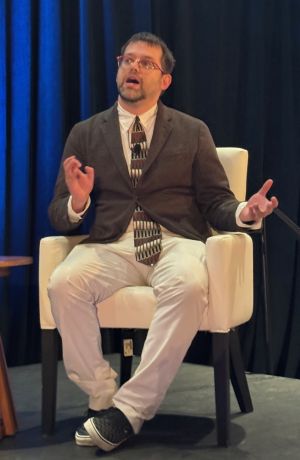
Joshua Britton, American Association for Cancer Research
I think this is quite common for everybody with a budget crunch: Grants are down. People are having to choose; they might have been able to go to three or four meetings, and now they’re cutting that down to one or two. I think we need to do a better job of marketing. Why is our meeting the meeting to come to—the important meeting? The other thing is retaining young talent, finding young talent, and after we train them, figuring out a way to keep them and keep them excited about the medical meetings industry.
Tanya Lowery, American Academy of Family Physicians
I would say it's about the same thing, and it's around attendance. It's around the competition that we face. We're family physicians, and so our attendees have lots of opportunities within state chapters; they're employed physicians, whereas when I started at an organization, we were solo practitioners or independent practitioners. So, they were leaning on us as an organization. Now they're leaning on their health systems to get their education.
So, we really have to get out and get in front of them. And I think once we get in front of our attendees, and they come to our meeting, they're sticky. They want to come back, but it's just getting to them.
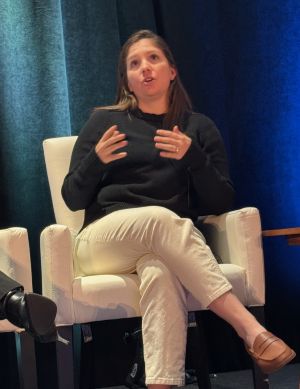
Molly Holt, Heart Rhythm Society
I feel like we're on the precipice of a large change, a large transformation—globally, yes, but in the meetings industry as well. How do we stay ahead of that trend? We have so much data, and such finite resources [to process] that data.
The second thing is, we have a second meeting that has yet to make money. That's a large challenge. What's the value proposition there and how do we turn that around?
[Related: How the Trump Administration May Impact Medical Meetings]
Have you noticed sponsors changing their strategies in recent years?
Molly Holt, Heart Rhythm Society
We noticed there was a shift from a large branding focus to a lot more focus on education. They want it to be tied to education in some way, shape or form. So, we made a conscientious effort to provide more educational opportunities. And then the marketing opportunities sometimes align with the education, so promoting the education that you're offering and expanding those opportunities.
Also, it's a really interesting shift in that our square footage has stayed relatively flat just the past couple of years. So, that's something that we've also noticed.
Debra Rosencrance, American Academy of Opthalmology
We went through a meeting redesign in 2019, and we had a consultant, and the consultant said, “You need activations. That's what people want. They don't want just banners.”
We also had this idea of a food court kind of thing [for craftspeople]. We heard from our ophthalmologists: “Hey, can you bring in some local craftsmen to the exhibit hall, because we're not leaving. We'd like to take something home, and we don't get out of this place.”
So, they came up with this concept that kind of looked like food trucks. We had a couple of local craftspeople and we sold it for, I think it was $85,000, and we had networking tables that were all branded and the food trucks were branded. The sponsor was very happy and the place was packed the whole time.
Hybrid events or virtual? What is your virtual strategy these days?
Molly Holt, Heart Rhythm Society
We had a pretty robust virtual meeting in the same pattern everyone else did: 2000, 2021, 2022. Going into this year, we'll have three livestreamed sessions and then our “virtual meeting.” And I put quotations around it because it's really just a quick-turnaround, on-demand product that they can purchase through our registration site, with the promise that they will receive content within 24 hours of the session, and then we expedite a limited number of sessions to be a four-hour turnaround.
Joshua Britton, American Association for Cancer Research
We do something similar. We livestream all the sessions from our annual meeting. They're available on the platform for anyone who's in-person registering, or you can register for virtual only. I believe they're available for maybe four months or five months. We have all the sessions that are recorded up on our website for people to stream, both in-person and virtual.
The cool thing that we are doing that we just started this past year is we are starting to use virtual meetings as an advertisement tool for our in-person meetings. We have a meeting that is kind of a mid-sized meeting for us, and our programs department is starting to develop programming that is ancillary to that in-person [event], and we'll do an hour-long webinar on Vimeo, and have some of the speakers talk about research that isn't necessarily going to be focused on in the main program, to get people excited for the program. That not only helps as a marketing tool, but you have follow-up webinars down the line to keep the conversation going, keep the content living in a lot of ways.
That’s one of the cool things we've been doing with virtual meetings that kind of got forgotten once in-person meetings came back.
Tanya Lowery, American Academy of Family Physicians
We're very similar with our annual meeting. We do not do livestreaming, we do on-demand. We record all of our sessions and provide them for 30 days to our attendees, and then you can buy an upgraded version that you can have access to for two years.
Post-Covid, all of our live meetings were under scrutiny. We’re doing lots of education studies right now and trying to learn what our learners want. Do they want to be on the ground? Right now, most of our education meetings are livestreamed for our annual meeting and a few other meetings. We are embarking on a whole new strategy for livestreaming just when I thought it was over; it's just very interesting.
With the cost and everything, we're trying to make sure that the things that we're doing on the ground are the things we really have to do in-person.
Debra Rosencrance, American Academy of Opthalmology
We took a different approach in 2020; we charged the exact same registration fee as if you were coming to the meeting. We were able to make some money that year as we had basically very little expenses. We've kept that up, and have been tinkering with it. We used to livestream a lot and then put it up 24 hours later. We're ratcheting that down to our big session rooms. We're still live streaming and then putting more up on-demand afterwards. You keep it up for four months.
We keep registration open for about three months after the meeting, and we still make a couple hundred thousand dollars after the meeting for the virtual meeting. So, we find that we are still making a great deal of money off the virtual meeting, but it is a lot of work. Our program team now is doing the live meeting and they have to deal with the virtual meeting.
And because of the volatility of the platforms—I think we're on a third platform within the last five years—so every time we have to re-do the graphics, we have to re-learn how to use it. So, it is not for the faint of heart.
How do we know when to start a meeting and how do we know when to sunset a meeting?
Molly Holt, Heart Rhythm Society
It goes back to your strategic initiatives. Something we've been grappling with is the meetings team might have an idea about how to have cost savings and when to sunset a meeting, and your executive team might have a different idea, and your board might have a third idea. Aligning those can be really, really difficult.
The internal staff, your executive team and your board have to come to an agreement about that meeting.
Debra Rosencrance, American Academy of Opthalmology
That's where understanding what the executive leadership wants, and how to talk to them, is key. We had a new CEO about five years ago, and [he wants] data. If you're going to ask him, “Can we do this,” he wants to see the data. You’ve got to learn what it important to that person and then sort of hit them with that so they can come around to your side. But it is tricky.
Are you seeing an increase or decrease in demand for meeting suites on the exhibit floor?
Molly Holt, Heart Rhythm Society
Interesting. I would have to go look at the data. We introduced off-the-meeting-floor suites, and that’s folded into our numbers. So, our sales have gone up a little bit for our suites, but I think the actual on-the-floor footprint of our suites has not changed significantly.
I would say we have obviously seen some of our larger booths build their own suits into their booth, so you could kind of go back and forth on how that impacts it, but I don't think it's something that I would say that we're actively looking at. I think it's stayed pretty stable over the last couple of years.
Debra Rosencrance, American Academy of Opthalmology
We're seeing that as well. We are selling a lot more business suites on the floor. We do have suites available in hotels and things like that, but they want access to the positions in a quick manner.
In fact, one thing that worked out really well is we have this weird schedule where, with the innovation meeting on Thursday, we only open for some of the day on Friday, so there's a lot of people that don't have anything to do.
This year, we put the business suites in the Ranch Hall so the exhibitors could have access to business suites on Friday even though their hall's not open until Saturday. And they really love that. So, we actually were able to sell even more business suites.
We've also been noticing they're bringing less equipment and having more meetings. So, there have been a lot of shifts the last couple years, at least for our meeting. In case you don't do business suites, the way that we work that out is with our general service contractor; we get a package, and then we just price the business suites higher than the cost, so that we're still making money on it. And then for an additional fee, if they want, they can write their business suite. So, there is a lot of sponsorship opportunity in these as well.
What is your advice for a less-experienced planner to rise in the profession?
Molly Holt, Heart Rhythm Society
I think part of being the leader of a meetings team is having exposure, in some way, to almost every facet of the meeting, and that's really important. And so, if there's a time in your career where you haven't done, let's say registration, and that's important for you to understand, then it's asking for that opportunity.
I think if your leader can give you that opportunity, that's really important. And maybe it's not the annual; maybe it's a smaller meeting—just being a well-rounded meetings individual, I think, is really important. And then kind of leveling up by being invited to those meetings that you might not participate in but that you can actively learn from.
Joshua Britton, American Association for Cancer Research
I would agree completely with that. You learn by doing, by sitting in the room, observing how [senior planners] deal with vendors and the convention center staff. It's having that experience now as a kind of mid-career professional, I feel really sets me up for wherever my career is going to take me next—hopefully still at AACR. I feel prepared when the time comes.
Debra Rosencrance, American Academy of Opthalmology
Every two years, I think you have to switch positions. I still, to this day, cannot figure out how you could do that, but the people who did it actually loved it, and turned out to be very well-rounded people. How can you job-share with others?
Joshua Britton, American Association for Cancer Research
Having the opportunity to mentor people has been very important for my personal growth, because I was kind of thrust into a managerial role during Covid, and I didn't really receive any training on how to be a manager, so I kind of had to fumble my way through it.
And I'll be completely honest; the first couple of people I probably worked with probably really didn't like me, but having the experience to kind of learn and grow as a people manager, I think it's been incredibly important, too. Having a team of people to work with...is so important to learn those skills that you need to be able to manage a larger team at a certain point.
Having that experience early on as a manager is very important.
How are you dealing with government funding and grant cuts?
Joshua Britton, American Association for Cancer Research
It's definitely our attendees who have lost their grant funding. Our colleagues in our foundation and our scientific research department are looking at ways of maybe creating our own grants for the first time, in clinical trials and different grants that we can actually go out and offer to maybe make up some of that funding gap because the work we do is incredibly important to the future of medical research, and there's got to be ways to fill that gap.
I think coming up with ways to fill that funding gap on our own is something a lot of a lot of our associations should try.
Molly Holt, Heart Rhythm Society
I believe the direct impact to our meeting is not noticeable right now, just because our meeting currently is not directly supported by those grants. But like I said, I think it will be seen in the research and the abstracts in the future, but we have not noticed an impact yet.
This year, our abstracts were the highest submission ever, and that's a really good point.