

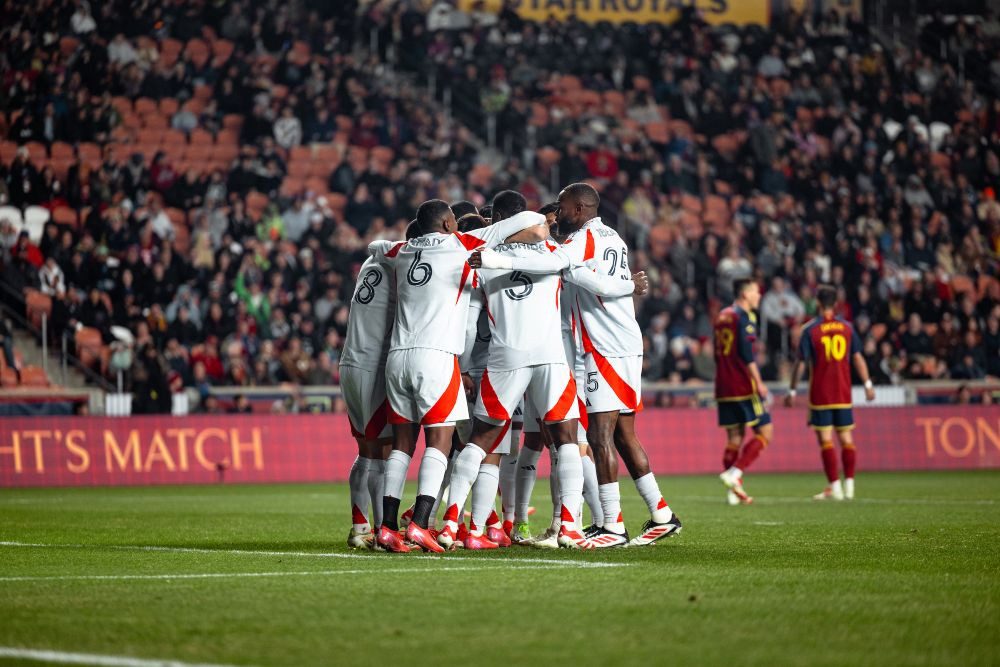
Back in 1994, when the U.S. staged its first World Cup, Dallas hosted six matches at the Cotton Bowl.
This summer, Arlington and the wider North Texas region host nine FIFA World Cup 2026 matches, the most of the 11 U.S. cities participating in the first-ever tri-national edition (along with Mexico and Canada) of the planet’s most-watched sporting competition.
Featured in our 2024 Meetings Texas supplement, Dallas Sports Commission Executive Director Monica Paul, the driving force of a team effort that scored the winning bid, was among the honorees at Visit Dallas’s 2025 Annual Meeting, hosted by perennial group favorite Hilton Anatole.
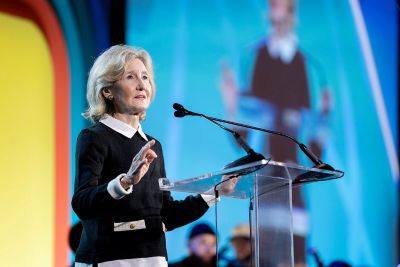
Another trailblazing Texan taking the stage was Sen. Kay Bailey Hutchison, whose name goes on Dallas’ new 2.1 million-square-foot convention center in honor of her inestimable economic, infrastructure and other contributions to Dallas.
Scheduled for 2029, the visionary new venue has a starring role this year as the International Broadcast Centre (IBC) for the World Cup, repeating its role from 1994. From January through July, the 485,000-square-foot IBC serves as the global nerve center for all TV, radio and new media operations, hosting some 2,000 national and international media representatives.
Other key Dallas operational venues include the 25,000-square-foot Food and Fiber Pavilion at iconic Fair Park, the central hub for training and supporting volunteers for all nine matches. Fair Park, site of the annual Texas State Fair, also hosts the 39-day FIFA World Cup Fan Festival.
Powering the North Texas economy and critical to World Cup success, DFW International Airport was also in the spotlight, with CEO Chris McLaughlin highlighting the airport’s record-breaking passenger growth, new international service and ongoing terminal expansions that continue to strengthen North Texas as a global gateway.
“This is what years of planning, investment and relentless collaboration look like paying off,” wrote Gina Miller, chief communications officer of the NBA’s Dallas Mavericks and an acclaimed local sports and media personality, on LinkedIn. “North Texas didn’t just win matches. We won moments that will define a generation.”
With preparations and activations already well underway, here is an overview of the seismic summer ahead.
[Related: Old and New Dallas-Fort Worth Metroplex Venues That Set the Stage for Group Success]
Arlington Rises to the Occasion
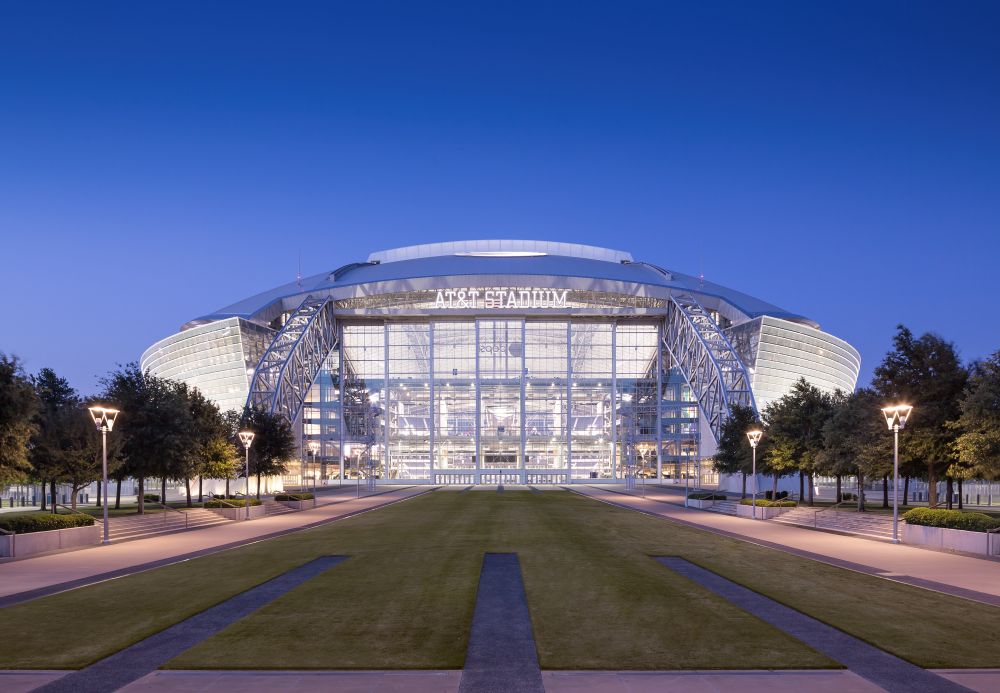
AT&T Stadium, the crown anchor of Arlington’s event, hospitality and entertainment campus, will host all nine matches. In accordance with FIFA rules prohibiting the naming of stadiums after corporate sponsors for World Cup play, the multipurpose home of the Dallas Cowboys is renamed Dallas Stadium for the tournament.
“Kiss my grits!” wrote one cheeky resident online, expressing local aggravation that the renaming was not at least Dallas-Arlington Stadium, as many had hoped for. That aside, Arlington stands to reap the rewards of dream match-ups and a major share of the projected $2 billion in economic impact from the event.

Among the eight national teams drawn for the five group stage are England, Croatia, Japan and the Netherlands, all global powerhouses with huge traveling fan support. Plus, Argentina, whose superstar captain, Lionel Messi, is guaranteed global eyeballs.
The bounty extends to two Round of 32 matchups, one Round of 16 match, and a prized semi-final on July 14.
With a well-muscled track record of hosting Super Bowls, Final Fours, MLB All-Star Games, A-list concerts and numerous other monumental moments, Arlington, with its own Sports Commission, six professional teams and eight sports venues, is a consummate sports host city. Hosting the equivalent of nine Super Bowls in one month is a level above.
With only 41% of the anticipated 54% international visitors speaking English, announced activations include creating an “Ambassador Row” of embassy representatives at Choctaw Stadium, formerly Globe Life Park.
As Deputy City Manager Jennifer Wichmann stated last year, the project “will give [us] a chance to show our visitors that Arlington is an international city capable of playing on a global stage.”
[Related: The Most Recent Property Openings, Renovations and Other Development News in Texas (2025)]
Flexible Formations
Other Metroplex cities capitalizing on the tourism boom include Fort Worth, which hosted the official team draw last December.
Organized by the North Texas FIFA World Cup 26 Organizing Committee in partnership with Visit Fort Worth, the community experience was hosted by legendary Fort Worth attraction and event venue Billy Bob’s Texas, the “World’s Largest Honky Tonk.”
Proceeds from the event, which attracted hundreds of exuberant local and international fans, went to organizations supporting youth soccer and community engagement under the World Cup Legacy Program.
Managing VIP planning and logistics for the draw was local lifestyle management firm Go Go Me Agency, which has partnered with Visit Fort Worth on concierge services for corporate sponsors hosting events during the World Cup, including assistance with venues, transportation and staffing.
“Through this partnership, we are committed to strengthening operational capacity, providing seamless concierge and hospitality support, and helping ensure the city delivers an exceptional experience for visitors, partners and stakeholders throughout the tournament,” said Go Go Me’s founder and owner, Rendee Hahnfeld.
Each team will be assigned a hotel and training facility, or base camp, where they will stay and prepare for their group matches.
Potential training locations include Toyota Stadium in Frisco (see Sports City USA) while hotels reportedly under consideration include the Omni Las Colinas in Irving, part of the city’s 11,000-plus-key collection. Minutes from DFW International Airport—a huge advantage for incoming World Cup fans—Irving’s other visitor assets, including a rich dining scene and the Toyota Music Factory (anchoring the Las Colinas Entertainment District), bode well for major tourism benefit.
Another hotel front-runner is the Renaissance Dallas at Plano Legacy West, which is ready to roll out the World Cup welcome mat with 60-plus properties, 1,000-plus restaurants, shopping and its own easy airport access and convenient transportation links.
[Related: The Dallas-Fort Worth Metroplex Is a Hotel Development Hotbed]
Creating a Lasting Legacy
The Dallas Sports Commission and FIFA are focused on ensuring that all local stakeholders and the wider economy realize a positive impact from the World Cup. Maximizing the moment was a topic of U.S. Travel Association President and CEO Geoff Freeman’s keynote address at the Visit Dallas Annual Meeting.
“The opportunity before America is extraordinary, and Dallas is no exception,” Freeman said. “With nine World Cup matches and more than $1.5 billion in projected impact, Dallas and the U.S. will take center stage before a global audience. Our focus must remain on the fundamentals—infrastructure, security and the traveler experience. When we execute on those priorities, the return will be extraordinary for Dallas, for Texas and for the U.S. economy.”
According to a FIFA-Deloitte study, economic impact could reach $2.1 billion.
For Paul, creating a lasting legacy for North Texas is paramount, which she addressed on a panel discussion with her host city counterparts from Philadelphia, New York/New Jersey, Houston and San Francisco at the Smart City Expo in NYC last April. Focal areas include opportunities for small business and underserved communities, sustainability, human rights and educating locals on the unique energy and passion of soccer and its fans. The future of North Texas youth soccer is also a top priority.
“The opportunity for young kids to be able to potentially see their idol play, and what we can truly do through this World Cup for legacy in the sport of soccer, but for our region, for the overall sports environment here locally,” Paul recently told a local news station. “It’s hard to kind of put into words the magnitude of this.”
Frisco’s ‘Sports City USA’ Ecosystem
First there were the Tawakoni, Wichita and Kiikaapoi (Kickapoo) tribes that for millennia inhabited the tall-grass prairie lands of the future North Texas region. Then came the settlers and epic Longhorn cattle drives of the latter 1800s, and in 1902, the railroads, when the community of Lebanon was renamed Frisco City, later Frisco.
Over the ensuing century, the small farm town 25 miles north of Dallas ambled along before a city council whiteboard session in 2001 changed everything.
For the sleepy community of 5,000 people and “a lot of cows,” the agenda topic—“what are your wildest dreams for something different to set Frisco apart?”—may have seemed out of left field. The answer was sports, by way of developing land close to downtown and the Stonebriar Mall into a minor league ballpark.
Embracing the vision, principals at that discussion, including George Purefoy, the city’s first manager, Ron Patterson, former assistant city manager, and former Mayor Mike Simpson, set Frisco on track for rapid and dramatic transformation.
Their first-hand accounts of this visionary conversation kick off Where Greatness Grows: The Story of Sports City USA, a seven-part docuseries that premiered last September in tandem with the official launch of Visit Frisco’s official Sports City USA brand.
Each short episode reveals how once off-the-radar Frisco became a sports magnet.

Fittingly for the farm town, a farm team, the Frisco Rough Riders (Double-A affiliate of the Texas Rangers), got the ball rolling in 2003 at new-build Dr Pepper Ballpark, now the multipurpose, 10,216-capacity Riders Stadium.
Visit Frisco debuted that same year, along with Comerica Center, the official practice facility and executive offices of the NHL’s Dallas Stars. The 6,000-capacity event-capable venue is also home to the NBA’s Dallas Mavericks’ G League affiliate, the Texas Legends, and the Dallas Pulse, a women’s Major League Volleyball expansion team starting play this month.
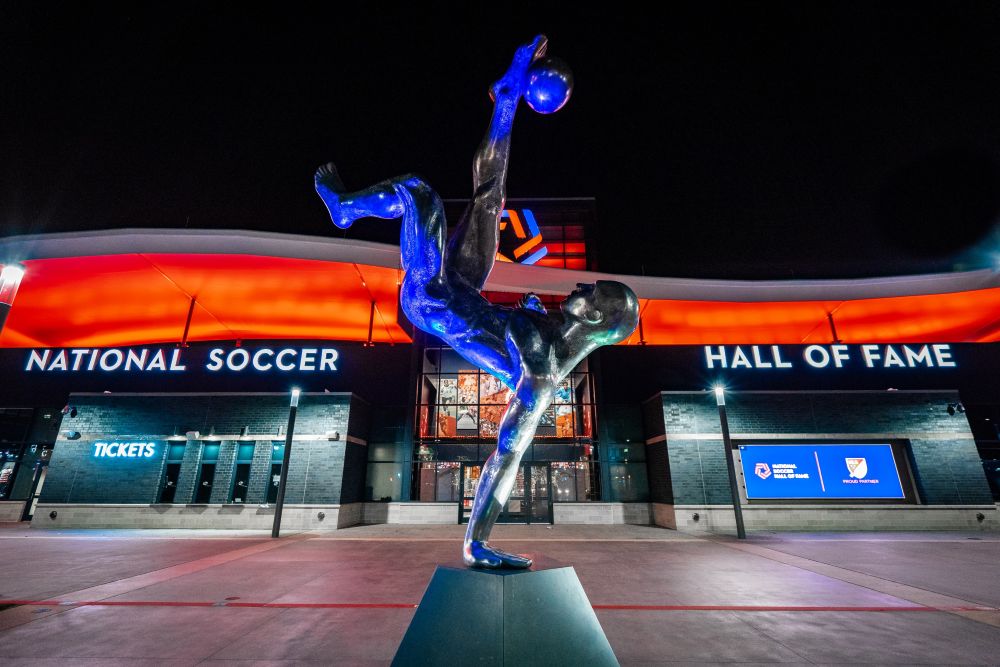
FC Dallas of Major League Soccer and its 20,500-capacity Toyota Stadium (currently undergoing a $182 million overhaul) arrived in 2005, followed in 2018 by the event-capable National Soccer Hall of Fame. Celebrating its 10th anniversary this year, The Star is the Dallas Cowboys’ event-capable world headquarters and training facility.
More “greatness” came in 2022 when PGA of America relocated from Florida to Frisco, followed in 2023 by the adjacent 600-acre, 500-room Omni PGA Frisco Resort, offering 127,000 square feet of highly versatile space.
There’s also cricket, the Frisco Pandas of the Professional Pickleball League and sports-meets-comedy “trick shot” sensations Dude Perfect, which opened a new $5 million, 80,000-square-foot event-capable venue in Frisco last year that can be booked for private in-person performances.
With a dozen-plus professional and collegiate sports organizations, five major stadiums and multiple championship-level training and game facilities, plus sports medicine, sports tech, eSports and research centers, the Frisco sports narrative extends beyond the teams and venues to an “ecosystem” of innovation and growth through sports.
Groups can harness this culture in myriad ways, from attending sporting events, venue rentals and post-game entertainment to engaging with the sports community for education, speakers and experiences.
Frisco’s remarkable sports evolution has strong Native American roots. In Kickapoo culture, traditional games including long-distance running, wrestling and early team sports such as lacrosse and stickball were essential for physical health and community building. According to information on the tribe, “the playing field became a microcosm of the community itself, where cooperation, healthy competition and shared experience strengthened the bonds that held the people together.”