


The revival of the Olympic Games is complete, and it’s a rousing victory for in-person events in general.
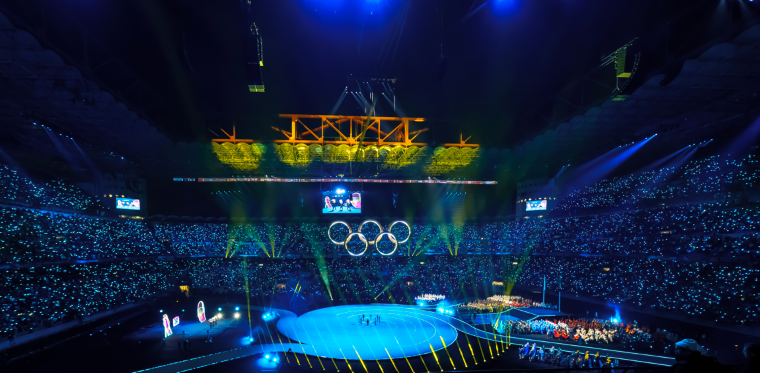
After the dazzling spectacle of the 2024 Summer Olympics in Paris, the 2026 Winter Olympics in Milan-Cortina, Italy, followed suit with its own memorable extravaganza.
The result: North American viewership of the Milan-Cortina games is more than double the viewership of the 2022 Winter Olympics in Beijing, China. Further, in a time of heightened tension and hostility around the world, “the world needs events like this one,” said Christophe Dubi, the executive director of the Olympic Games, in this February 15 article from The Wall Street Journal (WSJ).
As any meeting professional can tell you, the host destination is a huge factor in making an event so successful. For the 2014, 2016 and 2022 Olympics, “the Games were held in the middle of autocracies, the middle of pandemics and the middle of nowhere,” said the WSJ article. “They burned money organizing events that no one attended [and] they installed them in time zones where no one could see them.”
This time around, however, “the stands are packed inside the venues,” the article noted. “Up in Bormio and Cortina, alpine skiing has found a postcard backdrop of actual Alps. And after Games [in Tokyo in 2021 and Beijing in 2022] held without fans on glorified soundstages, more than a half-million spectators have descended on Northern Italy.”
Further, Milan-Cortina has made it a point of pride that 85% of its competition venues were already existing or are temporary, rather than being purpose-built only to be reclaimed by nature and crumble away, as has happened many times before.
Meetings-Industry Leaders Enhance the Message
With hybrid events still part of the meetings landscape and other technologies on the advance—especially AI—industry heavyweights are taking this moment around the Olympics to make the case about the enduring advantages of in-person events for maximizing human performance, satisfaction and motivation.
First, Julius Solaris, founder of events-industry consultancy Boldpush and one of the most recognized names in the business, will deliver a presentation on March 15 at the influential SXSW conference in Austin, Texas. The topic: the present and future of live experiences.
Here is Solaris’ description of the session in the SXSW online agenda:
Events have been the most sought after B2B marketing channel over the past four years. In the age of AI and deep polarization, in-person experiences offer the perfect outlet for multiple generations to gather and engage with brands. But events are not easy! What is working today and how are brands engaging offline? [This will be] a data-backed journey with a clear objective, helping you make your events more attended, sponsored and engaging.
Besides Solaris, another industry leader emphasizing the exclusive benefits of in-person events is Michael Massari, chief sales officer for Caesars Entertainment. In a January company podcast, he noted that AI will only make face-to-face experiences more critical.
“I think AI is effective and helpful and speeds things up… it will help us be more productive. But it is on the periphery [of the events industry] and I don’t think it will change the core,” he said.
“I recently heard someone say that in the next two to three years, AI video is going to become so effective that the only way to arbitrate truth will be to get in front of somebody and look at them as they are speaking to you,” Massari noted. “So, I think face-to-face meetings will only become more important, and I think companies will see them as a strategic investment rather than an expense… Unique collaborative experiences that get people to think about the world and the communities we live and operate in—these provide knowledge in a way people will retain.”
Looking Ahead
Lastly, the International Olympic Committee (IOC) expects the wave of excitement for its spectacular quadrennial gatherings to continue as the IOC prepares on two fronts for the 2028 Summer Olympics in Los Angeles.
“One is the logistics—pretty boring,” Dubi said, as any professional event planner would. “The second is the magic. This is what gives you goosebumps, and stars in the eyes.”
Again, spoken like someone who understands the power of events.