
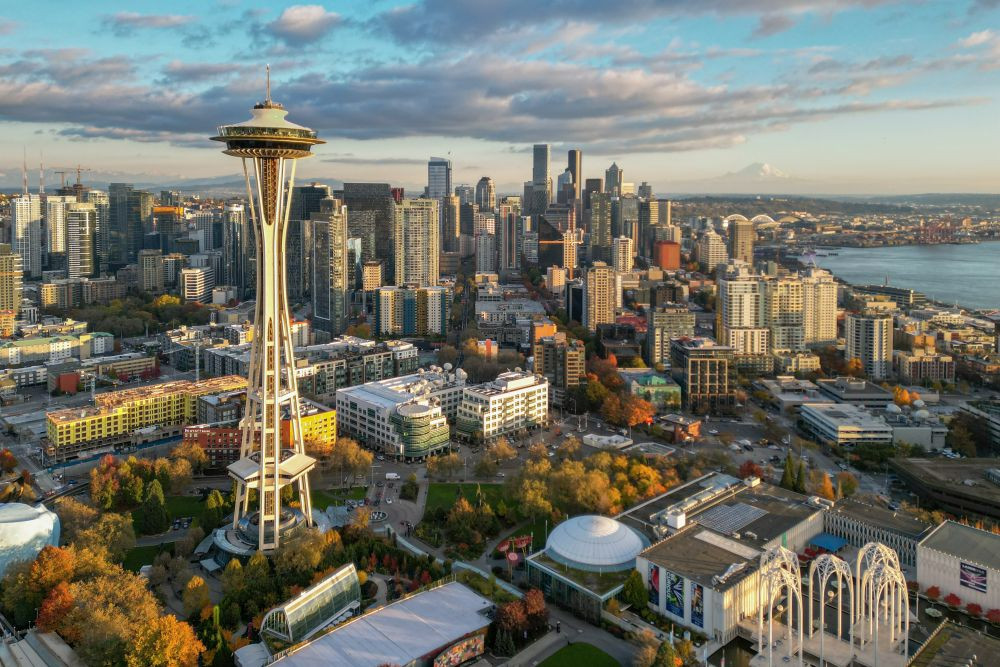
Seattle is one of the 20 largest metro areas in the country, ranking 18th in population size and 15th by land area. The destination’s big-city amenities include everything a meeting planner needs to host events from executive retreats to citywide conventions.
But as many of these meetings-friendly metro areas continue to adapt and evolve—upgrading facilities, opening new hotels, expanding accessibility and more—their competitive edge in the destination-selection market is becoming less about having what every other destination has and more about having something that sets the destination apart from all the rest.
For Seattle, that something is its densely packed downtown core, which is just eight blocks wide and home to two convention center buildings and dozens of hotels.
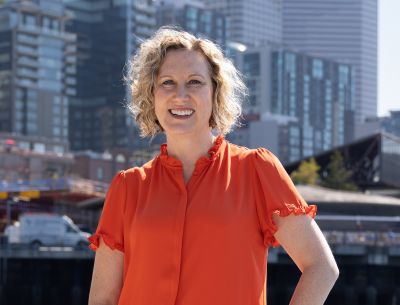
“What often is surprising [to meeting planners] is just how compact and connected our downtown core truly is,” said Kelly Saling, chief business officer, Visit Seattle. “In 2025, researcher FitFlop named Seattle the most walkable city in the U.S., as seen in Travel + Leisure.”
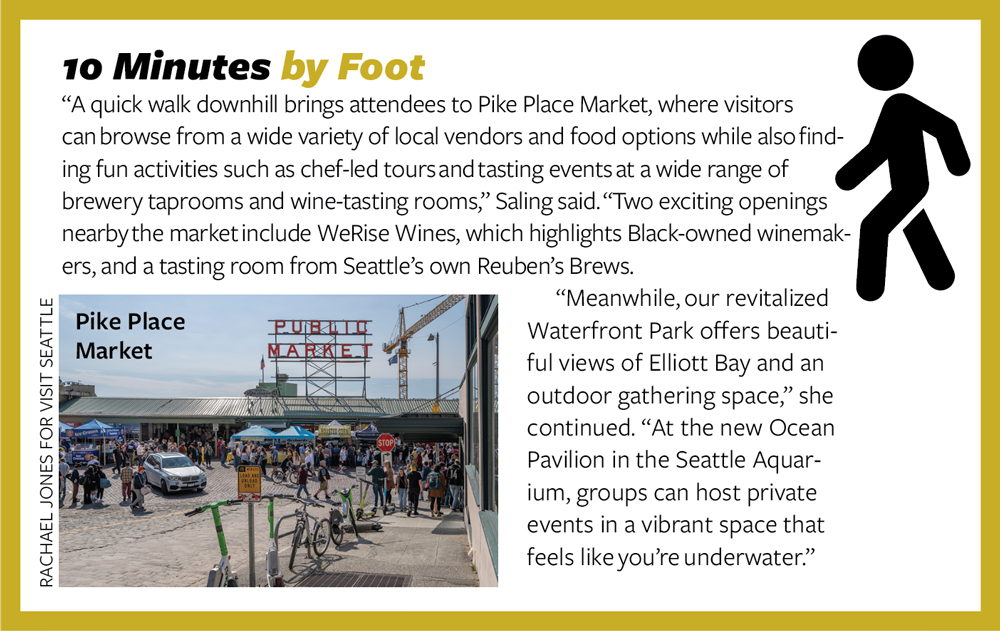
Attendees and business travelers can land at Seattle–Tacoma International Airport (SEA), hop on the city’s Link light rail and be in the heart of downtown in just 40 minutes, no rental car or airport transfer needed. From there, they have easy access to both Seattle Convention Center buildings—Arch and Summit—as well as 70 downtown hotels and attractions like Pike Place Market, Seattle Art Museum and the Space Needle.
Also nearby is the newly unveiled Waterfront Park and its Overlook Walk, a long-term redevelopment that added parks and pedestrian connections, connecting neighborhoods like Pioneer Square with the waterfront and Pike Place Market. (Fun fact: Seattle has 6,000 acres of parks, and 99% of residents live within a 10-minute walk of one!)
“Accessibility and inclusivity in Seattle aren’t an afterthought,” Saling said. “When meetings are here, you get to accomplish the work components but also easily lean in to exploring or heading to a quiet spot to call home—it’s about the whole human, not just the work human.
“For conference and event groups, Seattle’s compact downtown core offers many group amenities that help make planning easier, and the event-attendee experience stronger,” she added. “The advantage of hosting an event in Seattle goes beyond its walkability; it’s an opportunity to meet in a world-class city truly carved out of nature.”
[Related: New Meetings Happenings in Seattle, Spokane, Portland and Boise]
Getting Around Seattle
There is a wide range of ways to get around Seattle’s downtown core, including many convenient public transportation options that allow planners some wiggle room in the budget and attendees the ease of moving throughout the city.
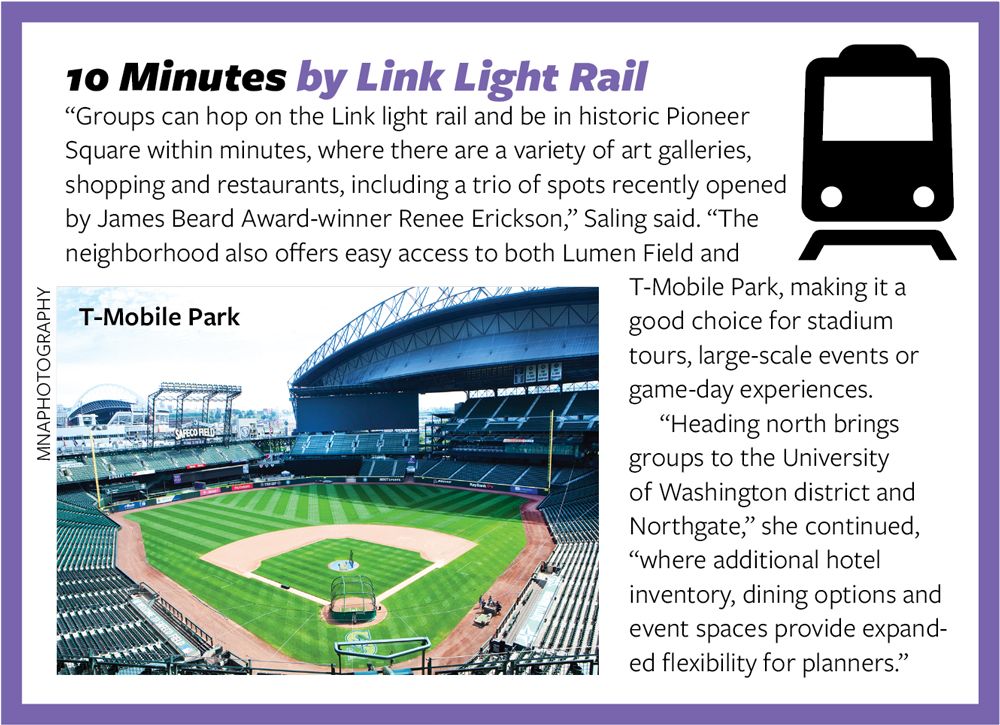
“Our Link light rail system is a popular choice,” Saling said. “It connects SEA directly to downtown, near the convention core, making arrivals and departures seamless for large groups.”
The Link light rail reaches beyond the urban core, too; at the end of March, the system extended across Lake Washington to Seattle’s Eastside, connecting downtown to the nearby cities of Redmond and Bellevue and marking the first light rail to ever cross a large body of water.
“This allows for attendees to stay across a wider geographic area if they desire,” Saling said, “all while still moving efficiently between venues and event sites.”
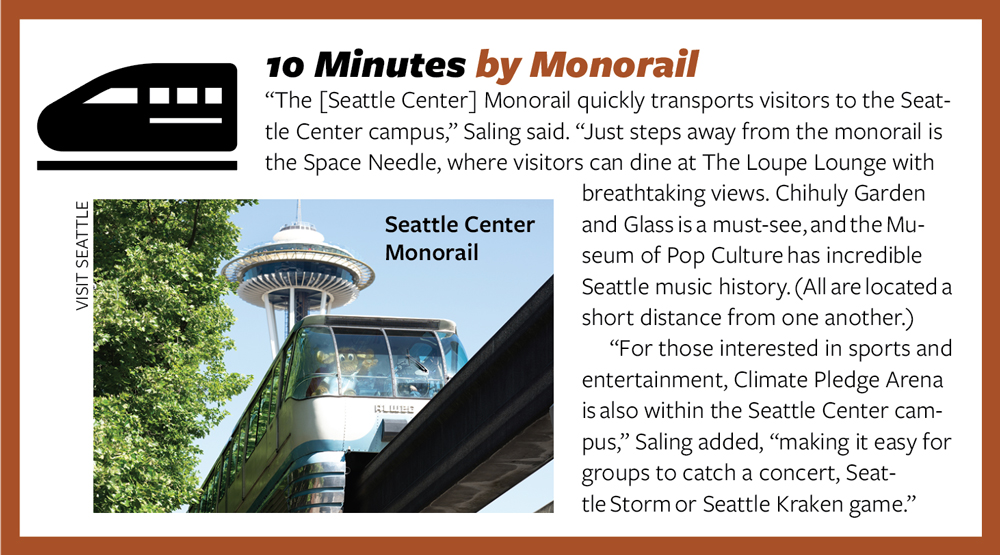
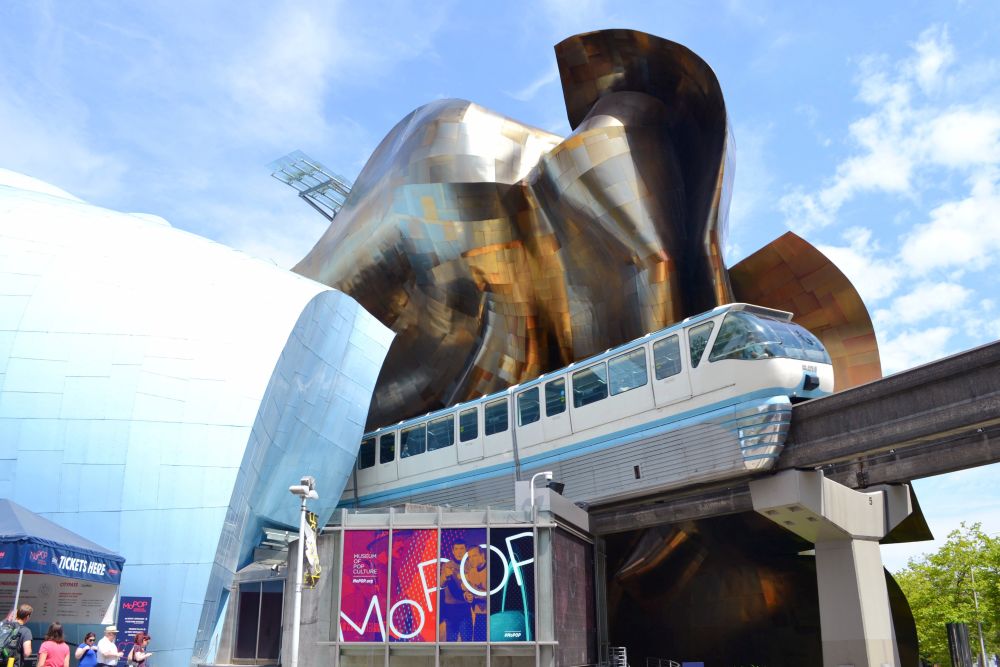
The Seattle Center Monorail is another favorite for groups and business travelers, providing a quick, direct connection between downtown and Seattle Center—the entertainment, education, tourism and performing arts center in Seattle’s Lower Queen Anne neighborhood.
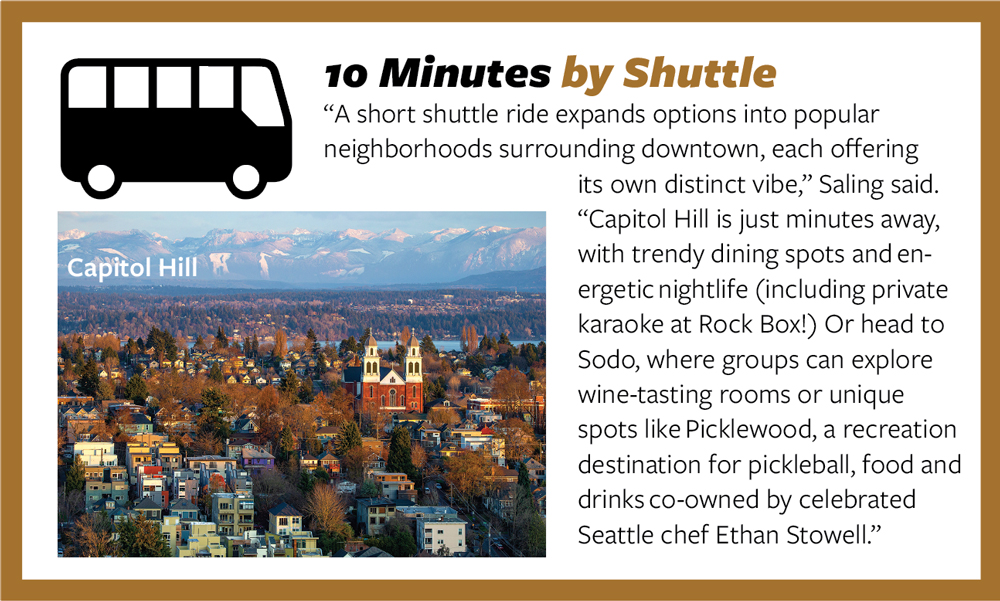
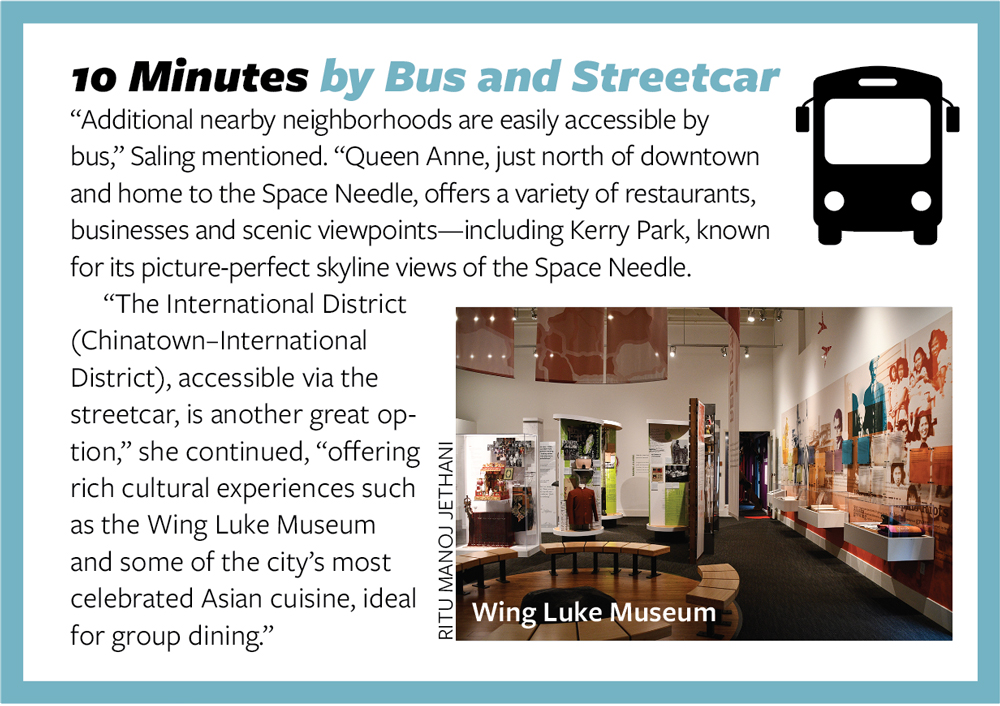
Attendees looking to explore the greater Seattle area can use the city’s extensive network of buses and streetcars with links to routes in key neighborhoods, and planners looking for a unique Pacific Northwest transportation experience for their groups can opt for water taxis and ferries to areas like West Seattle and Bainbridge Island.
“For many groups, the easiest approach is a combination of walking and transit,” Saling said. “Since Seattle’s downtown core is highly walkable, this allows attendees to move between hotels, restaurants and attractions on foot, with public transit serving as a simple backup for longer distances, allowing for stress-free traveling.”
[Related: Experiencing 24 Hours of ‘Bleisure’ in Seattle as a Meeting Attendee]
Starting at Summit
The Seattle Convention Center’s sustainably designed, LEED Platinum-certified Summit building opened in early 2023, offering more than 248,000 square feet of total exhibition space, 573,000-plus square feet of event space, a 58,000-square-foot ballroom and 62 meeting rooms.
Since its opening, Summit has served as home base for many meetings and conventions groups convening in Seattle. Starting at Summit, here’s what groups and meeting attendees can get to in just 10 minutes.