


With a fresh squad and a new head coach, an unlikely competitor made it to the Elite Eight round of the 2026 NCAA Men’s College Basketball tournament in late March, bringing even more energy to an already frenzied annual event.
That would be the University of Iowa, who advanced to the regional finals for the first time in 39 years. Their competition in that round were three other teams from their conference, the Big Ten: The University of Michigan, Purdue University and The University of Illinois.
Furthermore, the success of Indiana University in the 2026 College Football National Championship marked the third consecutive year a Big Ten team claimed the title.
The Big Ten’s strong sports following stirred a desire in Gina Speckman, executive director of Chicago’s North Shore CVB, and some fellow DMO professionals to create an easy travel experience for Big Ten fans to attend the conference’s sporting events. Enter Cities of the Big Ten, a volunteer coalition comprised of DMO professionals who are driving visitors to college cities.
[Related: Ann Arbor, Michigan’s Tech‑Ready Meeting Venues Offer Onsite Testing Facilities]
The Big Ten is having no trouble making a name for itself on the field and in the arena, but when it comes to marketing the destinations to visitors, the assist goes to the DMO coalition that steps in to sell the cities as a destination.
The coalition taps destination professionals from nearly 20 college towns to market the best experiences, attractions and venues in their area.
The coalition was a necessity for increasing visitation to the service areas of the Big Ten cities.
“College towns offer a lot,” Speckman said, but what mattered most to these destination professionals was looking at the cities through a different lens; the visitor lens.
“Universities worry about their students. Towns that universities are in worry about their residents,” Speckman said. “But for a DMO, we’re looking at everything that is in a city and curating what would make a great guest experience, which isn’t a priority for the other two.”
When the coalition started more than 10 years ago, the conference consisted of 13 universities located across the Midwest. But with more teams came more marketing responsibilities. As the Big Ten grows, so does its revenue opportunities.
In Champaign-Urbana, Illinois; Iowa City, Iowa; and Lincoln, Nebraska, DMO professionals utilize university spaces as unique, offsite venues for business groups.
The University of Illinois
Gina Scarpetta, vice president of sales at Experience Champaign-Urbana, sees the University of Illinois as her “sidekick.”
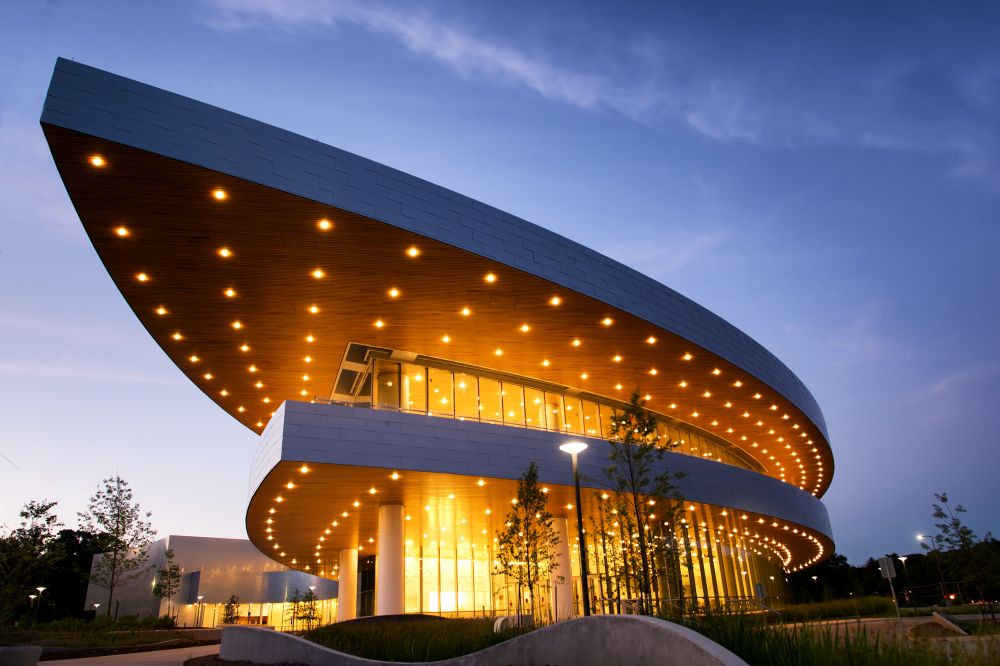
Scarpetta works closely with the University of Illinois’ Office of Conference and Events. The office was formed three years ago to focus on attracting large-scale events.
“Universities are so large and can be somewhat cumbersome to work with—so many different departments,” she said. “They felt that it made a lot of sense to put a dedicated group together that would make it easy for meeting planners and convention planners to work with the university and get in touch with the right people quickly and efficiently.”
Scarpetta envisions her position in the group as the person who adds “color and excitement” to an already robust community.
“We work hand in hand with that group,” Scarpetta said. “When it comes to assisting with hotels, we’re familiarizing them with all the attractions and activities that are in the area while conference attendees are onsite.”
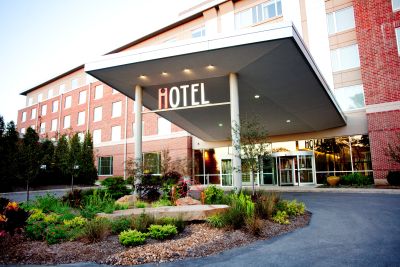
Scarpetta also represents the university at tradeshows. In her collaboration with the university, she finds the university-owned Illinois Conference Center and the adjacent I Hotel, which is managed by the university, are used most frequently for meetings in Champaign-Urbana.
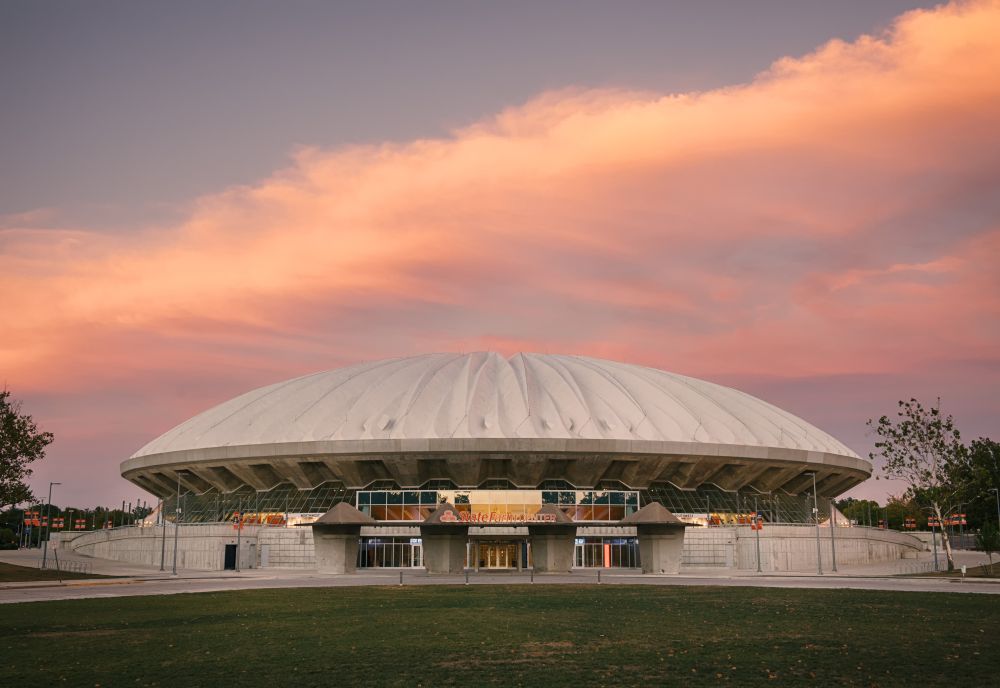
The conference center—which offers 70,500 square feet of meeting space—is also used in tandem with the University of Illinois’ basketball arena, State Farm Center.
The 16,000-seat State Farm Center is the second-largest arena in Illinois, trailing only Chicago’s United Center.
Scarpetta said these university spaces are “modern spaces where all of the technology and AV needs are included, which is nice for meeting planners,” she said. “Almost all of their spaces are equipped with projectors, screens and audio and visual microphones included in the price, so it’s not a lot of nickel and diming.”
And for conferences at the destination, the best is still yet to come. Last May, the university and DMO were awarded a bid for the National Order of the Arrow Conference, set to take place in July 2027.
[Related: Meet in Illinois' Historic Capital and Celebrate America's 250th]
Order of the Arrow is an immersive leadership conference produced by Scouting America. The conference occurs every two years, with the organization inviting the best and brightest scouts from across the U.S. to showcase innovation and celebrate service.
The conference, which expects over 8,000 attendees, will last one week and is anticipated to generate more than $10 million for the local economy.
“They’re going to utilize all of the Illinois Conference Center, the State Farm Center and Gies Memorial Stadium Grange Grove, which is the giant grassy area where people typically tailgate,” she said. “They’re going to utilize dorms, residence dining halls; so really kind of taking over campus.”
Scarpetta shared why she thought her destination stood out among others when given the opportunity to bid for the conference.
“Just being able to showcase the spaces in the community as a whole really influenced their decision because it was the whole package,” she said.
The University of Iowa
Modern, artistic, historic and athletic.
“Every venue has a story,” said Stacey Houseman, vice president of sales at Think Iowa City.
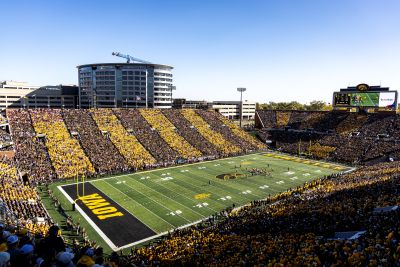
Planners and attendees have the opportunity to go behind the scenes in Kinnick Stadium’s pink locker room for away guests, which the NCAA deemed a “calming and infuriating” tradition unlike any other.
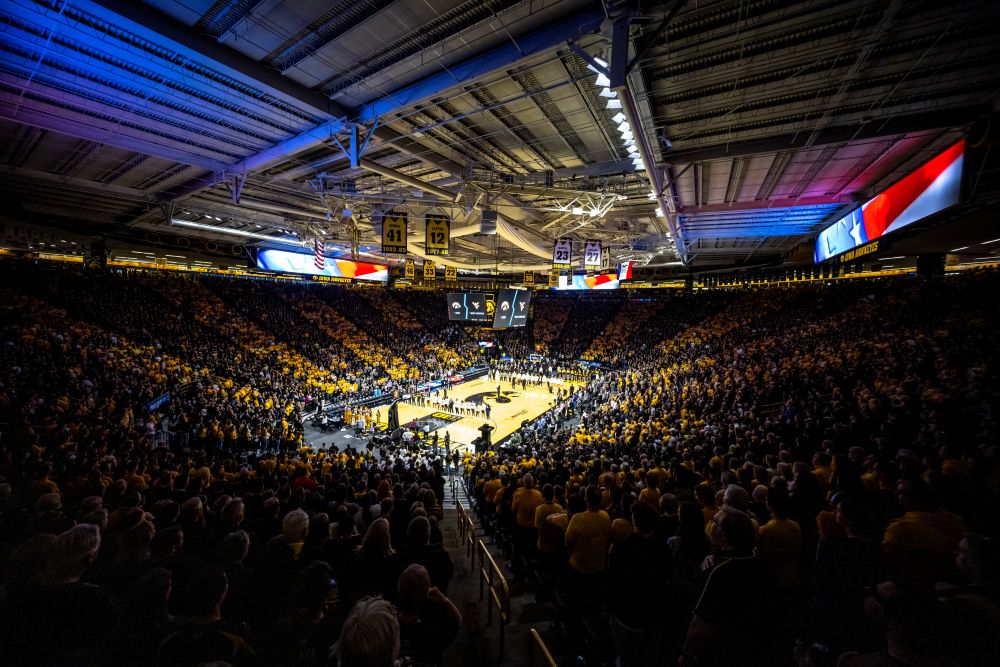
Hancher Auditorium, Houseman’s favorite building on campus, was built after significant flood damage totaled the original building in 2008. Carver Hawkeye Arena, the four-year home of hoops superstar Caitlin Clark, is gaining traction as a private events venue because of the strong passion centered around women’s basketball over the last few years.
Indeed, every venue has a story.
“They’re very much a common topic of conversation in any face-to-face interactions that I have with clients,” she said.
For the Iowa City DMO, The University of Iowa is a large piece of its destination.
“The University of Iowa is such an integrated part of Iowa City and Coralville. I mean, our backyard really is home to major research and education,” she said.
When planners tap these university spaces, they not only get a unique offsite venue, they get an experience—the college experience.
[Related: Green Gatherings: Meetings and Offsite Activities in Eastern Iowa Are Prioritizing Sustainability]
Houseman sees meetings and events at the university as a revenue stream that was previously “untapped.”
“I think there’s lots of opportunities for groups that are here on a one-time or regular basis,” she said.
As a partner of the university, Houseman includes its spaces as part of her site tours and bid proposals.
“The university [now] more than ever really wants to continue efforts to do some of those private rentals,” she said. “And if the client needs spaces outside the ballroom, then that’s the direction we’re going to gravitate toward because they are right there, they’re beautiful and well maintained.”

Other spaces planners can take advantage of at the University of Iowa include the Stanley Museum of Art. Also a victim of flooding from the Iowa River, the new venue opened in 2022. The renovated museum can host gatherings for 70 to 100 guests.
Voxman Music Building is a 190,000-square-foot space. The building features a 700-seat concert hall and 200-seat recital hall. The historic Old Capitol Museum is also available for private events. The gold-domed building sits at the center of Iowa’s campus and was home to the state’s original state capitol before the state government moved to Des Moines.
“They also do private events very well and they have a couple of different places that you can do them within the building,” Houseman said. “Just seeing the history and tenure of how our legislature used to operate is pretty fascinating because it really is like taking a step back in time.”
So, when it comes to using different offsite venues at Big Ten universities, Houseman said, “it’s a no-brainer, right?”
The University of Nebraska
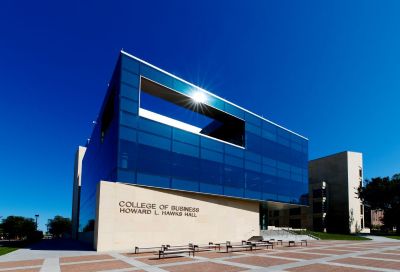
Derek Feyerherm, vice president of operations and development at Visit Lincoln, spearheaded the Cities of the Big Ten coalition alongside Speckman.
It all started with a meeting.
After Nebraska joined the Big Ten conference in 2011, the 13 universities gathered in Rosemont, the city where the Big Ten Conference is headquartered. The group gathered to share experiences to see how they could benefit each other.
“We helped cross-promote each other,” he said. “We would attend tradeshows with one another, that way we had more selling power because we had more communities behind each other.”
Feyerherm believes in the power of establishing strong relationships with local DMOs. It’s why he led the charge to build relationships with other destinations in the conference. It’s also how he established a great partnership with the University of Nebraska.
Visit Lincoln has a sales manager dedicated to working with university department heads to encourage them to host their events in Lincoln. The salesperson helps draw up contracts and provide visitor information, all while giving the university exposure.
“We’re here to help educate them on ‘it’s not as daunting as you think it may be,’” he said. “We’re here by your side the entire way, from start to finish.”
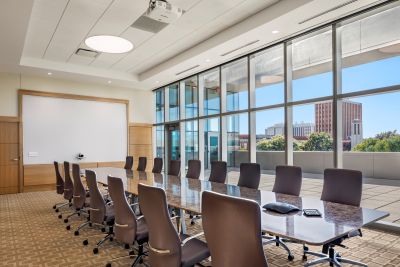
With the help of the DMO, the university hosts a lot of events for statewide associations.
Feyerherm said a “one-stop shop” for meetings at the university is the Nebraska Union.
“They have a couple different ballrooms, they have an auditorium, they have breakout spaces as well,” he said.
A “flashier” option is the newly constructed College of Engineering.
“Having a lot of different unique spaces, you could break up your event into three or four different buildings,” he said. “You don’t need to have one environment. It’s not just a conference center. Your attendees can get out and stretch their legs.”
Plus, there’s even more perks in addition to multiple unique spaces—a big one being price point.
University spaces are less expensive because they are already equipped with technology and other assets often not included in traditional meeting spaces.
The initiative to bring conferences and meetings to the university is a way to strengthen not only the partnership, but to help strengthen the university itself.
“We just want to see our communities thrive, and we want to bring outside people in to help our communities,” Feyerherm said.