


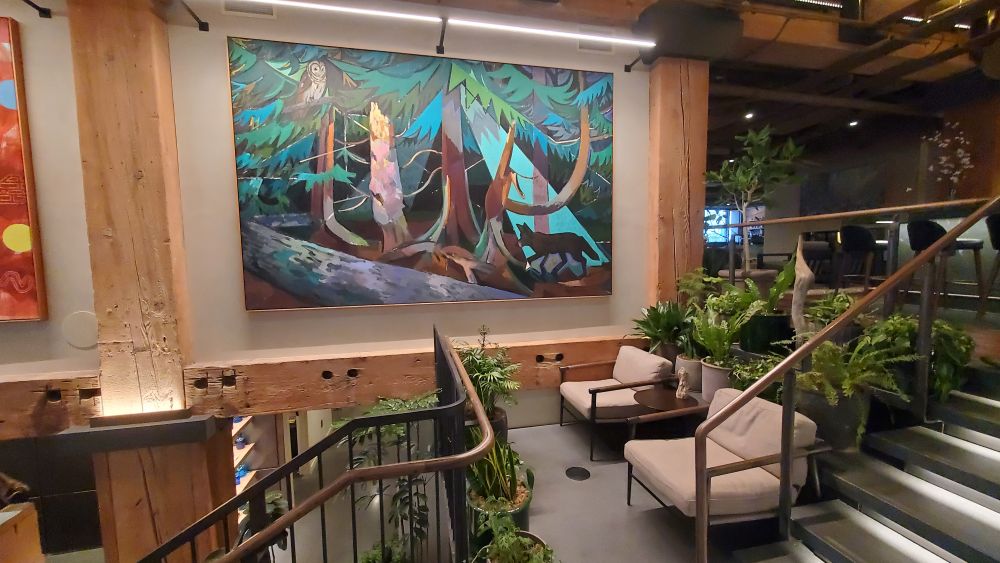
Inside the 120-room boutique Populus Seattle, host property for Visit Seattle’s “Mother Nature’s City” fam at the end of April, the first thing anyone noticed was the greenery. Massive amounts of plants and indoor foliage flank the hotel’s entryway, leading past the front desk to a staircase that ends at the restaurant and cafe areas. The entire space places guests in a relaxing, forested environment.
Guest Services Manager Patrick Whaley met us there for a grand tour of the nearly one-year-old property.
“All the plants we have, all the plants you see in the building here, are live,” he said. “We have a group that comes in that does all the watering and takes care of the plants.”
[Related: The Many Ways Groups Can Take Advantage of Seattle’s Compact Downtown Core]
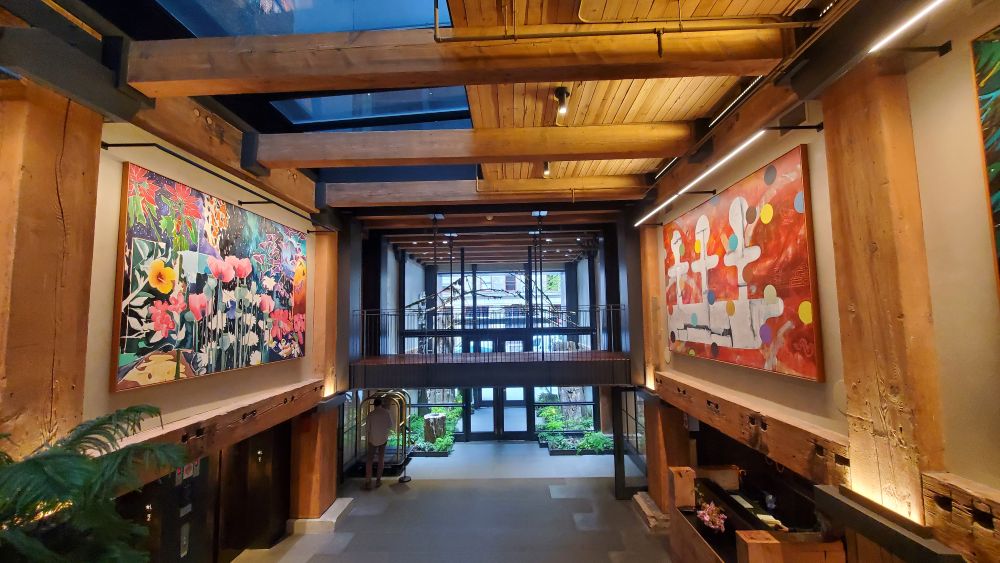
The relatively new Populus brand is known for its sustainability initiatives and environmental stewardship. The carbon-positive Populus Seattle is situated in the historic Pioneer Square neighborhood on a stretch that fades into the stadium area, placing guests a few blocks from where the NFL Seahawks, MLB Mariners and MLS Sounders all play their home games. World Cup murals adorn the alleys, anchoring a district of old brick buildings and former turn-of-the-century hotels now converted into galleries, coffee shops and bohemian venues.
Upon checking in, the second thing anyone noticed was the hotel’s art collection. Large paintings hang from every wall, in every public space. Most of the curated collection is for sale.
[Related: New Meetings Happenings in Seattle, Spokane, Portland and Boise]
At least two groups sold out the property during our visit. Just around the corner from the front desk, businesswomen in yoga pants filled the gym, which was open 24 hours.
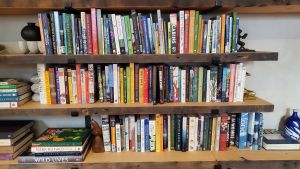
Next door to the gym, just below the street level yet with a clear view of the sidewalk outside, we found the Nature Library. Sourced wood flooring and bookshelves accompany ultra-cozy chairs and couches, where still more foliage rises from every interstice.
Most of the books are nature-based—ocean science, natural history, wild plants, environmentalism, hiking guides or pop ecology—but with tons of art and architecture volumes mixed in. Frida Kahlo, Mondrian and Vermeer sit right next to Weeds of the Pacific Northwest. Guests are allowed to take any book to their room, but there is plenty of space in the library to work, read or relax while completely isolated from the external street traffic.
“I’m always amazed at how well they soundproofed it down here,” Whaley said, pointing at the window-view of the streetscape. “This is a busy major intersection here and you never hear any of the cars outside.”
[Related: Read More On the Scene Destination Reports]
Flavors of the Pacific Northwest
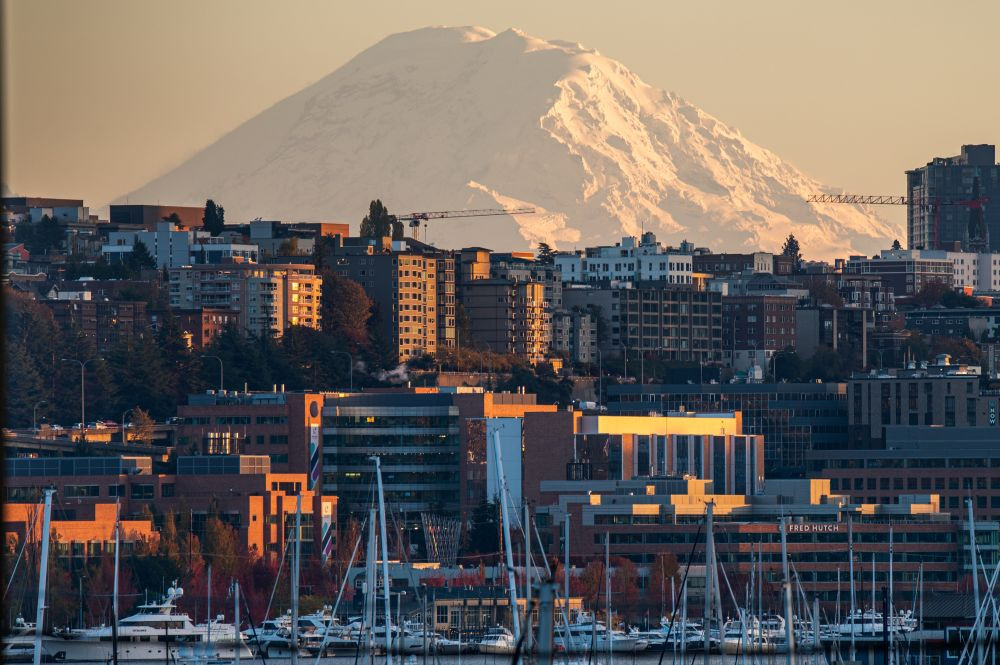
As the week unfolded, it became clear that Mother Nature designed the Seattle area for groups who prefer sustainable ecosystems, either in the city itself or down the highway. The flavor of activities we sampled could only have emerged in the Pacific Northwest.
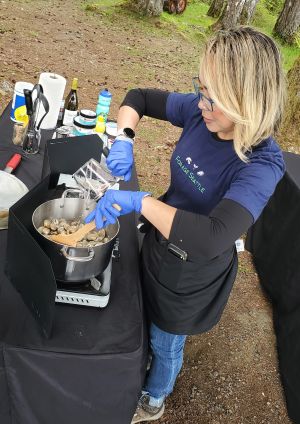
For example, an adventurous company, Forage Seattle, led by Angela Shen, specializes in mushroom foraging and all sorts of “in the wild” activities. Shen told us Forage Seattle is one of the only companies of its kind in the state of Washington that is fully licensed, permitted and insured to operate the type of “wild” activities Forage Seattle offers, which, for us, included an afternoon shucking oysters and digging for clams at Hood Canal, a 90-minute drive outside Seattle.
For groups that can’t venture that far, Shen said the whole operation could be transported to any hotel, minus the harvesting activity on the beach.
“We call it a ‘shuck and sip,’” she said. “We bring in all the oysters. We teach people how to shuck and we set up tastings.”
For our group, though, Shen met us on the beach, a place covered with oyster shells. But before the lessons commenced, she and her assistant prepared an elaborate multicourse meal of garlic butter clams, raw oysters and seared wild salmon with herb salad—all concocted at a portable stove in the picnic area, and all of which comes included in an overall group package.
[Related: How Pacific Northwest Convention Centers Are Agents of Positive Change]
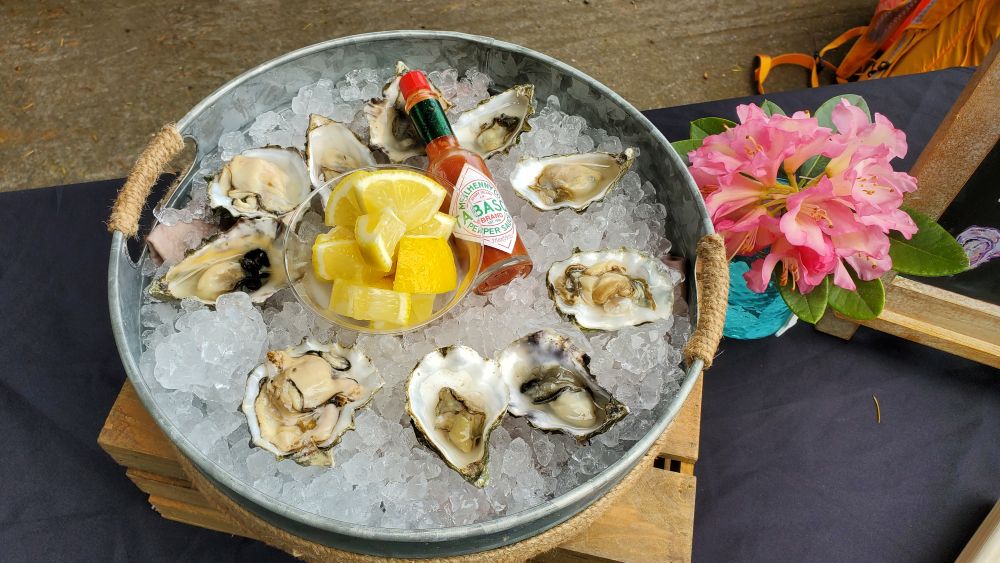
“This is my jam,” Shen said, divulging the recipes for everything. “If it’s easy enough to make in the woods or at the beach, with no electricity, then I know it passes the test. Then it’ll be a cinch to make when you get back home.”
Back in the city, the Wild Haus Floating Sauna provides a completely different experience of the Seattle landscape. Inspired by Scandinavian saunas, groups can venture out onto Lake Union in a privately captained boat equipped with a wood-fired sauna. Attendees arrive prepared with a swimsuit, after which towels, robes and beverages are supplied on the boat.
Once finished with the restorative sauna, guests can then jump into the water for a cold plunge, all while getting a tour of the various development projects that line the lake and the shoreline.
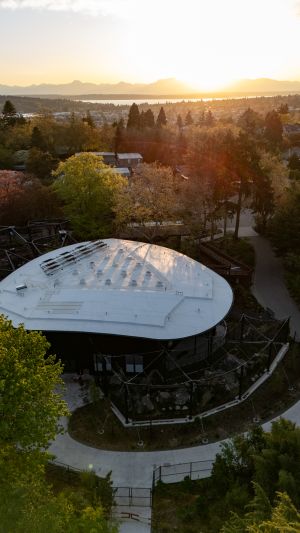
Even the zoo has something new. The Woodland Park Zoo, where a new Forest Trailhead complex opened May 1, clearly relishes in its new phase, replete with additional canopies for scoping out tree kangaroos and nearly 20 species of reptiles, amphibians and fish. Visitors are now able to get up close and personal with Carson the Red Panda, who has his own unofficial Instagram page (@carsontheredpanda).
Seattle’s New Nature-Themed Campaign
Later, we dined at Atoma, a contemporary restaurant tucked inside a 100-year-old Craftsman house, where Stephanie Byington, Visit Seattle’s chief marketing officer, explained the DMO’s new nature-themed campaign.
Seattle is already known for greenery, sustainability, shoreline access, craft beer, coffee, walkability and environmental stewardship. Especially in these chaotic times, just about all groups are looking for ways to manage the stressors of everyday life, and what Seattle has to offer can help them achieve that.
“People are longing for respite, and the respite that comes from nature,” Byington said, explaining why the time is right to develop an entire campaign around such an idea. “We’re Mother Nature’s favorite city.”
Among many other things, the aforementioned nature creates opportunities for wine and winemakers. For groups that need a property specializing in both, an escape to The SOMM places them in Woodinville, an area with 130 different places to go wine tasting. The property offers wine-blending classes with one of the in-house sommeliers, allowing guests to blend their own varietals.
[Related: Seattle's Summit and One-of-a-Kind Vibe Have the Emerald City Soaring]
Many more regular wine-related events are either already taking place or set to launch soon, and by now groups are taking advantage of everything. Guest Services Coordinator Alex Antonio told us 64 events were booked during the first few months the property opened, from October to December 2025.
“I’ve never seen those kinds of numbers in a new hotel,” he said.
Back in the city near 9th and Westlake, in a neighborhood that resembles Vancouver, British Columbia, with its seamless melding of skyscrapers and greenery, the new 1 Hotel Seattle features moss art on the walls and regular activities such as magnesium drips and silent book clubs.
Formerly the Pan Pacific, 1 Hotel completely overhauled the building and converted a former sterile ballroom space on the street level into a rocking Barcelona-inspired restaurant, La Loba. The property features 153 guest rooms and a variety of meeting and event spaces, including the 1,766-square-foot Rainier Ballroom.
Even though 1 Hotel and Populus are not sister properties in a business sense, they definitely operate with the same sustainable-forward attitude. Luxury doesn’t mean black ties and wasteful gluttony; it means inner nourishment.
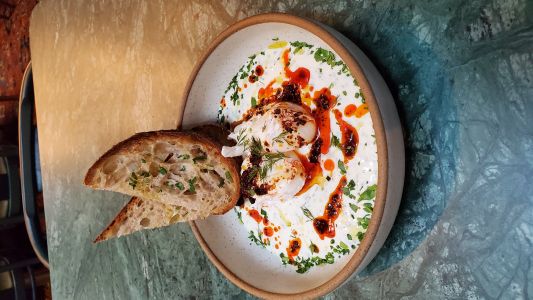
And back at Populus, we breakfasted in the Salt Harvest restaurant one last time before we left. A plate of Turkish eggs came on a bed of garlic yogurt, Aleppo pepper butter and fresh aromatic herbs. The dish is a specialty from Swedish chef Conny Andersson, whose nature-driven, fire-touched menu weaves together all the property’s components. During the weeks prior to our arrival, Andersson had just orchestrated events in collaboration with the National Nordic Museum.
“We’re lucky to have him,” Whaley said.