

In early May, more than 140 members of the Las Vegas chapter of Hospitality Sales and Marketing Association International came together for a one-day educational event hosted at Caesars Palace.
The goal, according to Alison Francis-Smith, managing director of HSMAI’s Las Vegas chapter, was to “hear from wellness-industry leaders on how the ever-growing ‘wellness economy’ is shaping demand, guest expectations, and opportunities across hospitality.”
In addition, the hoteliers in attendance got to experience four interactive activation stations designed to help them take the insights they’d hear from the event stage and translate them into real application at their properties—including for guests who are in house for business events.
“When we built this program, we wanted to create content that felt practical and relevant to today’s hospitality industry,” said Francis-Smith. “We wanted attendees to see that wellness is no longer just a trend, but something that should be naturally integrated into the individual guest experience as well as the event experience.”
“Another key takeaway,” she noted, “was understanding that experiences designed to help attendees restore and recharge themselves can also drive event ROI. Wellness elements can positively impact engagement, focus, networking, and overall attendee satisfaction.” Such results would also reflect favorably upon the host property and could drive repeat business.
Setting the Foundation
Keynote speaker Lisa Starr, a veteran of the spa and wellness industry and part of the Global Wellness Initiative (GWI), opened the event by telling the audience that 87 percent of companies now have formal wellness programs, and that each dollar companies spend on wellness programming brings about $6 in return, mostly in healthcare cost savings and less absenteeism but also from improved morale and reduced turnover.
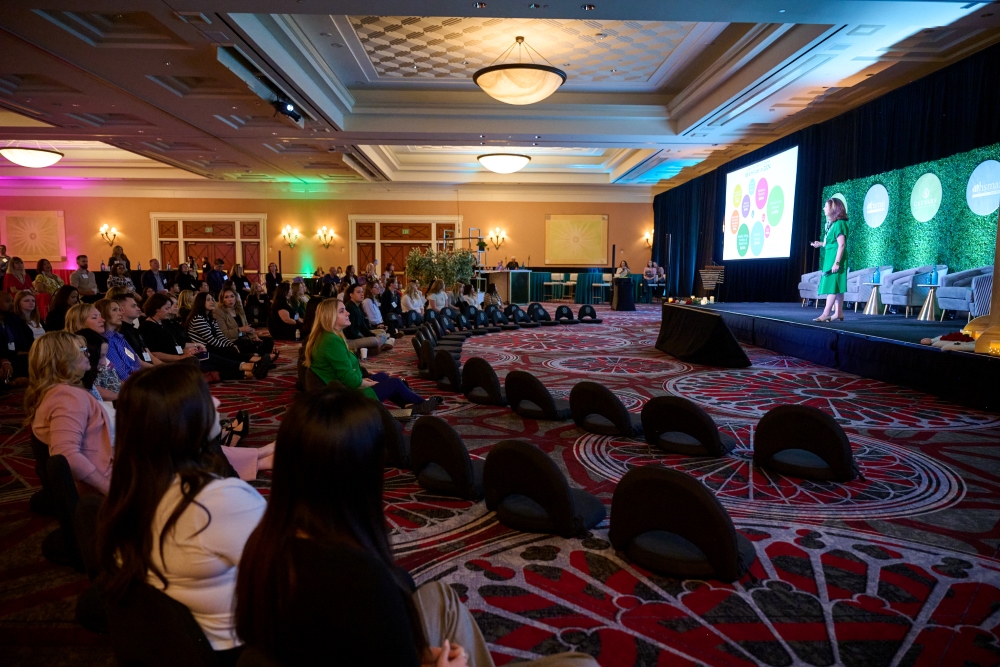
As a result, wellness is now an expectation in the hospitality and business-events segments—and the hotels that execute with authenticity and full-journey integration of wellness elements for their guests will position themselves for strong future demand.
[Related: Overlooked Mental Health Risks at Meetings, and Steps to Solve Them]
From there, David Stevens, co-founder of wellness-focused events firm Olympian Meeting and also a key player in of GWI (see sidebar), talked about ROI related specifically to wellness elements at meetings and events, in terms of improved content retention, better attendee interaction, and more.
In fact, for the benefit of both planners and suppliers, Stevens has hosted for nearly four years now a web series called Return on Wellness. At present, there are more than 40 episodes on Spotify where doctors and other experts address topics such as how business events can improve human health through an event organizer’s deliberate choices about food, physical movement and other elements that improve work performance and overall quality of life.
Another topic Stevens is strongly focused on: “wellness washing” not only by healthy-lifestyle suppliers but also by hospitality entities, where the quality of the wellness elements delivered are not nearly as robust as advertised.
Activation Stations
After the main-stage sessions, the hoteliers split into four groups and moved around the ballroom to stations that focused on different wellness elements and topics.
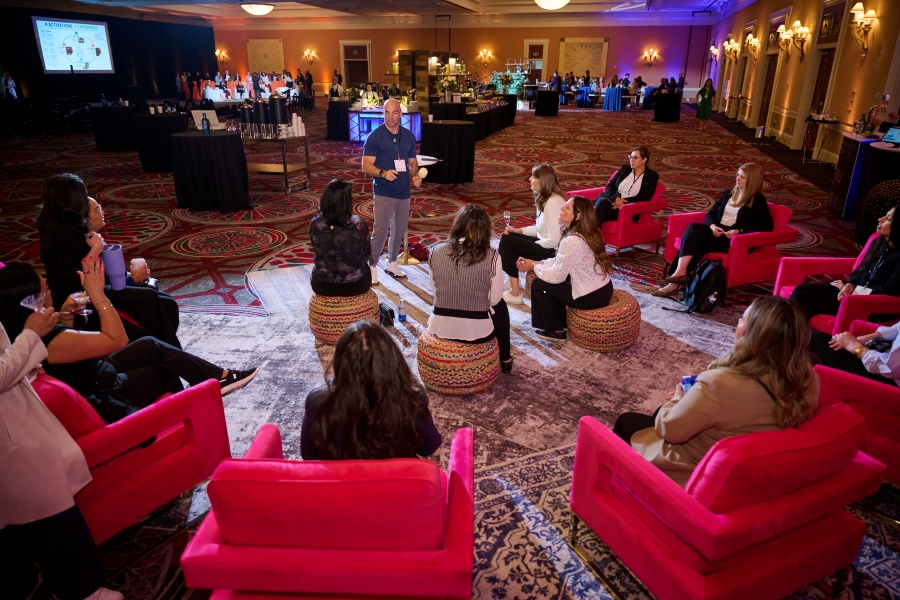
One station was the Apothecary Bar, so named to evoke a vintage 19th-century pharmacy. There, Rachel Milford, co-founder and managing director of experiential wellness design firm Pneuma Lab, delivered a sensory-driven experience exploring how scent, lighting, sound and other design elements influence attendee mood, focus, engagement and decision-making.
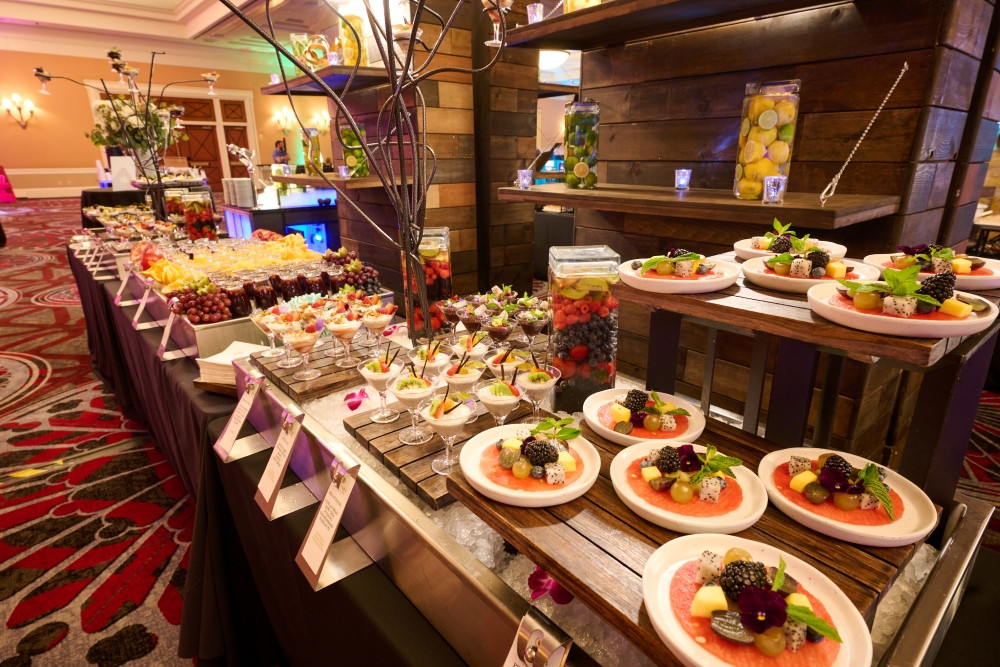
Another station was the Performance Hydration Lab, a hands-on activation exploring how hydration and simple beverage strategies support energy, cognitive performance and attendee endurance. Crystal Keath, founder of Wellthy Self, led this demonstration along with a member of Caesars’ culinary team.
There was also the Revenue Lab, where David Stevens showed the hoteliers how to turn experience into real commercial opportunity. And the fourth station, led by Kim Kopetz of global brand and experience marketing firm Opus Agency, was called Experience Exchange. Kopetz facilitated a conversation about what attendees value versus what hotels actually deliver and how that impacts attendees’ spending and the event host’s spending.
“The real value of this program wasn’t just in the insight, it’s in what they can take back and apply across their property, their team, and their strategy,” Francis-Smith said. “The program showed that wellness doesn’t have to mean large budgets or major agenda changes. Small touches like hydration stations, healthier food options, movement breaks, or quieter recharge moments can make a real difference to attendees’ experience at events.”
-- -- -- --
Global Wellness Institute Launches Meetings and Events Initiative to Advance Measurable Wellness Strategies
Coinciding with Global Meetings Industry Day on May 6, the Global Wellness Institute (GWI) announced the formation of its new Meetings and Events Initiative, a global effort designed to help the business-events industry apply wellness as an evidence-based performance driver through practical, measurable event design strategies.
Formed in 2014, GWI works to impact global health and wellness by educating public institutions, businesses, and individuals on how they can prevent disease, reduce stress, and enhance overall quality of life. GWI is a nonprofit organization that conducts research for the “wellness economy” that is now valued at nearly $7 trillion worldwide, which is double the amount it was when GWI was first founded.
Over its 12 years, GWI has launched initiatives such as Workplace Wellbeing, Aging Well, The Science of Yoga, Wellness for Cancer, Wellness Moonshot: A World Free of Preventable Disease, and others.
Its newest one—the Meetings and Events Initiative—will be chaired by David Stevens, co-founder of Olympian Meeting, with Reina Herschdorfer, director of marketing and public relations for Caesars Entertainment Meetings & Events serving as vice chair.
They will be joined by a distinguished group of industry leaders contributing expertise and guidance to the initiative:
• Dr. Senthil Gopinath, CEO, International Congress and Convention Association
• Stephanie Harris, president, Incentive Research Foundation
• Tahira Endean, head of program, IMEX
• Dena Lowery, president, Opus Agency
• Rachel Benedick, chief revenue officer, Meeting Professionals International
The launch underscores the growing recognition that meetings and events directly influence organizational performance. When wellness is intentionally integrated into event design, it supports stronger business outcomes, higher attendee satisfaction, increased engagement, improved content retention, a greater sense of belonging, and enhanced overall wellbeing. The Meetings and Events Initiative is focused on advancing practical, evidence-based strategies that deliver these results consistently across the industry.
The global wellness economy is one of the world’s fastest growing sectors. The Meetings and Events Initiative will serve the full business-events ecosystem, including corporate and association planners, tradeshow organizers, event marketers, agencies, DMCs, hoteliers, executives, and international event leaders.
Its work will be guided by a practical framework built around four Ms: Mindfulness, Movement, Meals, and Meaning. In its first year, the initiative will focus on developing a “best practices playbook” for application across different markets and event types.
“Meetings and events already shape human well-being, whether we mean to or not,” Stevens said. “This initiative is about helping our industry take that responsibility seriously and turn it into action. Wellness must become practical, credible, measurable, and operational.”
“This initiative creates an opportunity for the meetings and events industry to move forward with greater clarity, stronger standards, and a more intentional approach to designing experiences that support both people and performance,” Herschdorfer added. “I am honored to help shape this work alongside the distinguished industry professionals contributing to this effort. Their leadership and influence are instrumental in driving meaningful change, and together with the broader global wellness community, we have the potential to significantly advance the future landscape of meetings and events.”
GWI noted that this initiative is a concerted effort to help the business-events industry apply wellness as an evidence-based performance multiplier by developing practical event-design strategies that improve attendee experience, strengthen belonging, support public health, and drive better business results.
To learn more about the Meetings and Events Initiative, visit globalwellnessinstitute.org/meetings-and-events-initiative.