


The first time I went to a networking event after starting my career in September 2025, I felt discouraged by a room full of unfamiliar faces, like I didn’t belong or wasn’t welcome. While I now know that my brain was just playing tricks on me, that doesn’t negate the fact that, for some time, the stress remained.
Many attendees face this type of experience plus other psychological challenges at gatherings. They’re often motivated and excited to attend events but then leave feeling drained. The desire to be a part of the present moment is there, but so too is that psychological obstacle. The truth is, many attendees know how to mask what they’re really feeling and experiencing, so it may be shocking to learn these issues are so prominent.
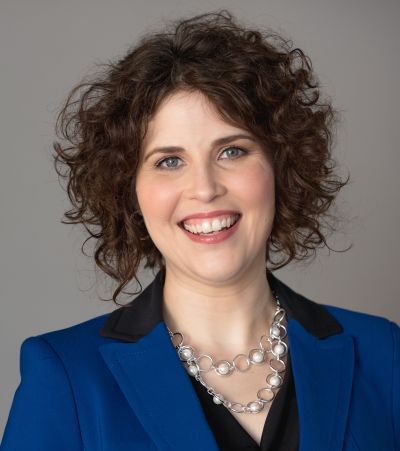
Dr. Heather Collins, cognitive neuroscientist and frequent keynote speaker, noted that "cognitive event design" can make conferences less overwhelming for people.
[Related: Identity Interrupted: How Meeting Planners Can Navigate Job Mobility and Career Grief]
“We want conferences to add to somebody’s mental and cognitive well-being, not take away from it,” she said.
To eliminate mental health risks at meetings and events, Collins suggests designing an event around how the brain actually works because, if we don’t, “we’re creating mental health liabilities.”
Following are three overlooked mental-health risks at events—information and cognitive overload, isolation for solo attendees and high-pressure environments for speakers—and steps to solve them for an overall better attendee experience.
Problem: Information and Cognitive Overload
When it comes to information and education at a meeting, more content doesn’t correlate with a greater impact; it correlates with cognitive overload. For our brains, less content actually leads to more understanding.
“Meeting planners and conference designers want to pack in a lot of high-quality content,” Collins said. “The problem is that too much content delivered quickly doesn’t allow time for processing.”
In a packed agenda, time isn’t a constraint; a conference’s greatest barrier is brain capacity. With back-to-back sessions and tight schedules, there’s little time for reflection.
“Your brain is not going to remember everything. That’s not going to happen,” she said. “Our brains actually need time to do what we call separating the signal from the noise, and that is pulling out those few gold nuggets that we really want to walk away with.”
Solutions: Pause Points for Processing
Including 15 minutes in the agenda for intentional reflection eliminates what Collins calls the “Was I even there?” effect.
“Memory is one of the most crucial brain functions to design into meetings and events, and people don’t remember what they heard or saw. Rather, they remember what they take time to process,” she said. “So, have a little notebook, [make it] your conference notebook, and at the end of every experience, [write down] what are my 3 takeaways? And you automatically know what your ROI was for that event.”
Problem: Isolation for Solo Attendees
In a room full of people it’s easy to feel lost and alone. For many solo attendees, that feeling of being isolated in a crowd is enough to take their minds off the event happening.
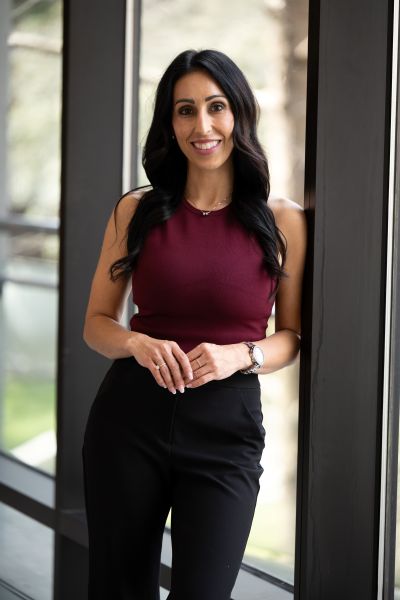
“Not only is it about being alone, it’s the combination of uncertainty, self-awareness and lack of structure all happening at one time and trying to navigate that environment,” said Dr. Jess Garza, executive performance consultant, Legacy Mindset.
When there’s no clear starting point or hand to shake at a meeting or event, Garza said attendees should first look internally to identify the experience that is stirring in their brains, because when we don’t know how or when to engage a game of double dutch ensues.
[Related: 5 Questions to Ask Before Hiring an Event Wellness Partner]
“You have to jump in and jump out,” she explained. “Do I say ‘hi’ now, or do I just wait here? Should I say my name? Or should I just sit back?”
After the internal back and forth, another line of questioning and self-doubt awaits, ready to take over a solo attendee’s wandering mind.
“We start to question credibility, our fit. We compare ourselves to other people that have been there for a really long time,” Garza said. “There’s judgment that happens, too, or not wanting to interrupt, and so we ask for permission.”
But to discredit these self-inflicted judgements and improper understandings of social dynamics, Garza has a solution: She becomes a game show host for what I’m calling “the Brain Game,” and her contestants—solo attendees—might hit the jackpot if they opt into her special contest.
Solutions: The Brain Game That Gives Attendees Structure
Rather than observing the room, Garza encourages solo attendees to challenge themselves and incentivize going out of their comfort zone with a little competition.
Garza says “the Brain Game” gives us structure, whereas simply observing the room is nothing but cognitive and emotional load, which she described as “purely draining, where you’re constantly self-monitoring, managing impressions and navigating new people and spaces.”
This can lead to attendees mentally disengaging and even leaving early. Instead of navigating a high number of invisible decisions without guidance, the Brain Game is a way to encourage attendees to take baby steps that are practical and logical. These mini self-challenges can take the form of introducing yourself to the first two new people who walk by. Choose one of them to ask two follow-up questions. Then in your next introduction ask a thought-provoking question that will spark a true conversation, working your way up to productive networking.
If attendees play the Brain Game right, they’ll “hit the jackpot.” Which, in this case, turns out to be an increase in clarity and more confidence in navigating an event on their own.
Problem: High-Pressure Environments for Speakers
Collins started speaking at conferences when she was 19 years old. Now with more than two decades of experience as a professional speaker, she is the perfect voice to shine light on the anxieties that surround public speaking.
“That performance pressure for speakers is real. It’s huge,” she said.
[Related: WITT Releases New Wellness Credential for Meeting Planners]
The high-stake environments at many meetings and events trigger a lot of anxiety in some speakers and can be perceived as a threat to the brain.
“These speakers might feel judged, they might feel overly scripted, they might feel under supported,” she said. “They might just have a big anxiety response not knowing what to expect. Now, the challenge here is that they can only do their best when that threat response in their brain is actually diminished.”
Solutions: Diminishing the Threat
To diminish the threat, Collins suggests creating a safe environment for everyone from professionals to first-timers.
“If you’re hiring a professional speaker, maybe ask if that professional speaker would be willing to talk with one or two of the non-professional speakers,” she said.
Another thing that helps reduce anxiety for non-professional speakers is getting a sense of the environment ahead of their session.
“Make sure slides are uploaded beforehand. Make sure there’s a tech rehearsal where they can come in the room, run through their slides, see that everything is going to work—that alone will reduce anxiety,” she said. “We want to create the best conditions possible for speakers to feel safe, successful and really turn the experience from something of fear and anxiety to something they can enjoy.”
Sharing Is Caring: How Community Helps Heal
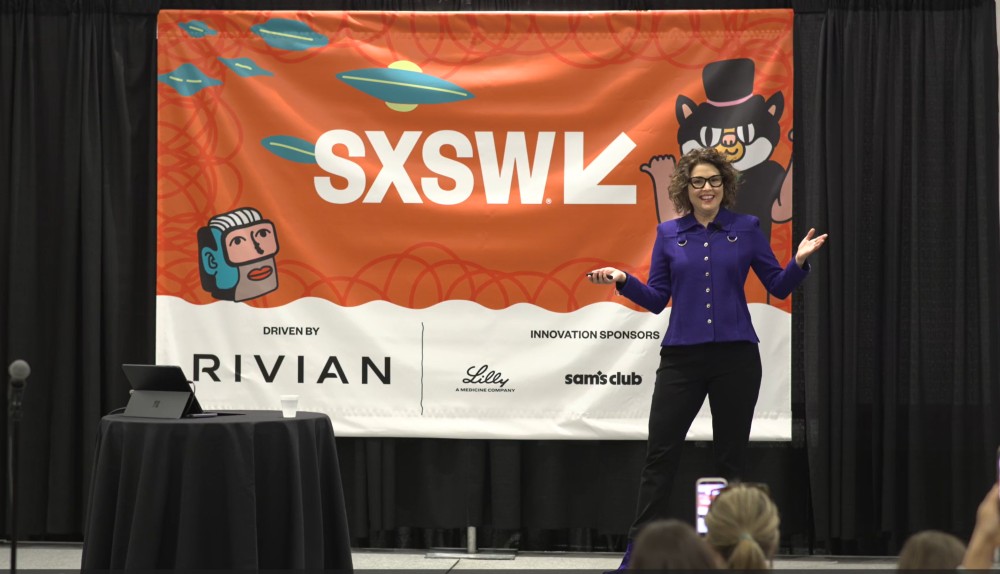
Sue Walton, president of May and Williams and co-founder of the MeCo group on Google, remembers a quote from longtime industry veteran Joan Eisentodt: “Meeting planning is like being a brain surgeon. You have to be very precise.” Throughout her nearly 40 years in this detail-focused business, Walton has observed how planners downplay their issues.
“It’s behind closed doors and it still is,” Walton said. “People don’t want to say, ‘Hey, I’m down.’”
She started a community Google group called MeCo, now in its 20th year of existence. Walton never imagined the group would become a community staple and safe space for support.
“We’ll talk about our experiences,” she said, “and I think that uplifts us.”
In all her experience as a planner, and from hearing stories and experiences from other planners through the MeCo group, Walton shared her struggles with travel fatigue and how to combat it when on the road.
She described herself as a homebody who needs a recovery period. When she travels, she gets up early and gets on the road—but she can’t wait to get back home.
Walton arrives onsite early to help ground herself before the event gets started.
“When you arrive early, you are able to scope it out,” she said. This helps calm her nerves.
She also practices mindfulness onsite, taking 12 minutes out of each day to close her eyes in her designated office. It’s her daily calming practice.
“It’s important to have what they call mindfulness meditation,” she said. “It’s just being able to be there, but step inside your head and be able to calm yourself down. There are all sorts of ways people do it. Some people just take walks, and that’s important, no matter where you are.”