

The Power of Togetherness: Leading With Connection in a Disconnected World
Season 7, Episode 5
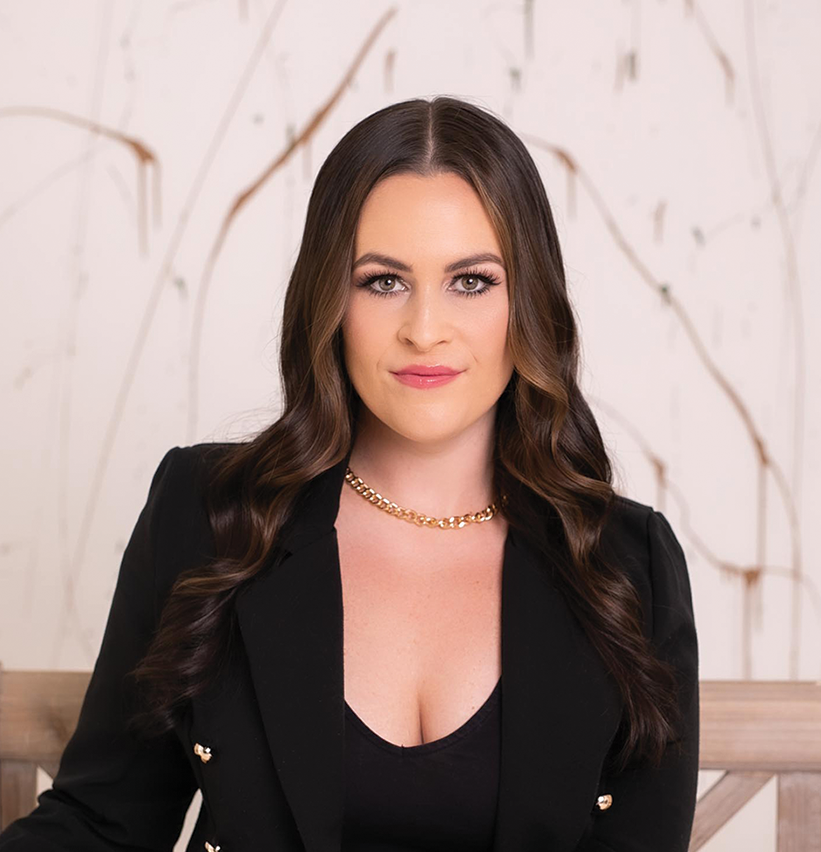
Guest: Melissa Majors, Inspirer, Storyteller, Author and Coach, Melissa Majors Consulting
Melissa Majors, speaker, author and leadership coach, joins host Courtney Stanley for a conversation about the growing need for human connection in today’s world and what it means to lead with empathy, intention and community.
Together, they explore the unspoken pressures many women are carrying right now, the importance of rewriting the narrative around how women support one another, and why meaningful connection and belonging matter more than ever in both life and leadership.
Listen now:
Listen to more Dare to Interrupt podcasts: MeetingsToday.com/Dare-to-Interrupt.
Podcast sponsored by Myrtle Beach Convention Center.

Meet Our Guest:
 Meet Melissa Majors—a brilliant storyteller who doesn’t just give talks; she takes audiences on a journey. She blends neuroscience, business savvy, human nature and common sense into stories and tactics that prepare us to thrive in work and life.
"She is like sunshine. Her conversational style, smile, authenticity and energy are infectious!”
Melissa is a leading advisor, coach and advocate for human-centered leadership. Her expertise is curated from over 25 years of leading thriving teams across a variety of industries, including investments, insurance, ed-tech, associations and business consulting. Her practical experience is enhanced by her formal education, which she gained studying strategy and innovation at Harvard University.
Melissa is the author of two books: Help Them Thrive: Leadership Coaching for Humans Leading Humans and The 7 Simple Habits of Inclusive Leaders.
Melissa has been featured in publications such as Forbes Magazine and is loved by audiences at Google, the National Association of Realtors, 7-Eleven, RTX (formerly Raytheon), Catalyst, Lantheus, Blue Cross Blue Shield and many more.
She is endearing, authentic and fun! What to expect from Melissa on stage? An endearing and authentic experience filled with mesmerizing stories, audience interaction, smart research and an enthralled audience who will buzz about her session long after the event has concluded.
Melissa is originally from Columbus, Ohio, so naturally, she’s a die-hard Ohio State Buckeyes fan. She now lives in Cedar Hill, Texas, with her husband, Terrance. They have two children, Terrance and Luke, and her “Chief Wellness Officer,” a sheep-a-doodle named Ziggy.
Connect With Melissa:
More About Our Host:
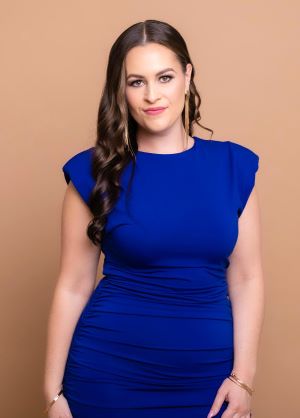 Courtney Stanley believes that transforming past experiences into impactful conversations through raw, authentic storytelling challenges the status quo, connects people from all walks of life and results in great change for the world.
Courtney is the youngest member to have ever been elected to Meeting Professionals International’s (MPI) International Board of Directors.
She is the recipient of Smart Meetings’ Entrepreneur Award, MeetingsNet’s Changemaker Award, the Association for Women in Events (AWE) Disruptor Award, the MPI Chairman’s Award and MPI RISE Award.
She was also named Collaborate and Connect Magazine’s 40 under 40 and a Meetings Today Trendsetter.
Recognized as one of the event industry’s most impactful change-makers, Courtney serves on the Events Industry Sexual Harassment Task Force, AWE’s Board of Directors, MPI’s Women’s Advisory Board, is a Meetings Mean Business Ambassador and is the co-founder of the award-winning movement, #MeetingsToo.
Courtney was named as a 2020 Meetings Trendsetter by Meetings Today.
Connect With Courtney:
Website
LinkedIn
Instagram: @courtneyonstage
Twitter: @courtneyonstage
Facebook
Transcript:
Editors note: The following transcription was facilitated by AI program Otter.ai and proofed by our editors. Although it is fairly accurate, there inevitably will be some mistakes, so please consider that when reading. Thank you.
Courtney Stanley
Hey, welcome back to Dare to Interrupt, the podcast where we have honest conversations about adversity, growth and what it really takes to lead in today's world.
I'm your host, Courtney Stanley. Today, I'm joined by Melissa majors, speaker, author, leadership coach, and one of the most authentic voices when it comes to the topic of human centered leadership.
In this conversation, Melissa opens up about the power of togetherness in a time when so many people are craving real connection and belonging. We talk about the unspoken pressures women are carrying right now, the importance of rewriting the narrative around how women support one another, and Melissa's perspective on aging with confidence and intention.
If you've been craving more meaningful connection, navigating change in your own life, or looking for a more grounded and empowering perspective on leadership and growth, this conversation is for you. Let's dive in. Welcome to the show. Melissa, how's it going? How are you?
Melissa Majors
Amazing Courtney, I'm so glad to be here with you, honey.
Courtney Stanley
I know. Me, too. Likewise, I am smiling so hard right now. What's bringing you joy this week?
Melissa Majors
Oh, let me tell you a funny story. So, I've been really intentional about finding things to spark joy in my life every day. So, this morning, it started with torturing teenagers. Courtney, so my sons and their kids or their friends, we carpool to school every day, and so one of them is a really big like music lover, and he's got a diverse palette of music. He's only 14 years old.
So, anyway, we're always listening different kind of music. Well, it's music. Well, today, on the way to school, I put on some disco music, Courtney. And I pulled up in front of their school, rolled all my windows down, and we were jamming to Saturday Night Fever, and those kids couldn't get out the car fast enough. They were mortified, and I was so tickled, it brought me so much joy. And then I called their parents afterwards and left a voice message, and it brought them joy, too. So, those are some things, those little, small, little things in life.
Courtney Stanley
I love that. I love that it's a little bit sick and twisted, too. Not only was it joyful, but it's also a little bit of that dark humor, which I always appreciate, too. I also love the soundtrack from Saturday Night Fever. Like, that's a great soundtrack. So they're missing out, you know, they gotta go back to the 70s for a minute.
I love your son so much. What's it like being a boy mom?
Melissa Majors
Oh my gosh. It's the perfect thing for me, because growing up, I don't think this is an appropriate term anymore, but I was an absolute tomboy, like, do not put me in dresses and fancy shoes and all that. I was out fishing and climbing trees and getting dirty.
And so now that I'm a boy Mom, it's perfect, because I get to do all those things and have buddies to do it with. So I love it, and boys love their mama. Oh, they do. They're still sweet and affectionate, and kiss me on the cheek and want to spoon and cuddle. So, I just love being a boy mom.
Courtney Stanley
Oh, that sounds so sweet. I love that. I love that so much. And they're such good kids, too. I remember, and I've told you this before, but I just have been so impressed being able to witness your dynamic with your sons. I feel like you're such a good parent and it I know that's such a broad statement to make, but there's a vibe between you and your sons where you can just tell, like there's a lot of love there, there's a lot of respect there.
Your kids are so well mannered. They’re just lovely, lovely, lovely people. So not surprised.
Melissa Majors
Thank you.
Courtney Stanley
Didn’t fall far from the tree. Yeah?
Melissa Majors
So sweet. I try, you know, I think that's all we can do. Parenting is hard. Oh my gosh, it's not easy. But I really am intentional about trying to spark joy for them too, every day, if my kids belly laugh during the day, I'm like, that's a win.
Courtney Stanley
Oh, I love that so much. And you recently brought your kids on stage with you. Tell me about that.
Melissa Majors
Oh, Courtney, it was such a highlight. It was so amazing. So, this speaking gig that I had was with an association for teachers and administrators. They're absolute angels, by the way. And it happened to fall over spring break, and it was at the Kalahari Resort, which is like kids heaven.
So, I said, take my boys with me. They'd never seen their mama in action. And so they sat in the room, and they saw me do my speech and everything.
And then at the end, I brought them on stage, and I asked the audience, I said, Listen, will you help me? The applause that you would normally give to me, would you give them to my sons? And I told my sons, I said, there may be a time in life where you doubt yourself, and you doubt that you're gifted, and you may wonder if you really have what it takes to make it in this life. And I want you to remember the sound that you're about to hear. And then those teachers exploded with applause and cheers, and they were standing on their feet, and my kids absorbed all that amazing energy and that sound, you know, and then when they got off stage, girl, there wasn't a dry eye in the house, including mine.
It was such a special moment, to be able to use my platform to not only pour it into people and the audience, but to have them help pour into my kids. It was just, it was a very, very special moment.
Courtney Stanley
Gosh, I'm gonna cry. Sounds so beautiful. What an incredible opportunity, you know, like, what a memory, what a core memory that will be for everybody in that room, for your sons, for you, wow. That's beautiful. That's really, really beautiful. How did they react?
Melissa Majors
Oh my gosh. They were standing on stage, and they just, you could see them just start to twist, and their eyes were bright and they were smiling. They loved it. They soaked it all up. It was really, really special.
Courtney Stanley
Oh, I love that so much. And I have to give you some extra kudos here on a different topic, because you were just the headliner for MPI’s Global Meetings Industry Day, and you debuted a message around togetherness; this was their main broadcast. Why do you think people are craving connections so deeply right now? And what do you think we are getting right or could do better when it comes to community and leadership?
Melissa Majors
Yeah, it's a great question, and I'm so honored to be selected as the headliner. Big shout out to Steven Foster and Grit productions for sponsoring that segment and recognizing the importance of helping people connect better, because it's unintentional, so many ways that we don't plug into people like I don't know about you, Courtney, but I love Instacart girl, I will order my groceries and my jammies and my flip flops and have, I call it the store the front door.
You know, it's just so convenient, and some of these on demand services, but as a result of the convenience, we're missing out on opportunities where we would have been interacting with people at stores, you know, going to restaurants instead of delivering. And there's science, there's a lot of interesting science and advances in the neuroscience community, in the wellness community, that as humans, we are wired.
We're designed to connect other people like we need it as much as we need to eat. It's that important. And when we trade convenience for connection, we're actually causing poor mental health. And there are chemicals in our bodies that are created when we connect to people that create anti-inflammatory properties in our body that will reduce the chances of Alzheimer's and dementia and cardiovascular disease and all that.
And by not plugging into those people, we're thus missing out on these incredibly beneficial chemicals, and it's eroding our overall health and causing premature death, like it's that important, and given that we are also in such a divided time, yes, we're in a digital on-demand age, but we're in a polarized time where we are defining so much more clearly who are us’s and our thems are, and it's eroding compassion in our society as well.
So I'm teaching better together. That's the topic of this keynote. I'm teaching it not in a shameful way, but just as a biological way, and also that togethering is a skill that we need to work on building so it doesn't cause a dysfunctional society and time and lower quality of health for all of us.
Courtney Stanley
What an important topic to discuss right now, and it's so relatable for everybody. You know, even if you're listening and you are a super social creature, and you, you know, love being out, and you find yourself to be naturally more extroverted and wanting to be social. I'm sure that you can think of somebody in your world who is not like that, and maybe has become a little bit more isolated, a little bit more of a recluse, especially in the last six years or so.
It's a very important topic. And I'm curious, you know, what are some of the main takeaways that somebody would walk away with after hearing a presentation like better together?
Melissa Majors
some of the main takeaways are tips on how you can choose connection over disconnection, and I've been doing some research, informal and formal research, on how are we doing related to togethering, and I call this one bit of research called the waiting room experiment.
And so, you know me, I never meet a stranger. I'll talk to anybody, but I go to the waiting rooms, and I've assessed the social norm, which is for no one to talk to each other and everybody be on their phone like you're so consumed in your own world on your phone.
Well, I was recently in a waiting room getting my oil change, and everybody was on their phone, except for one other woman, and we made eye contact and locked in, and we started chatting, and then we got on the topic of our dogs, which, you know, if you're a fur baby, you know you have a fur baby in your life, you can talk forever about your dog.
So anyway, we start showing pictures of our dogs to each other, and it created like FOMO in the room, Courtney, where everybody then disengaged from their phone and engaged in the conversation, started sharing pictures of their dogs. And you could feel the energy in the room elevate. It was palpable, like there was joy and those good chemicals that were getting created.
That's what happens when you choose to engage in conversation, versus choose to disengage and lock in in your own world on your phone.
There's little tips like that that I teach, and also creating and knowing and how we empathize more with our us’s and less with our thems, and so in just a real non-judgmental way, I help people identify ways that they can redefine their tribe in terms of human versus other labels that we have and we can empathize with all people like if we had a society where we were more compassionate for more people, empathetic for more people, it would elevate all of us and reduce a lot of the stress that we experience in this multicultural society in which we live.
So those are some of the tips and tricks.
Courtney Stanley
I won't give it all away, but I know I'm dying like and I know that. I know this. I know exactly what we need to do here. We need to put some teasers out. We can't give it all away. But I am dying inside. I'm like, especially with the us’s and the thems, because that is such a massive issue in our society today, and I struggle with it too, you know, I'm not going to say that I'm, you know, perfectly neutral with everybody that I meet. I think we all have biases and we all have triggers.
And, you know, it can be very difficult to not, you know, put labels on certain types of people, groups of people, you know based on differing values. So this is something that I struggle with, too.
So of course, I'm sitting over here and I'm like, Oh my gosh. I want to know. I want to know, how do I translate this, you know, us and them in my life, it's such a big topic.
Melissa Majors
Well, you know what? It goes back to our brains, like our brains are wired to sort people out into us’s and thems. It's biological. And when we recognize how our brains work, and then it's biological, then we can choose different actions.
We can choose to connect versus just reacting. And something I talk about in the message also is the analogy called the elephant and the writer, which is basically helping to depict how much more powerful the elephant, or our emotions, how much more powerful and control our emotions are, compared to our logic and reasoning, which is the writer.
And if the elephant is triggered and we're emotional and it wants to go left, guess which way you're going? You're going left. And there's, I also teach ways of calm and your emotions and your elephant down, so you can choose logic to connect with people, even if your brain is saying, Nope, no, stay away.
So those are some of the things. And very soon we'll have, like, a recording of the GMID broadcast on YouTube so you can get more than a sneak peek. If you go to my website, probably next week, it'll be there. But if anybody's interested in having this message with their community, just give me a call or hit me up at MelissaMajors.com, we can, we can talk show.
Courtney Stanley
Okay, ma'am, well, I can't wait to watch this video. I'm hungry for it. You left me thirsty.
I want to go back to the first part of what you said, where you were talking about, you know, self isolating, even in social spaces.
But I want to ask a little bit of a different question, because this is such a difficult challenge that leadership and management have dealt with for the past six years, and that is, you know, remote workers, remote employees. How do we what would you advise leadership teams or managers, people managers do when they are saying we are lacking connection, but we're a remote workforce, and I don't know what to do to create that type of opportunity. For people to really experience that human to human moment that is so important,
Melissa Majors
Whether you are in person or you're working remotely, often times, our conversations are transactional. Like, did you get my email? When is it when you turn in the PowerPoint? We getting paid today? They're transactional conversations, and it doesn't turn into that nourishment that causes people to bond at a human level.
And so I managed a very successful, innovative team of all remote workers for about three years earlier in my career, and we became good, good friends because I intentionally asked questions that would help them reveal who they were at their core, who they were at the human level.
And it caused us to bond--even though it was over a screen, it caused us to bond. And then when we did get together in person, we were already connected. And I was really intentional about creating opportunities for us to connect even deeper when we had that eyeball to eyeball time, and this team was high performing, they were loyal. They were achieving double digit growth.
This can be done, but you have to be intentional. And we also hosted social time online. So for example, we would have Halloween parties, where people would dress up, we would all bring like a cocktail, and we created those moments of connection on purpose, versus just the transactional conversations that would happen otherwise. It can be done.
Courtney Stanley
Can you give an example of what an intentional question would sound like?
Melissa Majors
Yeah, absolutely. I have a whole list of them in my latest book called Help Them Thrive. And I also will provide, if you want, I can provide your readers access to the list of questions. It's called 20 or 36 questions to connect on an interpersonal level. And this is based on psychologist Arthur Aaron's work. Oh, if anybody's looking to fall in love, girl, these questions are an intimacy hack. They truly do help you really connect at that core level.
But I tailored them to the workplace, and one of the things you can say is, what's your jam like? What's the song that would cause you to run to the dance floor or sing in your car like nobody's watching. And what happens is people then start to reveal their musical preferences, and we connect over similar music.
So when you ask questions, I call it fishing for commonalities, when you ask those questions about musical interests and passions and hometowns and foods, it bonds you over the things that everybody cares about. But I'll give you a link, Courtney, so you can share the full list with your listeners.
Courtney Stanley
That sounds perfect, yeah, and I have definitely stolen some of those questions and reframed them for different audiences, also on dates, because they're very helpful questions to have a, you know, a deeper conversation than just something that feels more transactional.
Melissa Majors
What's your favorite go to question to connect?
Courtney Stanley
So a few of them. I so I tend to start out a little bit lighter, so I might ask something like I did with you at the beginning of this conversation, what's bringing you joy this week? You know, something that's a little bit more top of mind. It doesn't require quite as much emotional exposure, but it's allowing me to get a peek behind the doors into your world, and it's leaving you in a space where you're able to share what's comfortable for you without me becoming too, too invasive, but it's a good starting point.
So that's a question that I love to ask. I also like to ask, what's, you know, what's stressful for you right now? I think especially in it could be, you know, in a work setting, it could also be in any sort of, you know, friendship or relationship, or anywhere where you want to show up and support the other person.
It's an important question to ask so that you're able to show up and meet them where they're at, because it could be that they're like, You know what? Actually, everything is pretty good right now, easy, breezy. It's been a good week. I feel pretty steady, and you're like, Okay, great. It's something to continue to check in with, but it also may be an opportunity for you to, once again, take a peek behind that curtain and see, wow.
Okay, so there's some context for, you know, some of the behavior shifts that I've seen this week, whether it was maybe somebody was a little bit short in an email or on a call or, you know, maybe they you didn't hear from them in 24 hours, 48 hours, and you're like, what's going on?
So I think it's so important for us to fill the gray with context. People love black and white. The brain loves a closed loop. We hate open loops. So some of these questions allow us not only to close those loops and to understand the other person better, but they create greater. Deeper trust, deeper understanding and more intimacy. So I love, love these questions. Those are two of the questions that I would say are more of the starter go to’s.
Melissa Majors
I love those and the contrast between the joy and the pain of stress, because that's what life is about. Is joys and pains. It’s not all sunshine and rainbows, right?
Courtney Stanley
Exactly, exactly. And I know you, I mean, you speak to so many different types of audiences, but you also speak to quite a few women's leadership audiences. What are the conversations that women are having right now, whether they're having them quietly or they're having them openly, about fears, pressures, things that they want, things that they need.
What do you think you've heard that really deserve more attention and more intention?
Melissa Majors
Yeah, thank you. That's a great question, and I'm very honored to speak at a lot of women's leadership conferences. And I don't just speak from the stage, I get women talking to each other, and so I do have my finger on the pulse of what's going on.
And I was just in California last week speaking at a women's leadership conference, and I opened with a story about what I was preparing to travel to this conference, and I needed to call the airline, and I got a call center rep, and I told her where I was going and why I need to change my flight. And she says, that's wonderful, you know, I wish women were more supportive of other women. And I shared that with the audience, and a lot of people said, Yeah, you know me too, and they're raising their hands. And I said, you know, I got to be honest with you, whenever I hear that, it makes me cringe, because when the call center rep said it also it was a moment where I could judge her, or I could teach her, and I chose to teach her.
And what I said is, you know, sweetie, that's not been my reality. And the truth is, whenever I get ready to step on a stage, I always pause to pray and name the people that were involved in getting me there, and the majority of the time it's a woman, or it's women who got me onto that stage. But we don't talk about how much we're supporting other women, like the stereotype is more prominent than the reality that women are truly supporting other women, and so I have them at the beginning of the session talking about how other women have supported their success, what they've done to support other women's success.
So we can shift and change this narrative to the reality, which is women do support other women. So I know that's at top of mind.
Something else that's really at top of mind is women are tired, like we are 10 times more likely to manage the household and work a full-time job, and we are unintentionally defining normal in terms of women having more to do. And Courtney, we talked about my sons, and I've been really intentional about catching this, because women do all of the things, like I'm managing the finances and the academics and all the things, and so my sons are seeing me do 10 times more. And so normal for them is seeing a woman do 10 times more. And then when we go into the workplace, that normal carries over into the workplace.
So if we're doing more at work, and then we complain about it, people are like, Why are you complaining? It's normal for a woman to have more workload. So some of those areas where we can course correct are at top of mind for women, because it's burning a lot of us out unnecessarily.
Courtney Stanley
How do we course correct that? And I completely agree with you, and the way that I have talked about this, even with just, you know, friends, family, whomever is that it's, it's unpaid labor. It's not because, let's say, even if it's at work, we work the same hours, or we have similar salaries, we have similar job titles and responsibilities on paper, but there's a lot of unpaid labor that women do behind the scenes, because it has to get done and that is often the case at home too.
Like you were saying it's, it's whether you are a wife or a mother or you're a daughter or a sister, it is so normal for women to be doing significantly more work. How do we start to course correct this? What does that look like?
Melissa Majors
And we have to model what fair looks like. And I'll tell you a story. So I, I was 29 I started in the C suite for an investment firm, I was the only woman. Was very different in every kind of way, and I was looking over my budget, my P and L, and I noticed there wasn't a line item for an assistant for me. And so I went to the Chief Financial Officer and said, Hey, I noticed that all of my male colleagues have an assistant. But there isn't a line item in my budget for an assistant.
He says, oh, it's not in there on purpose. I said, Well, tell me more. And he said, Well, your successor, she was the first in the office, last one to leave. She was in the office from Monday and came in on Saturdays too. I say, You don't say. And then I said, Well, tell me, do my male counterparts come in on Saturdays too? He says, No, they don't come in on Saturdays. I said, Yeah, we need to find a line item for that. My assistant in that budget, and he knew exactly what I was saying.
You have to model what fair looks like. And then Courtney, when I hired my assistant, I hired a man. That was fun. You have to model what fair looks like. I could have chosen to shrink like she did, or I could have chosen to course correct, and I chose to course correct and model what fair looks like.
Courtney Stanley
You know what I have? I have a male assistant as well, and there is something about it that I really do appreciate. I can just say I appreciate your communication style so much because it is so effective, but there, I mean, there's a real punch behind it. You know, there is a message, there is a meaning, but it's, it's the way that you communicate is done so beautifully and so eloquently. But it's like the bottom line is the bottom line. And, gosh, I love a bottom line woman. I really do.
So I appreciate that story so much, and I love that you hired a man to be your assistant.
Melissa Majors
It was so much fun. They didn't like that, but I didn't care.
Thank you for the compliments. I know that stories resonate with people, Courtney, like I believe in this profession, as a keynote speaker, you are a negotiator with behavior change. You're not an entertainer, and if people can't use what you share right when they leave the audience. It was a big, fat waste of time.
And I feel like this is my calling. So I've worked really hard on, how do you tell stories in a way that people relate to, but they can pull something out and use? And so I appreciate you calling it because you're one of the best in the business, honey. So thank you for those compliments. I appreciate that.
Courtney Stanley
Oh my goodness, yeah, it's true. It's so true. I learned so much from you in every conversation, which is one of the reasons why I was so excited to share you with this audience, because they're, I mean, you're to me, and you're a friend, you're a sister, you're a mentor, and I think that a lot of people tuning into this are going to feel the same way.
So I appreciate you and celebrate you. And speaking of celebrations, you have a big birthday coming up. You've got a special birthday coming up. And, yeah, yeah. How are you feeling about it?
Melissa Majors
I'm feeling fabulous, baby. I'm fixing to turn 50. I feel like a four year old that says I'm gonna be five next year. About this, I turned 50 in July, and I couldn't be more lit up about this chapter in my life. Can't wait. I love it.
Courtney Stanley
What are you most excited for?
Melissa Majors
You know, the wisdom I've gained over the years, I still have my health. I can still drop it like it's hot and pick it up, Courtney.
You know, I have tapped into my purpose. I feel like I'm walking in my true calling. So work doesn't feel like work. You know, I'm showing up for myself and the best way, I have I've lost 25 pounds in the last two years just due to wanting to be healthier. Like I don't mind getting older, but I don't want to get older and be unhealthy.
And just as a result of that health journey, I feel better in my skin. I'm more confident I've been and the wisdom, I wouldn't trade that for a 20 year old body for anything, Courtney, so it's just a good place to be. And I see so many people, not just women, but so many people, fighting getting older. I'm like, dude, it's kind of inevitable. And you know, in life, you can choose to suffer, you can choose to thrive.
And I'm very much in the mindset of choosing to thrive and trying to live and having the best quality of life I can. And if I'm down, depressed because of something that's going to happen, whether I like it or not, I can put myself in hell.
So I've really been intentional about embracing getting older, and it lights me up on the inside. So, yes, it's a fun journey. Embrace it. Don't fight it.
Courtney Stanley
I wanted to stay with this topic for a second, because I think that there is, you know, we do live in a culture that I think in many ways, signals that women should fear or resist or resent aging Instead of embracing it. Do you think that there is any kind of mindset shift that you would suggest for a woman who's tuning in and she is in that mindset of, I don't like what's happening. I don't like the way that my body and my face are changing. I don't feel my most confident.
Melissa Majors
It is hard, and I've been there for sure. The mindset shift happened for me when I really embrace the fact that I want to live a high quality life. My father died a year and a half ago, and that was an eye opener for me, because, Courtney, at the end of his life, he was so satisfied with the life he had lived, like every he did everything he wanted to do, he didn't have any regrets, and all the people that he loved him back.
And so, if you fast forward to that point in your life when you're about to transition, I promise you are not going to care about whether your face got wrinkled or you use the right cream, or you went and got both. None of that will matter. What will matter are people and the relationships, and did you have joy in your life at all phases of the life?
So I'm keeping the end in mind, and it just helped me shift my mindset on the present and today, I'm going to try to make the most out of today, no matter whether I have gray hair, you know, no matter whether I have extra wrinkles. I mean, do what you want to feel your absolute best, but aging is going to happen whether you like it or not. And do you want to put yourself in a hell, like mindset or enjoy this ride? And I'm choosing to enjoy this ride, and I hope everybody embraces that.
Courtney Stanley
I hope so too. I hope so too. We are getting toward the end of our conversation today, and we've covered so many, so many different topics, but I do want to give you an opportunity to share anything else that's on your mind. You know, knowing that it's a lot of women in the industry and some outside of the industry who are tuning in, you know, looking for advice for you know, a moment to grow, a moment to feel validated.
Any lasting words or thoughts or ideas that you want to leave with our audience today.
Melissa Majors
Yeah, for sure, and I will share this. This was advice I got from Jo Saxton. You're looking for an incredible leadership speaker, Jo Saxton, check her out.
I heard her at the Global Leadership Summit, and you can't unhear some things that you hear. And one thing she said is, our talents are like gifts from God. And regardless of what your faith is like, this is just an important thing to embrace, and our talents are like gifts from God. And imagine, you know, Courtney, you have these cute nieces that you love, and you pour into. Imagine getting them a birthday gift or a holiday gift, you know, and you just spend all your time trying to find the perfect gift for them, and you give it to them, and they shove it behind the couch and don't open it. And so, I mean, just imagine how disappointed you know our Creator, the universe, would feel by putting these talents inside of you that you don't even bother to open for fear of what other people will say or do you have to use your talent.
And once I accepted my talents are gifts, I am now opening those gifts, and I'm using them unapologetically. And so I encourage everyone to see the talents that they have. Use your voice, use your gifts. The world needs a woman's touch, speak up. Open those gifts, and you use them unapologetically. And when you do that, it boosts your confidence, it boosts your joy. It's just a lifter of overall well being. And also you serve people that need your gifts.
And so recognize your gifts, open and use them. And last but not least, we are friends. And so if there's anything I can do to help you, use your voice, use your gifts, serve people more. Enjoy life, or drop it like it's hot on the dance floor. Find me at MelissaMajors.com so we can have a conversation.
Courtney Stanley
Oh my gosh. Well, bravo. You know, I'm always willing to get down low. So I'll see you somewhere.
Melissa Majors
For sure.
Courtney Stanley
Melissa, thank you so much, and truly, you are a gift. So thank you for being here and sharing your time and your energy and your wisdom and your mentorship and your story and all of the things with us today.
This has been such a pleasure, and audience, of course, thank you all for continuing to tune in, whether this is your first episode or you've been ride or die since the beginning.
Please share what you learned from this episode, what stood out to you, what was special. Share with us on social media by following at @MeetingsToday and @CourtneyonStage, and be sure to never miss an episode by subscribing to Dare to Interrupt on any major podcast platform.
Embrace your gifts, embrace your full self in every chapter, and keep daring to interrupt my friends. Until next time.