



Experienced meeting planners know that building the right environment at a meeting is as critical to success as program content and networking opportunities.
The right set designs, lighting, seating and F&B choices are central to creating an environment that keeps attendees alert and mentally sharp throughout the day. But there’s another element planners can work into the event that’s effective, easy and inexpensive: breathwork.
“We all have daily stress that affects us physically, mentally and emotionally,” said Sepideh Eivazi, a former hotel conference services manager who is now an event planner as well as founder of Dawn of the Earth, a holistic wellness consultancy. “Our breath is our inner medicine.”
What Is Breathwork?
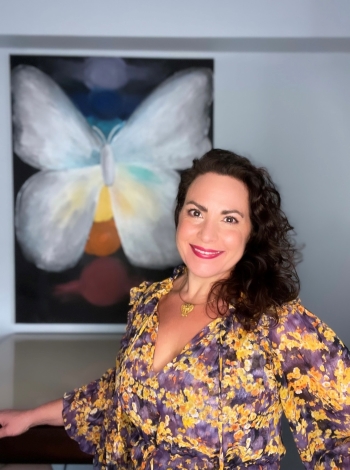
“Breathwork is the intentional and conscious control of the rate, pace and depth of your breathing,” said Lisa Caruso, who, like Eivazi, is a hotel-industry veteran who founded a wellness consultancy, JoyWelle, that teaches hotel teams, meeting attendees and other professionals how to manage stress and achieve well-being.
“When you control your breathing in an intentional way, you optimize oxygen levels in your blood while balancing carbon dioxide levels. It also reduces the level of cortisol, the stress hormone, in your body.”
Eivazi explained more about the biological basis for breathwork. “With mouth-breathing exercises, we’re putting the body into a state where pent-up stress and emotions like frustration, anger or sadness can be released,” she said.
To achieve this, she will lead participants in exercises such as “coherent breathing” (five seconds inhaling, five seconds exhaling) and the “physiological sigh” (two short inhales, one long exhale).
“Then we use nose-breathing exercises to rewire the nervous system from the sympathetic—fight, flight or freeze—to the parasympathetic, which brings calmness, relaxation and mental focus,” Eivazi said.
In fact, a 2016 article in the Journal of the Society for Neuroscience noted that deep nose breathing triggers the release of nitric oxide, which activates the parasympathetic nervous system while reshaping brain waves to allow for better cognitive function and memory—exactly what event hosts would want for their attendees.
“Everyone has to breathe anyway,” Caruso noted, “so why not do it in an informed way that brings so much benefit?”
For planners, this information and perspective can be used as the first building block for getting one or more breathwork sessions onto a meeting’s agenda.
Overcoming Misperceptions
Even after planners make the biological case for breathwork to their executives and to attendees, there are often a few incorrect assumptions that need to be addressed, such as: teaching breathwork during a meeting is too time consuming; attendees will have to sit or lie on yoga mats as they do breathwork; and the techniques are impractical to use while at a meeting or anywhere else outside of home or a hotel room.
First, a session that teaches attendees why breathwork is beneficial and how to do it need not be long.
“It could be a 20- or 30-minute part of a morning or afternoon general session, or you can address it for just 10 minutes each over a couple of general sessions,” Caruso noted.
[Related: How to Take Control of Mental Health and Well-Being]
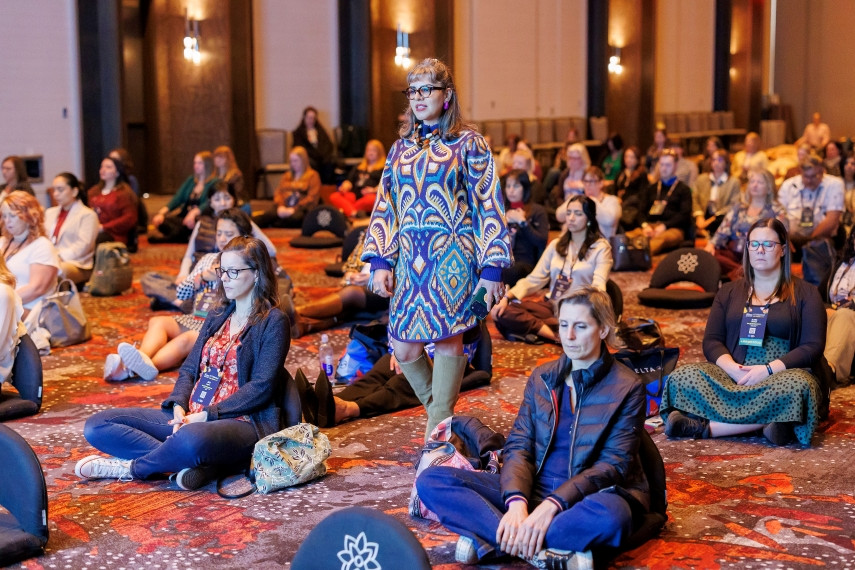
During the business-events industry’s biggest show, IMEX America in Las Vegas, Eivazi conducted a 15-minute introductory session for industry journalists in their breakfast room, providing them with a baseline understanding of breathwork’s benefits and having them briefly practice simple exercises they can do for just a few minutes anytime they want to relax and refocus.
The start of the day is not the only time that would be good to introduce breathwork. “Especially during the lull most people feel an hour after lunch, that’s when we can guide them through the practice to energize them and make them fully present again,” Caruso said. “Rather than throwing caffeine and sugar at your people, let's do a 10-minute practice session to oxygenate the brain. You can also close the day with breathwork, after all those hours when attendees were taking in information and interacting.”
The other common misperception—that attendees should be sitting or lying on a yoga mat or a blanket for breathwork, making it impractical to do in most places—is easy to dispel.
When possible, Eivazi and Caruso set up their session rooms with an area featuring yoga mats and meditation bolster chairs for attendees who want to try those. But they also have traditional conference chairs and perhaps some couches in the room to show attendees that they can achieve the desired results without any special accommodation.
“I do breathwork on the New York City subway,” Caruso noted. “It can be done in the office, the airport, a hotel lobby or on a meeting break. Wherever you notice that you're getting fatigued or anxious and you want to center and calm yourself, you can breathe intentionally for two minutes, five minutes, seven minutes, whatever. You'll become relaxed, more present, more focused and able to perform.”
“It’s important to let people know that even just five minutes of breathwork can make such a big difference in how they feel,” Eivazi added. “It’s easiest to start out with a routine when you wake up in the morning or before you go to bed. Once you get comfortable with that, doing breathwork in other places will be much easier.”
Spaces for Individual Breathwork
Even though breathwork can be done anywhere, planners could encourage their attendees to try it on site by using out-of-the-way spaces that pose no distractions. In other words: Don’t build these “relax and refresh” lounges in prefunction areas, if possible.
“It’s about making people feel safe to try getting comfortable with the practice, so we definitely don’t want to put them near passing foot traffic and background noise,” Eivazi said. “It’s best to use an enclosed room where you create cozy, private spaces. You must make it appealing for people to drop in for a few minutes and not overthink: ‘Are people watching me?’”
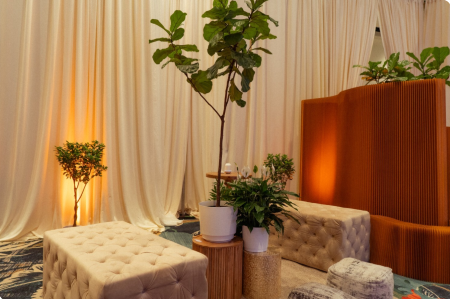
Once a space is chosen, creating the right atmosphere is key. Eivazi uses soft lighting and decor, fragrant essential oils and gentle music to activate the senses in a subtle, pleasant way. “With the 10 minutes we might have with someone coming in to do breathwork, we want to get their mind and body ready quickly,” she said.
Caruso advises her meeting clients to use these same elements, but she’ll also suggest noise-canceling headphones for participants if that would make them more comfortable.
Lastly, if you want to send people home with a wellness-related swag bag, you can include a writing journal, scented items, herbal teas and healthy snacks, she added.
Both Eivazi and Caruso believe that breathwork is becoming an easier sell for meetings with each passing day.
“When I began six years ago with this concept for meetings, most people laughed and told me, ‘You’re crazy; people are not going to sit in a conference room and breathe,’” Eivazi said. “But I knew that the value of breathwork would become recognized.”
“There's a huge opportunity in the business-events space for breathwork because it requires little effort for big impact: on-demand stress relief that makes people feel better and focus better,” Caruso added. “Who doesn't want that?”