


September as part of a significant rebrand, the City of Good Neighbors’ convention and tourism bureau is attracting national headlines and international attention like never before.
“This is a pivotal moment for Buffalo’s visitor economy,” stated Visit Buffalo President and CEO Patrick Kaler of the bureau’s multimillion-dollar campaign, the largest in four decades. “For the first time, we have the resources and visibility to share Buffalo’s story on a national scale. This campaign is about more than tourism—it’s about redefining how the world sees Buffalo and celebrating the qualities that make this community remarkable.”
With around 60 tradeshows and numerous attendance-building events on their 2026 schedule, Visit Buffalo and the Buffalo Sports Commission have many compelling talking points to share. Here are the projects and renaissance districts reshaping the city’s image and group appeal.
Buffalo’s Building Blocks, Past and Present
The brand message of “That’s Buffalo for You” spotlights Buffalo’s “unexpected contrasts and distinct personality” in a set of catchy two-word phrases.
Celebrating its centennial last year, the Erie Canal was christened the “Mother of Cities” for its profound influence on the development of urban centers in New York and beyond.
As the canal’s western terminus, Buffalo was destined to become the global leader in grain trans-shipment. Today, that inestimable industrial heritage, recognized as “Polished Grit,” is now a visitor calling card.
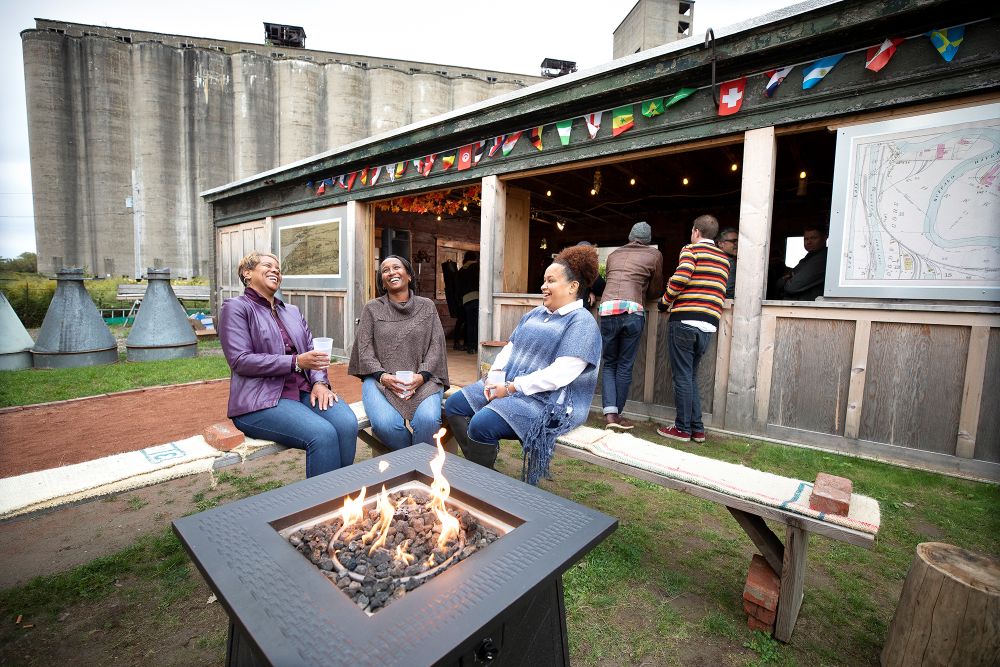
While still a milling capital—since 1941, the inner harbor’s General Mills plant has sweetened the air with the scent of Cheerios—Buffalo’s mighty grain elevators now form a cinematic setting for recreational activities like kayaking, guided tours, dining and art.
Unique rentals include Duende. Updating a former flour company office and garage, this restaurant, bar and indoor/outdoor performance space anchors Silo City, a trio of silo clusters on 14 acres reborn as a large-scale cultural event campus.
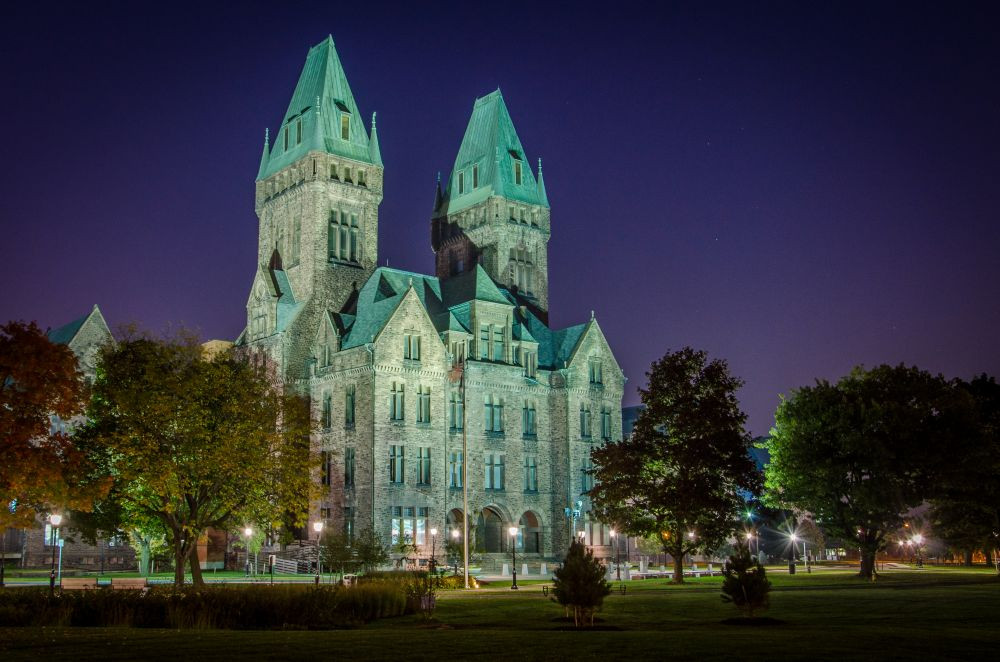
In a similar vein, “Historically New” celebrates restorations such as the $114 million transformation of the former Buffalo State Asylum for the Insane from 1880 into the four-star Richardson Hotel. Architected by H.H. Richardson in his eponymous Romanesque Revival style and set on 42 acres originally landscaped by Frederick Law Olmsted and Calvert Vaux (of Central Park and other national fame), the 88-key sandstone sanctuary offers 7,000 square feet of event space.
One of Buffalo’s eight National Historic Landmarks, the hotel anchors the adjacent cultural district where the event-ready Buffalo AKG Art Museum, with its world-class collection of 20th-century paintings and sculptures, dazzles anew following a $230-million transformation completed in 2023. Buffalo is also a Frank Lloyd Wright stronghold, with six works including the group-capable six-building Martin House Complex and Graycliff Estate on the shores of Lake Erie.

Synonymous with hometown classics like the Buffalo chicken wing, beef-on-weck sandwich, sponge candy and charbroiled hot dogs, Buffalo has a bold new “Refreshingly Spicy” culinary identity. The expanding portfolio includes two group-capable James Beard-nominated hotspots: authentic Texas-style BBQ joint Southern Junction and romantic stylish wine-driven Waxlight Bar à Vin.
Other major developments include the $6 million renovation of the Buffalo Convention Center, completed in 2023, that gave the center a new facade fit with color-changing lights, reworked a curbside loading and unloading zone for guests with its own built-in snow-melting system and reconfigured the entrance with new 10-foot-wide sliding doors for better traffic flow.
The Buffalo Convention Center’s 110,000 square feet of space includes a 64,410-square-foot exhibit hall, 12,367-square-foot ballroom and 21 breakout rooms. It’s also directly connected to the 396-room Hyatt Regency Buffalo, with 23,479 square feet of meeting space including a 10,120-square-foot ballroom.
[Related: NYC Likely to Have Vegas-Style Casino Resort Open by April]
This summer sees the anticipated opening of the Buffalo Bills’ new high-tech, $2.2 billion Highmark Stadium across from the team’s current 53-year-old venue. Buffalo is reclaiming its Lake Erie shoreline and green space heritage with the ongoing $110 million transformation of former LaSalle Park into the 100-plus-acre waterfront Ralph Wilson Park, after the late Bills’ owner.
“Buffalo offers groups a complete and dynamic experience, where culture, cuisine, history and outdoor activities come together in a way that’s both authentic and easy to navigate,” Kaler said. “Providing the ideal mix of character and comfort, the city shines as a premier destination for rewarding meetings and captivating group experiences.”
Resorts on the Radar
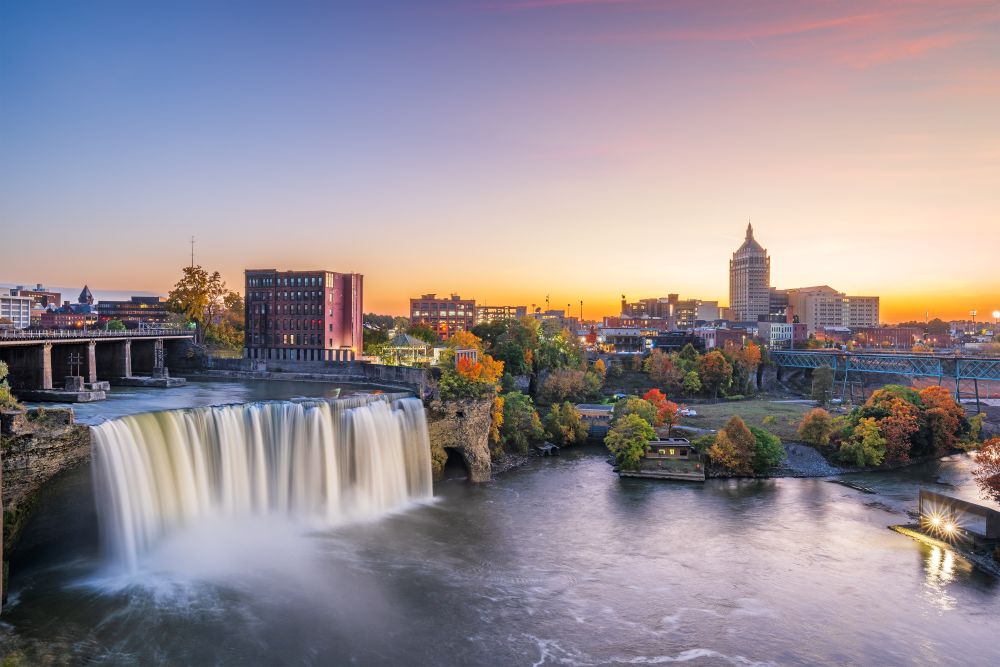
Likewise propelled forward by the Erie Canal, Rochester, with an industrial heritage that includes milling, flowers, optics and technology, and Syracuse, advancing from salt to diversified manufacturing including automobiles, typewriters, fine china and pioneering inventions, offer groups of mix of heritage and modern meeting options. With Albany, the state capital, completing the upstate city mix, the Empire State’s countryside regions boast a bounty of historic and modern resorts and large-scale properties.
Last October, the Albany Capital Center broke ground on a $54.9 million expansion project. The 30,000-square-foot addition, anticipated for completion in 2027, will add two ballrooms plus prefunction space, five dedicated meeting rooms, and 3,000-square-foot outdoor courtyard.
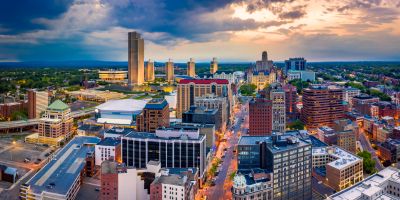
This January, NYC-based Emerson Hospitality, self-described “stewards of capital, real estate and hospitality,” announced the redevelopment of a historic Hudson River Valley agricultural estate into a luxury 70-key destination resort.
Dating to 1910, Black Creek Barns, in Esopus, was designed by Julian Burroughs, son of legendary naturalist and conservationist John Burroughs. Adjoining the John Burroughs Black Creek Trail, a 2,000-acre protected area, the 153-acre estate is close to the Hudson River and Burroughs’ National Historic Landmark cabin, Slabsides.
The announcement stated that the property will be “reimagined as a resort and gathering place that combines craft, nature, wellness and hospitality in a completely new way for the Hudson Valley.”
Slated for late 2027, the redevelopment will restore six historic structures and add new cabins and suites. Plans call for a 7,000-square-foot indoor event hall that will flexibly accommodate a range of group programs. Plus, two dining venues; 9,000-square-foot craft and design center; wellness facility; and outdoor amenities.
[Related: On the Scene at New York City’s The Kimberly Hotel]
Under an hour away in the Catskills, the Emerson Resort is another nature-inspired group destination. While unrelated to Emerson Hospitality, the property has kinship as a historic former dairy farm and its namesake, Ralph Waldo Emerson, whose Catskills-inspired 1836 essay, Nature, sparked the American Conservation Movement.
Some 20 miles from Esopus, the magical Mohonk Mountain House is the last surviving northeast mountain resort of the Victorian era. Founded in 1869, the Smiley family’s fairy-tale National Historic Landmark resort, perched on a glacial lake surrounded by breathtaking Hudson Valley scenery, remains an enchanting meetings destination for the ages.
Cooperstown groups have long gravitated to the Otesaga Resort Hotel. Located on Otsego Lake’s southern shore, this graceful 1909 mansion offers 30,000 square feet of space for gatherings of up to 300 people.
Gateway to the Adirondacks, Saratoga Springs is home to the Gideon Putnam. Opened in 1935, the 124-room resort, home of the Roosevelt Baths & Spa and offering 12,000 square feet of versatile space in 10 function rooms including a Grand Ballroom, expects to resume operations this spring following service upgrades.
[Related: Atlantic City’s Borgata Continues Its Hot Hand]
An hour north of Albany, The Sagamore Resort (1883) is serenity defined. The lakefront resort is set on an island connected to the mainland by a 60-foot-long bridge and offers 32,000 square feet of indoor space along with 20,000 square feet of manicured outdoor space. More enchantment beckons at the Inns of Aurora (see On the Scene) in New York’s fabled Finger Lakes region.
In 1993, Turning Stone Resort Casino opened as New York’s first land-based casino. This summer, the Oneida Nation-owned property in Verona, 30 miles east of Syracuse, becomes the Empire State’s largest meetings and conventions resort with the completion of its $370 million “Turning Stone Evolution” transformation.
Scheduled to debut this June, the 258-room Crescent Hotel will be the 3,400-acre resort’s fourth hotel, bringing the total key count to 1,046 guest rooms and suites. And slated for a Labor Day opening is the Grand Expo venue, with 200,000 square feet of flexible, contemporary space.