

This January, Houston First Corporation President & CEO Michael Heckman joined other local leaders, decision-makers and stakeholders for a panel discussion at the Houston Business Journal’s annual Economic Forecast event. The Journal’s conclusion from the data, trends and projections shaping the future of Houston’s business landscape: “2026 could be the best year yet for Houston’s economy.”
Here’s insight into the drivers behind the bullish outlook, including an unprecedented run of major sporting events, continuing tourism infrastructure development and the driving power of meetings and conventions as Houston embarks on a monumental year under the powerful campaign message, “A World in a City. A City of the World.”
Group Business Creates Stability, Strength and Momentum
Facing the same macroeconomic, geopolitical and other headwinds that continue to impact U.S. destinations, Houston’s $27.4 billion tourism economy experienced a 9% decline in hotel occupancy, demand, RevPAR and revenue last year. To put that in the proper perspective, though, the dip was measured against 2024’s record-breaking visitation of 54 million arrivals and aligns more closely with the hospitality sector’s trajectory in 2023.
On a bright note, as reported by Houston First Corporation, the destination’s well-established business travel base boosted 2025 hotel performance in the Uptown, Downtown and other inner-loop hotel markets.
Contributing events included the 60,000-strong Offshore Technology Conference at NRG Park. Benchmark events at the George R. Brown (GRB) Convention Center included the American College of Healthcare Executives (ACHE) Congress on Healthcare Leadership, bringing in a landmark 6,100-plus attendees, and a record 40,000-plus people to the second AFROTECH Conference, celebrating Black excellence in technology, culture and innovation.
All three events are returning to Houston this year, amplified by blockbuster rebookings such as the new seven-year deal with the FIRST (For Inspiration and Recognition of Science and Technology) youth robotics championship. Hosted by the GRB Convention Center seven times since 2017, the annual competition attracts more than 50,000 attendees each year with an economic impact of approximately $74 million. Running from 2028 through 2034, the new contract is poised to generate more than $500 million in total economic impact.
Delivering an anticipated three-year value of $150 million, the National Cheerleading Association’s (NCA) All-Star National Championship debuted in February. The prestigious three-day event was expected to bring an estimated 65,000 competitors and fans to the GRB Convention Center, with an activation footprint that extended into adjacent Discovery Green, a nearly 12-acre public urban park; the 19,000-capacity Toyota Center, the multipurpose home of the NBA’s Houston Rockets; and 150 city hotels.
Setting and Exceeding Major Goals
The cheers of the NCA participants were a fitting prelude to the other sporting events on Houston’s 2026 calendar.
One week after NCA in early March, 40,950-capacity Daikin Park, home of the MLB’s Houston Astros, hosted 12 games of the MLB World Baseball Classic. Fans from around the globe were expected in town to see teams that include the U.S., Mexico, Great Britain and Italy, to the tune of $50 million to $60 million in economic impact.
At the end of March, the attention shifts from the diamond to the hardwood, when thousands of fans will pack the Toyota Center for two NCAA Men’s Basketball South Regional contests in the Sweet 16 round for an additional $10 million slam dunk.
[Related: View the Texas-Mexico Borderlands in Photos With Joel Salcido]
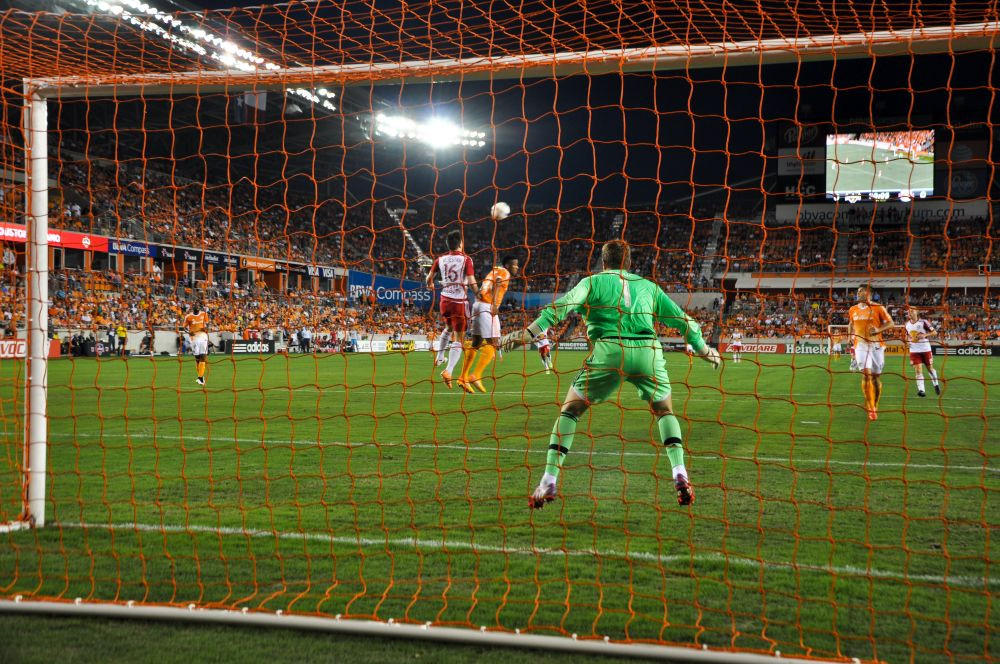
Then comes “The Beautiful Game” starting in June, when Houston hosts Men’s FIFA World Cup action for the first time with an economic benefit that could reach as high as $1.5 billion. Renamed Houston Stadium for the tournament, NRG Stadium, with an expected seating capacity of 72,220 fans, hosts seven matches. European giants Germany, Portugal and the Netherlands are among the contenders in five group stage matches, followed by a Round of 32 knockout in late June and Round of 16 match on Independence Day.
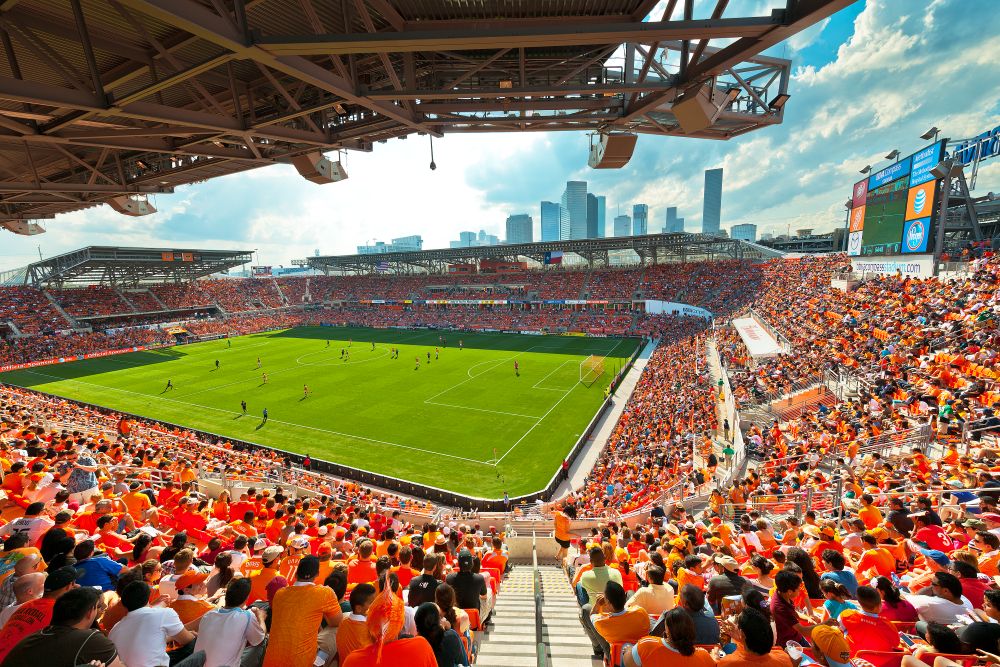
Activations include a FIFA Fan Festival in the EaDo (East Downtown) neighborhood behind the GRB Convention Center, where venues include 22,000-capacity Shell Energy Stadium, the multipurpose home of Major League Soccer’s (MLS) Houston Dynamo FC.
Houston Prepares for the Future
At the Economic Forecast event, Heckman called the World Cup “a global opportunity.” While the 2026 stack of sporting and other events is unprecedented, Houston—no stranger to world-class happenings and global tourism—is reaping the benefits of experience, planning, foresight and investment to create its own opportunities and destiny.
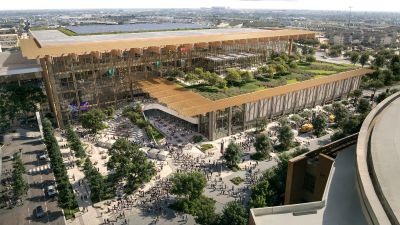
The GRB Convention Center illustrates this perfectly. No other city is primed with mature NBA, MLB and MLS venues within a half-mile radius of a major convention center. Taking nothing for granted, Houston First Corporation, which manages the venue along with 10-plus other city-owned facilities, is leading its billion-dollar-plus transformation into “the most sellable and innovative convention facility in North America.”
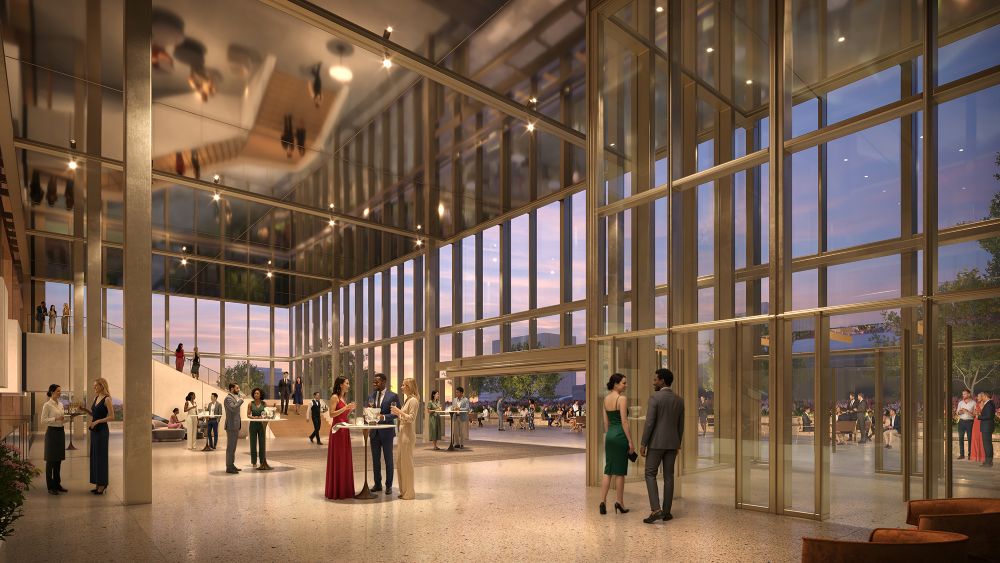
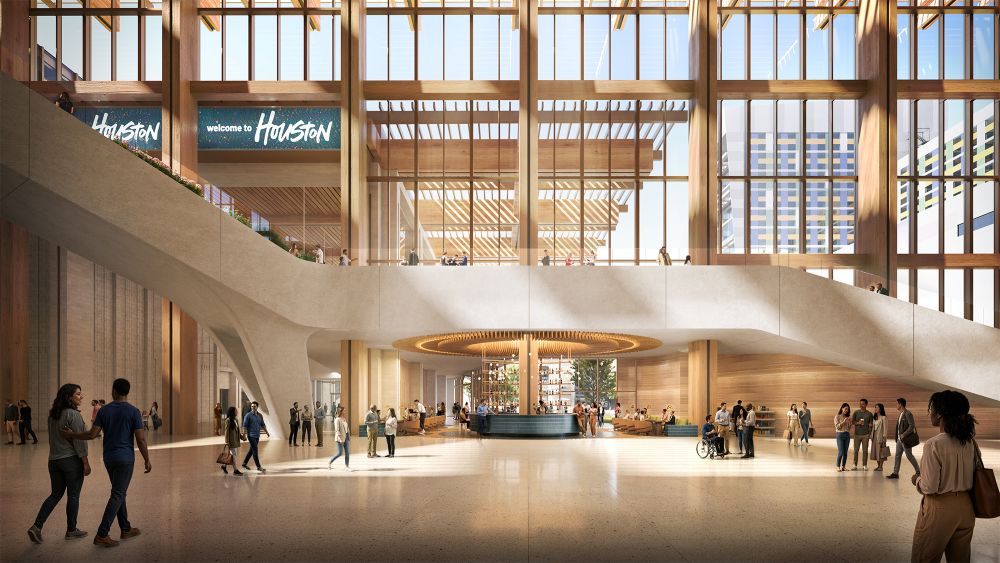
Slated for completion by mid-2028, phase one of the multiyear project includes a new 700,000-square-foot building dubbed GRB South and a 100,000-square-foot pedestrian plaza, paving the way for a new interconnected campus of major facilities, amenities and public spaces.
Recent analysis from leading destination real estate development advisory firm Hunden Partners forecasts that the expansion, which includes two exhibition halls totaling 150,000 square feet; a 50,000-square-foot multipurpose hall with an outdoor plaza; and the largest ballroom in Texas, will increase citywide equivalent meetings and conventions by 62%, reduce “dark days” by 66% and produce 337,000-plus additional annual group hotel room nights in the Central Business District.
[Related: A Local View of San Antonio in Photos With Al Rendón]
The full campus transformation, including a new entertainment district and other components, is targeted for completion around 2038. The first phase alone is expected to boost annual events at the venue by 30% and generate $20 billion-plus in additional spending over the next 30 years.
The investment is already paying dividends.
Houston beat out three other cities in a 19-month bidding process to secure the seven-year FIRST contract. Cited in an accompanying Houston First release, Chris Moore, CEO of FIRST, stated that the new GRB South building was among the major selling points behind the agreement, allowing the event to grow into the next decade. Heckman in turn emphasized that FIRST “is the first example of a major piece of business that Houston has booked due in part to the $1 billion expansion of the GRB.”
Hotel development also figures in the future, with Hunden Partners recommending the construction of a new 800-room hotel to support the GRB South expansion. Same story in The Woodlands, north of Houston, where a new study commissioned by Visit The Woodlands calls for two new upscale, full-service hotels to handle growing demand from corporate meeting planners and business travelers.
Notable hotel projects in Houston include a major expansion of the JW Marriott Houston Downtown. Slated for completion in early 2026, the project includes boosting the room count to 384 total keys and adding 10,000 square feet of event space. Closed in 2024, Uptown/Galleria favorite Hotel Derek is slated to reemerge this summer in time for the World Cup as the 299-room Greenleigh.
With airlift and connectivity serving as key strategic factors in sustaining and advancing Houston’s position as a vital hub for business, corporate meetings and conventions, supporting infrastructure investments include United Airlines’ $2.6 billion redevelopment of Terminal B at George Bush Intercontinental Airport (IAH), which is slated for completion this year.
Fueled and engines roaring, Houston is ready to welcome—and take on—the world.