

While every corporate and association planner knows how steeply costs are rising for their events, those responsible for coordinating executive meetings, customer summits or incentive-travel programs are in a particularly difficult position right now.
That’s because at the start of 2026, the average nightly rate at hotels and resorts in the luxury tier was $394, compared to $226 for the upper-upscale tier, according to industry research firm CoStar. That is the widest price gap ever recorded between those tiers. Even so, demand at luxury properties has remained steady, while the upper-upscale tier has seen a slight drop in demand.
Those circumstances might tempt some organizations to shift a high-end program into an upper-upscale property this time around. Doing so, however, strips away that most-desirable “X factor” from a high-end gathering: deeply personalized service that comes from a property staff’s granular knowledge of the group and its individual participants. This factor is precisely what luxury properties pride themselves on most.
Planners can ensure that their groups using luxury properties receive that exclusive level of service by asking smart questions, while also being informative partners for the property team ahead of an event. Here’s how.
Technology Helps, but People Perform
Among all hotel categories, the service experience relies on technology more than ever. Chris Nassetta, president and CEO of Hilton Worldwide, recently said the following on a McKinsey & Company podcast:
“Where technological advancement serves us really well is mass customization. … It’s already built into our ecosystem with the use of AI, taking all sorts of structured and unstructured data … to customize your experience while you’re on property.
“We’re a business of people serving people, so it’s always going to be about our people to a large degree. But it’s also going to be, ‘How do we enable those people?’
"AI is the greatest gift I’ve ever seen to enable us to deliver alpha in customer fulfillment. And that’s our business."
Liz Lathan, co-founder of Club Ichi, a professional community of nearly 600 corporate event marketers who often use luxury properties, agreed with Nassetta but with a qualification.
“With service, there’s a tension between technology and personalization,” she said. “On the scale of a corporate event, technology feels like the right answer because once you put your credit card in the machine, it recognizes everything about you, and it feels like you've checked the box on a personal experience.
“But what people using the luxury category want is someone to meet them at the front door, assure them they've already been checked in, and walk them to the elevator. It's a very different level of touch,” Lathan noted.
[Related: 3 Planners Share their Top Florida Incentive Programs]
The good news is that hotel-loyalty programs can help deliver more high-touch experiences to attendees without planners doing extra work. Hilton’s Nassetta referred to the use of this structured data to personalize the guest experience, while unstructured data can also be gathered by hotels from guests’ social-media accounts and other online activity, thanks to AI.
Surprisingly, planners sometimes don’t think to pass along the loyalty-account numbers of their participants. “You’re likely to have a lot of people enrolled in Marriott Bonvoy or Hilton Honors or another program,” Lathan said. “With that, you can let the property take care of a lot of the personalized experience, like specific F&B items or amenities being placed in members’ guest rooms or giving them access to the concierge lounge.”
What to Tell the Property
From the property side, Chris Finelli, vice president, global sales and events for Hyatt, noted that planners who share detailed information give the onsite staff a strong head start for crafting the right experience.
“With the event’s desired outcome,” he said, “is this about rewarding top performers? Strengthening team alignment? Rebuilding culture? Luxury environments allow for more precise design, but that requires clarity."
In addition, "understanding attendee expectations and VIP preferences at an individual level is particularly valuable,” Finelli said. Information about dietary restrictions and preferences, wellness priorities and privacy concerns allows the property to tailor experiences in meaningful ways.
Michelle Thomas, area director of sales, luxury brands, for Marriott International, takes a similar approach. “I want to understand how the client wants participants to feel during the program, and how they want participants to remember the experience once they’re home,” she said. “I get there by asking about how their attendees felt at their best conferences or incentive programs in the past.”
What to Ask the Property
On the flip side, Lathan stressed that planners must ask questions as well to ensure the property can handle a group’s specific needs.
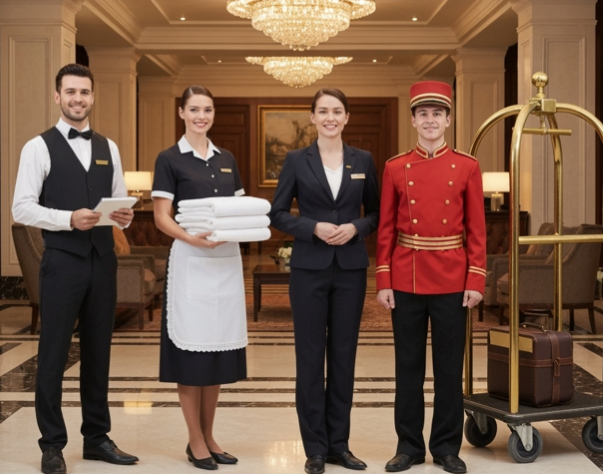
“Especially with high-end events, people don't want to stand in line, ever,” Lathan noted. “So, how can you create a concierge-level experience for every attendee? Planners have to partner well with the hotel even on the registration experience. How do you avoid having a reg desk at all and get the registration materials, the welcome package and the amenity into their rooms so that they simply had to be greeted at the entrance and escorted to their room?”
One common challenge is having many participants arriving in a narrow time window, Lathan said. As a result, “you might not have enough bell staff to handle all of the luggage, and it takes an hour or more for your people to get their belongings in their rooms. Especially when it’s an incentive where a lot of participants are flying on the same plane, it can get backed up.
“So, if you’re adding pre-arrival room drops plus these other labor-intensive elements to maintain the luxury experience,” she added, “the planner needs to find out whether all that can happen with the property’s typical staffing levels, or if additional personnel need to be on site at certain times.”
[Related: Why Vancouver Is Such a Unique Incentive Destination]
For other event elements, staffing remains the key component. With food and beverage setups, “are they staffed well enough to deliver the personable, white-glove service you want? Or do they need to hire additional staff, and will those people be trained for the service you want?”
Marriott’s Thomas noted that “one area we emphasize is staff tenure. We’ll tell planners about how long some of our associates have been with a property, or if it’s a newer property, how long some associates have been with Marriott. It reinforces that they’ve seen a wide range of experiences and can provide the right one for that group.”
All About the Experience
“In the past few years, the focus of luxury groups has shifted from elevated accommodations and seamless logistics to immersion,” said Hyatt’s Finelli. “Planners are asking how to make an event something that can’t be replicated elsewhere. In the luxury space, that means exclusivity, customization and a strong sense of place.
“Groups are requesting private buyouts, chef-led culinary journeys, behind-the-scenes cultural access and programming that reflects the destination in an authentic way,” he added. “Well-being is also more embedded in luxury meetings than even a few years ago. It’s a core element on agendas now. We’re also seeing planners prioritize privacy and discretion, with secure environments and controlled access points for executive groups. Luxury properties can deliver all of this through smart design and staffing ratios.”
Planners know that unforgettable moments are the entire point of using a luxury property for a meeting or incentive program.
“It's always incredible when the staff welcomes the group and also sees them off in a grand way, like properties in the Caribbean or Hawaiʻi where they have everybody dressed up, applauding and playing music,” Lathan said. “It feels really different and special.”