
In the meetings and events industry, there is arguably nothing more valuable than the people, and the finite resources that are their time and attention.
The concept of the “attention economy” refers to this scarcity of cognitive focus, specifically—a precious and limited commodity in a highly digital world where everything is fighting for a moment of our time. And how much time we give to things, from engaging with an Instagram reel to reading an email, is dwindling day after day.
As more readily available content is created and consumed—at an even faster rate now, thanks to the numerous AI platforms at our fingertips—our average eight-second attention span is only becoming harder to capture as one question is becoming harder to answer: How should we really be spending our time?

“Neurologically, we are being rewired to go faster, to move faster, to do too much all at once and keep scrolling,” said Devon Montgomery Pasha, facilitator of human experience and chief experience officer, DMP Creative. “Our brains relate dopamine to scrolling, to getting to the next thing and the next thing and the next thing right away. It’s not necessarily that our attention spans are shorter, per se, but that we want a consistent refresh in order to get that same feeling. And these two things are competitive.”
The attention economy helps visualize this concept and the important role human engagement plays in our daily lives. It also helps us better understand the value of capturing attendees’ attention at our events, where ROI is often determined by not just how many people show up, but also if and how they choose to participate.
“Everything and everyone is competing for Gen Z attention—human attention, in general—and [at your event], you have to compete more because they can just as easily dive into their phones, do microlearning, scroll, get their content,” Montgomery Pasha said. “There are multiple things vying for your attendees’ attention, and at the same time, you’re trying to strike a balance that gives them the chance to not—to not disengage, to not turn to their phone, to not put their attention elsewhere.”
When you successfully capture an attendee’s attention, Montgomery Pasha said, “it’s because something about your event has been value-aligned to that person.” It’s not necessarily about designing for shorter attention spans; it’s about understanding your attendees and creating experiences that make them want to be in the room.
“How are you creating the persona around understanding that need, and how are you designing experiences that fulfill that need in a way that gives your attendees something that feels tailored for them?” Montgomery Pasha said. “When you can do that, that’s when you’ll capture their attention. They’ll be more dialed in, and they’ll find the value of being there.”
[Related: The Z: Advice for Overcoming Onboarding From 10 Meetings and Hospitality Professionals]
The Gift of Choice: Attendee Agency and Autonomy
Typically, to create an experience that feels tailored to your attendees, you have to give them the flexibility to decide what they want to do—and make sure you provide enough options to please everyone without having too many variables in your event to control.
“The key is providing choice within structure,” Montgomery Pasha said. “So, no matter what, the choice has to be controlled and structured by the organizers, and what they want is to strike a balance between offerings and overwhelm.”
During our conversation, Montgomery Pasha asked me to think about the last time I was at the Cheesecake Factory and how massive the restaurant’s menu actually is—a list of over 250 items across more than 20 pages, plus over 30 varieties of cheesecake.
“When it comes time to decide what to eat for dinner, we’re so overwhelmed we all do the exact same thing: order what we ordered last time,” Montgomery Pasha said. “That’s decision fatigue. We’re overwhelmed. We’re overstimulated, and we’re not able to fully enjoy that offering because of it.
“If we’re trying to connect with our attendees, we have to remember that yes, they value experience,” she continued. “But if they value autonomy over experience, there still has to be some sort of choice.”
[Related: The Z: 10 Meetings and Hospitality Professionals Share Tips for Standing Out in Job Interviews]
Structured, Snackable Moments That Stuck
As Montgomery Pasha mentioned, the flexibility of choice within event design needs to be accompanied by structure and be intentionally organized. Maybe the way you offer attendees a choice is by highlighting priority or sponsored programs in your event’s education but letting attendees know they have one or two other options to pick from. Or, creating a sense of FOMO but running multiple sessions more than once to avoid forcing attendees to choose between two things they value.
“Where’s the harm in offering a session twice?” Montgomery Pasha said. “We’re so stuck in this mindset of, ‘We have to have a million choices, but we can only have those choices in a certain way.’ We’re missing the opportunity to drive people toward things that they value. We can’t keep doing the exact same thing for a completely different audience. We have to break out of this.”
The issue is, Montgomery Pasha said, “this is how we’ve always done it, and so what we’re looking at in terms of the attention economy is we don’t understand our audience yet. We don’t understand what [Gen Z] values or their emotional data, what drives their decision-making process, and we’re not doing any adaptation to align with that, to start getting into that.”
One thing my mom always says to me: “Baby steps are the best way to start.” That’s where “snackable” moments at events come into play—drop-in experiences, micro-engagement models and shorter, shareable programming that doesn’t require too much of a commitment. As a planner, you’re offering attendees a little taste. Your attendees are feeling a sense of agency and autonomy, and you’re getting the opportunity to better understand the audience you’re designing for without committing to an entirely new event structure.
As a Gen Z attendee, here are some snackable moments that stuck with me.
MPI Southern California’s [WE]Con Speaker Sprints
About a year ago, I was invited to speak at MPI Southern California Chapter’s WE[Con] event, where experiential education is always a priority. At last year’s event, instead of giving one speaker 45 minutes for a morning general session and 15-minute Q&A, MPI SoCal partnered with Unique Speaker Bureau International to feature three speakers who each gave 15-minute previews of what their 45- to 60-minute breakout sessions later in the day would focus on.
After the three speaker “sprint sessions” were up, attendees not only had a better understanding of the education topics to choose from but also the energy and personality of each speaker, making it easier to pick which breakout session provided them with the most value—and easier for the event organizers to track which content resonated with attendees most.
Caesars Entertainment’s Global Wellness Summit
Caesars Entertainment invited more than 100 meeting planners and members of industry media to Las Vegas in June 2024 for its first-ever Global Wellness Summit, a four-day event that showed just how wide the wellness space can be in the meetings industry and the many ways we can take care of our own well-being.
When it came to the event’s featured keynote speakers and education, Caesars kept topics broad yet focused and relevant to a diverse audience. Sessions covered everything from creating a mindful and positive workplace to strategies for reducing “quiet quitting” to exercises designed to foster neuroplasticity and creative thinking that enhance focus and learning.
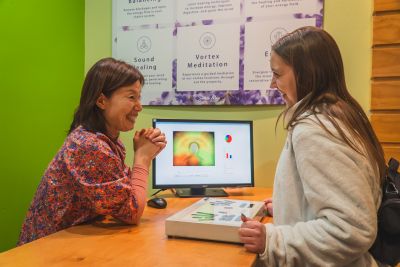
But at the welcome reception, Caesars decided to take a risk and get creative with mini-activations around the perimeter of the space, each offering the opportunity for attendees to learn about well-being practices that might be unfamiliar.
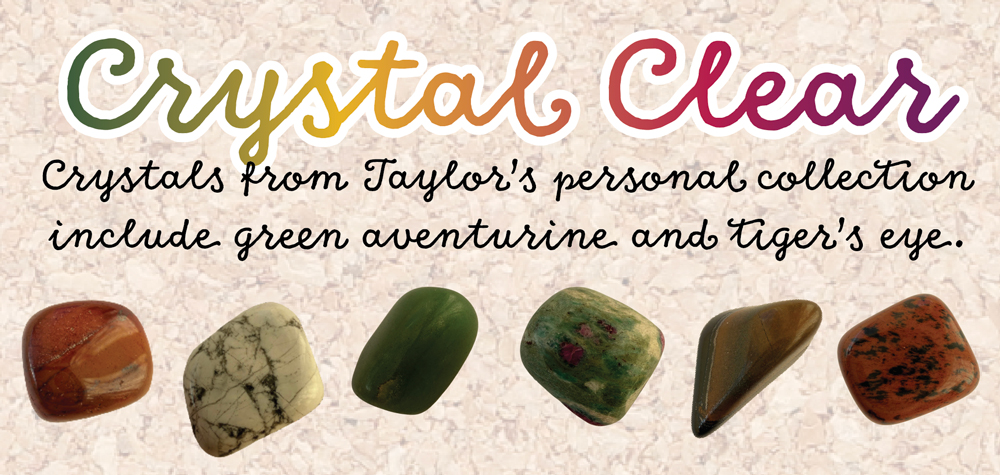
These “snackable” moments featured an array of sensory experiences, like aura readings by Body & Brain Wellness, scenting sessions provided by Scentex and a “Crystal Essentials” activation from CROW Practice that taught attendees how crystals can amplify and raise energy vibrations, make us more aware of our own energy and help us stay present and grounded.
The activations were available all evening for attendees to participate as they wished, and the more people started engaging with each one, the more others began to follow suit until, suddenly, everyone was going home with a crystal in their pocket.
Meetings Today LIVE! National in Irving, Texas
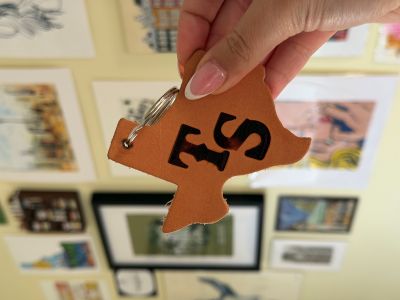
In between going back for seconds during the opening reception of our Meetings Today LIVE! National event in Irving, Texas, last year, attendees had the opportunity to brand keychains and luggage tags—some shaped like the state of Texas!—with Western-style letters to take home with them as a keepsake.
When attendees are eager and excited to get out and experience a destination but there’s still some event housekeeping to get done onsite, mini-activations such as this give attendees a taste of what’s to come as they have more opportunities to get out and about in the days to follow.
And when it’s all said and done, that keychain becomes a lasting reminder of the memories they made at our event.
Smart. Simple. Snackable. Successful.
Did I capture your attention ‘til the end?
Taylor
Have a question about Gen Z or a topic you’d like to learn more about? Share your thoughts with Taylor at taylor.smith@meetingstoday.com.
Mission Statement: "The Z: Planning for the Industry’s Next Generation" is an award-winning Meetings Today column discussing the meetings and events industry’s newest and youngest members—the incoming Generation Z. Written by Meetings Today’s Taylor Smith, a member of Gen Z herself, The Z explores how to welcome, work with, understand and plan for the industry’s next wave of professionals while serving as a guide for members of Gen Z themselves, planners and attendees alike.
Read more from "The Z: Planning for the Industry’s Next Generation."