

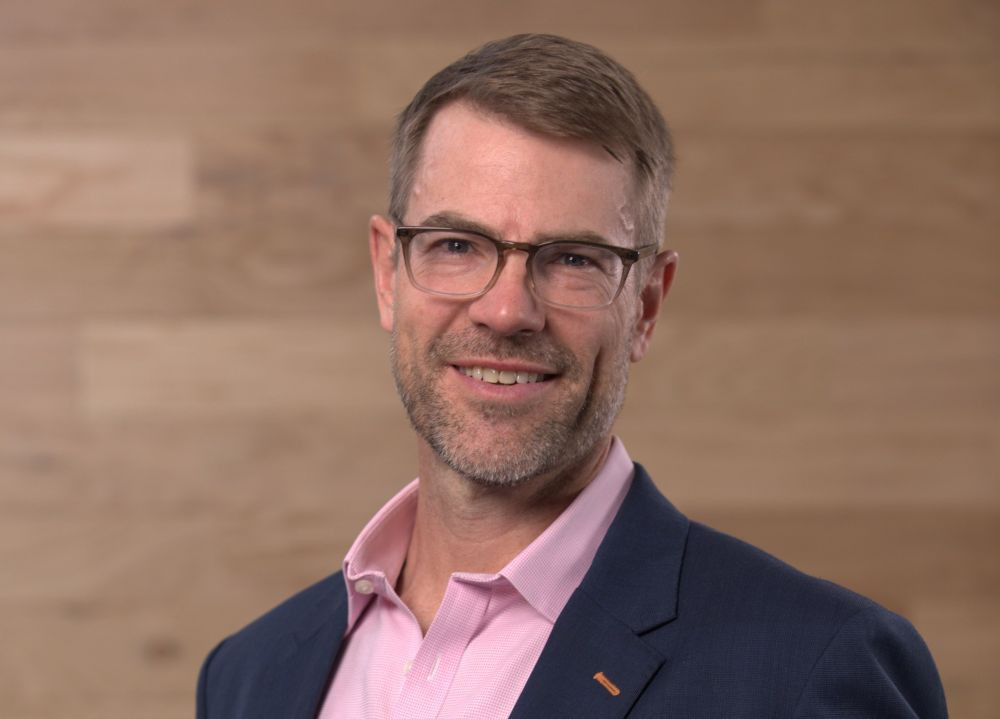
One10, a company specializing in science-driven motivation and performance solutions, named Drew Carter president and CEO in March.
His appointment follows a multiyear planning process led by longtime CEO Bob Miller in partnership with One10’s Board of Directors, and is part of a leadership evolution that’s aligned with the company’s long-term growth strategy and 2030 vision.
Miller transitioned into the role of vice chairman of the board, where he focuses on strategic acquisitions, key client and supplier relationships and enterprise-level growth initiatives.
“Over the past several years, we’ve positioned One10 for its next chapter,” Miller said in a press release. “After conducting a national search process, we are convinced that Drew Carter brings the strategic vision, operational discipline and cultural alignment needed to lead One10 into its next phase of growth.”
Carter previously served as president of performance solutions at One10 and as founder and CEO of Whistle Systems, an employee engagement and rewards technology company acquired by One10 in 2025. Earlier in his career, Carter led Maritz Motivation, overseeing global enterprise incentive and loyalty platforms, and co-founded AlixPartners Digital, which advises organizations on technology-driven transformation.
Meetings Today sat down with Carter to get a better understanding of what his appointment means for meeting planners and where Carter’s priorities lie in continuing One10’s evolution.
Taylor Smith: As you step into the CEO role at One10, what are your top priorities, and how will they directly impact meeting and incentive travel programs?
Drew Carter: Whether you’re setting up a meeting or a conference or incentive travel program, or really lots of other aspects of business, I think the first goal of any of our clients or colleagues is, how are you creating value and measuring the ROI of an incentive trip? It can be kind of challenging if you just look at that trip by itself, but we take a couple of routes.
The first is, our business is launching the Experience Index, which is a really novel way to measure the return on event-type concept, measuring the impact of our meeting. And it’s really the first in the marketplace to do that; we’re using our software, our behavioral science and our data sciences, which is kind of the envelope that we call our motivation science. Measuring that value is critical, and the Experience Index is a great way to do that…
What I’m bringing to that is a disciplined, systematic approach, so that we can harness motivation science in a way that’s very repeatable and measurable. That’s what I think really makes the difference.
How will the Experience Index help meeting and incentive planners design more engaging, effective programs?
I come at this business from a software and data-science perspective, so what I bring is, “If we have lots of interesting experiences where we’ve seen this works, this doesn’t work, how do we put that into a database? How do we make it available so we can learn from it?”
[With the Experience Index] you can say to a planner, “We’ve seen this work really well—that one, not so much—for a case just like yours.”
What does “motivation science” look like in practice for events and incentive programs?
The point is, how can we reduce friction from someone’s experience? That is an example of motivation science. So, instead of having five things for people to fill out to register for an event, can we get by with just two? Often the answer is yes.
It’s creating that systematic approach that says, “This is good, this is bad. How do we make more good and do less bad?”
[Related: Maritz Lands Current MPI Board Chair as Global Head, Business Events Solutions]
With your digital background, how do you see technology enhancing in‑person meetings and incentive travel?
In the lives of humans, we have been trained that our experience with technology should be like our Starbucks app or a Netflix app, or maybe Amazon, and when you take off your customer hat and put on your employee hat, you still expect that kind of interaction. I expect you to know who I am, to remember the last time we spoke. In the case of Netflix and many others, to anticipate what I’ll like. I just expect that. That’s how the world works.
So, when clients are working with technology at an event, a conference, a meeting, incentive travel, their attendees still have that same expectation. Your tech should work like all the best tech. Why wouldn’t it? And yes, our industry has been slow…The experience with technology at an event should be equivalent to how we engage with tech otherwise.
Secondly, the digitization of our lives makes in-real-life experiences even more memorable…How can we accentuate that? How can we use technology to make those events even better? How do I take away low-value things? Should I use facial recognition to identify you so you don’t have to stop and type in your name on a tiny little itsy-bitsy keyboard? How can I use tech to make a better experience?
What are the biggest missed opportunities you see in how organizations plan meetings and incentive programs today?
One is assuming that because something worked last year, we should just kind of do that again this year. “Last year was great, let’s just do that again” can be very appealing, but it’s such a dangerous slope. You slip down it and all of a sudden you’re eight years in and your participants are like, “Can we do something different?” And by then, what I see happen in the marketplace is you get a new boss, and the boss looks at last year’s program and the one before, and now you’ve got a lot of explaining to do…
The other one is tiered programs. Just focusing on the top 10% or 20%…by the time you get down to the fifth decile or so, they’re like, “Well, I’m never going to make this, so I’m out.” And they might be a little frustrated that they can see the activity: “I know these guys are going to Lisbon; now I’m kind of mad.”…It’s not difficult to create a multitiered approach.
Looking ahead, what mindset should planners adopt to keep their programs relevant and impactful?
I challenge all our folks, no matter what we’re doing, to think of what’s the boundary. You may not do everything, but what’s the very edge of what you could do? It’s an interesting thought experiment. At least we know where the boundary is…What’s the art of the possible?
Read about more moves and appointments in the meetings industry