

The Courage to Be Direct: Building Confidence Through Candor and Difficult Conversations
Season 7, Episode 6
Guest: Leslie Blye, Chief Revenue Officer, Ansera
Leslie Blye, chief revenue officer at Ansera, joins host Courtney Stanley for a conversation about leadership, confidence and the courage to have difficult conversations.
Together, they explore what it means to lead through change, how confidence is built through experience and candor, and the difference between managing a team and truly developing people.
Listen Now:
Listen to more Dare to Interrupt podcasts: MeetingsToday.com/Dare-to-Interrupt.
Podcast sponsored by Myrtle Beach Convention Center.

Meet Our Guest:
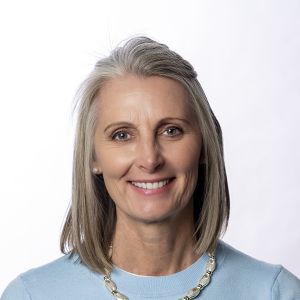 Leslie Blye, CMP, is the chief revenue officer at Ansera, where she leads revenue strategy, client partnerships and sales team development across the experiential industry.
With more than 15 years of experience, Leslie has built her career on a simple but powerful philosophy: Lead from the front. She joined L!VE—one of the three legacy companies that merged to form Ansera—in 2011 as national sales director, spending over a decade helping grow the business from a regional production company into a national experiential partner before stepping into her current role as CRO.
Known for her solutions-oriented mindset and ability to navigate complex, high-stakes situations, Leslie has earned a reputation as a leader who brings clarity, builds trust and keeps teams aligned around a shared purpose. She is deeply committed to mentorship and developing the next generation of sales talent. Her longevity, consistency and dedication to doing what's right have made her a respected voice at Ansera and in the industry.
Connect With Leslie:
LinkedIn
Instagram: @leslieablye and @anserahq
Facebook
Website
More About Our Host:
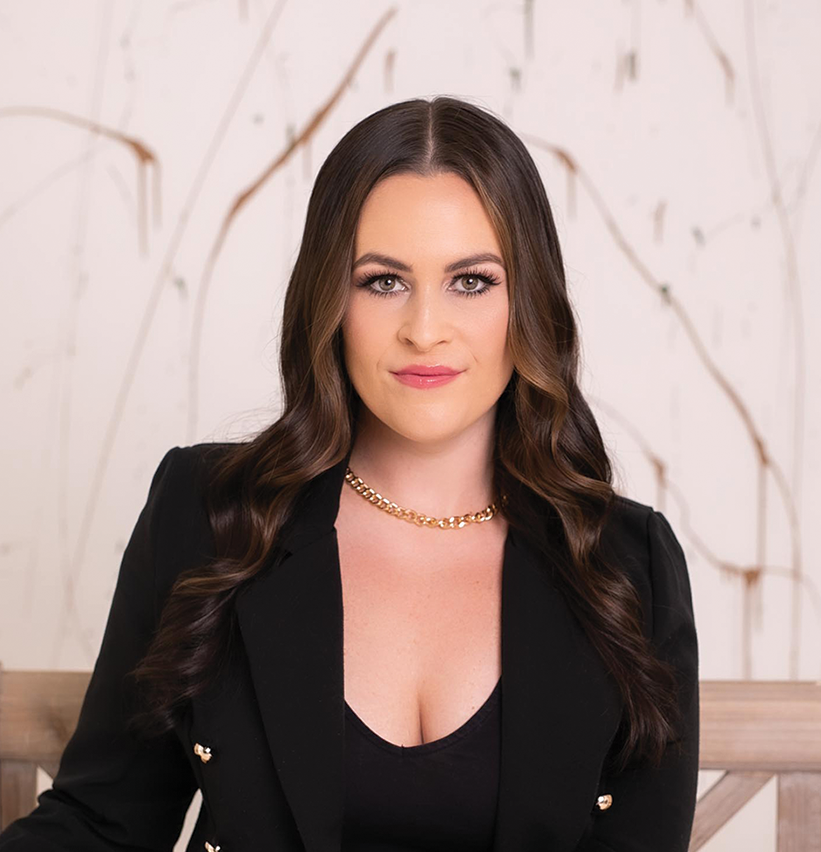
Courtney Stanley believes that transforming past experiences into impactful conversations through raw, authentic storytelling challenges the status quo, connects people from all walks of life and results in great change for the world.
Courtney is the youngest member to have ever been elected to Meeting Professionals International’s (MPI) International Board of Directors.
She is the recipient of Smart Meetings’ Entrepreneur Award, MeetingsNet’s Changemaker Award, the Association for Women in Events (AWE) Disruptor Award, the MPI Chairman’s Award and MPI RISE Award.
She was also named Collaborate and Connect Magazine’s 40 under 40 and a Meetings Today Trendsetter.
Recognized as one of the event industry’s most impactful change-makers, Courtney serves on the Events Industry Sexual Harassment Task Force, AWE’s Board of Directors, MPI’s Women’s Advisory Board, is a Meetings Mean Business Ambassador and is the co-founder of the award-winning movement, #MeetingsToo.
Courtney was named as a 2020 Meetings Trendsetter by Meetings Today.
Connect With Courtney:
Website
LinkedIn
Instagram: @courtneyonstage
Twitter: @courtneyonstage
Facebook
Transcript:
Editors note: The following transcription was facilitated by AI program Otter.ai and proofed by our editors. Although it is fairly accurate, there inevitably will be some mistakes, so please consider that when reading. Thank you.
Courtney Stanley
This episode is sponsored by the Myrtle Beach Convention Center. Leslie, welcome to the show. What's bringing you joy right now?
Leslie Blye
What is bringing me joy? We have a beautiful sunny day outside, and summer is my absolute favorite season, so that is one thing that's bringing me joy.
Courtney Stanley
I love that. And what are some of your favorite activities to do in the summer. What makes it so special?
Leslie Blye
I love being outside, so for me the weekend is as absolutely much outside time as possible, whether that is working in the garden, hanging out at the pool, being with family and friends outside, maybe having a cookout, just really, from the moment I get up to the very end of the day, I love to have as much outside time as possible.
Courtney Stanley
I love that you're speaking my language. I love summertime, too, for all of those reasons. I don't have a garden, though; that's in my future for sure.
Leslie Blye
Sometimes it can be stressful, but it also can be a stress relief.
Courtney Stanley
Is it a vegetable garden? Is it a flower garden? Is it both?
Leslie Blye
You have lots of landscaping that requires, I think, attention all the time. And then a couple of raised beds. So I've gone from having a large garden, vegetable garden, to smaller, and I've found just with the Monday through Friday time availability, I'm better keeping that small.
Courtney Stanley
Okay, I love that. That's good. That's really good. I love that. So, Leslie, you're the chief revenue officer at Ancera. Would you tell us more about this incredible company that you represent?
Leslie Blye
Yes, Ansera, which, by the way, many people don't know, but Ansera is the Latin word for goosebumps, and it really is the feeling that we hope to create, that we intend on creating for our clients with their attendees at each event. And Ansera has changed quite a bit over the years, because it started as three different distinct companies that were founder-led production companies, some with more of a creative agency flair, others with more of an AV and technical background, but all three were anywhere from 40- to 50-year-old companies that came together about two years ago, and we've been integrating since that time period. And in January, we're very excited to launch the new brand, Ansera.
Courtney Stanley
I love that it means goosebumps. I think that's so cool, and I know that your team has been running with this concept of awe. Can you explain just a little bit about what the science of awe is that your team has been so focused on doing research about and really incorporating into your work for your clients.
Leslie Blye
Sure, well, over the last several years, I think our industry, the events industry, has been contemplating and prioritizing the experience, and as we dug into what does experience really mean for the clients that we partner with, we kept coming back to impact, and while the what and the how of that impact can differ based on the client and the event, it really relies on retention, and so many times events today are designed in a way that only 10% of the intended message is retained, which is a little scary when you think about the financial contribution that has gone into that, but we looked at all of the competing factors for that attention, both during and after an event, and when that factors into return on investment, which really is return on engagement--you're hearing that a lot in the industry--and then what you were trading off from a financial commitment, we felt like we needed to take a more intentional approach to that, and in doing so, we've translated the challenge into creating both engagement and then resulting impact into this and Sarah pursuit of awe.
I mentioned Anne Sarah means goosebumps in Latin, and we really think of awe as that feeling that you get when you have goosebumps. It's almost a feeling--it's hard to describe--but our goal is to help our clients create that with their attendees.
Courtney Stanley
That's very cool, and what a shocking data point, that only 10% of information or content is retained after an event or conference, that's staggering...
Leslie Blye
Think about yourself; you maybe have attended conferences where you're struggling to not look at something that's going on on your phone or one of the devices that you have. It could be media, it could be news, it could be social media, it could be a message from family or friends that's happening while you're at the event, which is where you should be having the greatest amount of your focus. And then think about how that even diminishes when your attendee goes home, and now they're competing with personal life, family, things that are going on at work, and so all of a sudden what you thought was and felt so impactful for these two or three days becomes what was that topic that really resonated with me, and so you know we're looking at how we help clients to deliver more of that awe and impact both at and post-event.
Courtney Stanley
And Leslie, how are you doing that? So there's something called an AwwBOT, and I'm very interested in hearing more. What is this?
Leslie Blye
Well, you know, I can think back to probably two-plus years or so ago, we'd attend conferences, talk with clients, and they would ask, what is going on with AI, and at the time, you know, AI was really just starting to permeate all industries and really just kind of touch on our events industry, and in that you were seeing things like facial recognition, but it still felt very far. Now I think it has become so available; AI and tools so easy to build that for us; the AwwBOT capitalizes on AI. It's truly a tool that we have loaded in over 400 articles and academic briefs on experiential design, psychology of learning, studies of event architecture, and those help us to analyze and make recommendations for our clients' event frameworks, early uses for us, and the AWOT was just launched earlier this year, but so far we've been using that to look at agendas, run of show, keynote speaker presentations and scripts, and what they analyze and look forward to, and make recommendations on, or the tool does is things like attention fatigue, cognitive load, emotional impact, both before the event ever happens, and then how that is going to be translated when they go home.
So, what it is, what you actually saw and what you did, as well as what was your reaction; did it change the way that you thought about the event being successful? Was there a difference between an event looking good and one that actually lands with the audience?
Courtney Stanley
That's fascinating. So, just to break this down and reiterate for the audience, so you have clients that come to you and they give you things like their agenda, their run of show, they give you maybe keynote presentations. You take this content that they give you, you run it through this AI tool called AwwBOT, and essentially get a report saying, hey, these are some areas that we would recommend, you know, changing things up to make sure that you are maximizing attention or emotional connection to material things like that, is that right?
Leslie Blye
Yes, using it early on, you know, there's many times that you can use it throughout the process. You can use it post event and, and get your analysis as you start helping to ideate and plan for your next event, whether that's in the next year or maybe it's in the next three months, but it, when you're using it, you can design a better agenda, so that you're building in more of those moments, that energizer moments, break moments, networking times, certain parts of an event will drive better engagement, and so are you spending your attendees' entire day listening to one presentation after another? Are you building in ways for them to retain that and interact with that information, and then the people around them?
So it's a tool that's helped not only during planning, but we're now starting to use that during the production process, so the months leading up to the event, we're in executive producers working with the client to help improve and constantly add new and different ways to engage with their audience.
Courtney Stanley
That's pretty incredible. And I don't know about any other event agency or partner that is doing anything like this. This is incredibly unique, and I do see this being something that really can change the industry for the better. I really do.
Leslie Blye
We're calling it the science of all; we do really feel like that this is something new and different, but again, it's early days; we're starting just now, starting to develop out those things beyond what I talked about in terms of analyzing run of show and agenda, and all the different ways that it can assist both clients and how we work better and more efficiently for our clients.
Courtney Stanley
That's incredible. That's very cool. So, people who are tuning in, if you have anything to do with the event space, you've got to check this out on Ansera's website, or contact somebody, contact Leslie, contact anybody at Ansera, because this is just this technology is too cool. It's very cutting edge, Leslie. I want to give the audience an opportunity to get to know you personally as well, and you've spent more than 15 years helping organizations grow, evolve, navigate so much change, especially now, looking back. What are some of the defining moments that really shaped the leader that you are today?
Leslie Blye
You talk about change; change management. Being able to adapt is something that I see people either have inherently, and they can really capitalize on, or can be a challenge for them, and it can be everything from a process in your day-to-day activities to what the company is that you work for, so with Ansera, the change of three distinct organizations that may have had a very similar what I call end product, but had different types of customers coming together, doing things in a very different way, potentially, so some people it was continuing the same process they'd been doing for the last however many years.
Others, it was asking them to do it a whole new and different way. So, while you, while I, as a leader, am having to change and have different expectations working with different people, the people that I'm leading and coaching are going through very different changes and always keeping that top of mind, so for me, being able to adapt, being able to handle change, and really exhibiting those qualities has been something that I think has helped me, especially in the last several years, where change has just been constant.
Courtney Stanley
And Leslie, because you and I have spoken before, I know that you know one of the challenges that you have mentioned that you face is, you know, being really direct with people who maybe are a bit resistant to change. Why do you think so many people avoid healthy disagreement, and what have you learned about navigating those conversations effectively? Because you do manage a lot of different personalities, and some people are, you know, in it with you, and they're ready to take on the next chapter, and some people are more resistant to those changes.
Leslie Blye
I think, for me, when I look back at 20 years ago, when I first moved from being a sales rep and an individual contributor into being a sales manager, I approached it thinking that what caused my success is what everyone else needed to do, and it was one of the, like, probably big kind of aha moments for me, and I had a phenomenal coach leader at the time, was our VP of sales, and he shared with me, just because this is the way that you were able to be successful doesn't mean that's how every single team member does; as long as they can get to the end point in that objective or goal, they may do it differently, and embracing that and supporting them in that way was one of the things that I learned the most, and I often see other individuals who are just becoming managers struggle with because you want to have somebody do what you found success doing, but it isn't always necessary to do that.
Courtney Stanley
Yeah, yeah, and going back to this challenge of, you know, really being direct and having direct conversations, do you feel like, you know, in your leadership journey, was there ever a moment when you realized that avoiding a conversation would actually be more damaging than having the conversation?
Leslie Blye
Yes, and for me, that being direct, I would say, along with that change, and looking how to manage people differently, has been an ongoing struggle, and even I struggle with that, even today. Over the last, gosh, I'd say six months, I read Kim Scott's book, Radical Candor, and it was eye-opening. It was funny. I started reading it, and then another team member I had sent her a note and said, 'You've got to read this now. And so she started right after I did, but I would send her messages, 'Have you gotten to this section yet? This is so applicable to what we're going through,' but it gave me more of a road map for how, and why, and that what I was feeling was not unnatural, I think, especially with women.
You have a sense, and she addresses this, of a fear of being direct, that you're going to come off as bossy or not be respected in the same way, and that can happen, and you just have to work through that, but it can't hold you back, and so for me, I've had issues. I can even think in the last month where, whether it was a direct report that I was needing to address an ongoing challenge with on something for improvement, or up here where we had a difference of opinion, and what I was hoping for was to create a space of debate and discussion, and yet that person may not have been ready for that yet, and so to not give up, but just to keep pushing forward and pushing forward with understanding and empathy versus my way or the highway type thinking.
Courtney Stanley
You said a word earlier when you were first talking about this book, and that's the word candor, and I know that you've shared that candor is a muscle. What do you think the difference between being candid and being confrontational is? And how can leaders build that muscle without damaging relationships.
Leslie Blye
The building of it is practice, and so for me, think about lifting weights, and that you don't start with the highest weight that you can pick up, you work your way up, and so it's not an all or nothing when you realize that I need to be more direct in my conversations, in my relationships, that could be at work, or it even could be in personal life, and you don't, like, pick the biggest challenge to debate and discuss.
Find something that's easy, a little bit more comfortable, and then build that muscle up through practice, and it's also, I think, approaching it with a knowledge that you may have; the recipient of your conversation may be feeling defensive, and how can you do your best to eliminate that? For me, I always come back to data, and the data doesn't always apply, but I think it's probably just my sales nature--what do the numbers say? You can't argue with the numbers, the numbers are black and white, but that's not always the case. A lot of the discussions, especially in business, don't have anything to do with data, so you have to find a way to help a person understand where you're coming from, they'll let them know that you understand where they're coming from, and then ultimately what you're doing is trying to find the best end result or the best moving forward for the whole organization.
Courtney Stanley
And I think you said something so interesting, Leslie, about, you know, women specifically being worried about, you know, being perceived as difficult or as bossy, or you know, really not coming across the way that they would want to come across. If somebody is tuning into this and they say to you, I really struggle with being direct, and it's harming my professional development. It's not getting me where I want to be in my relationships, but I'm really afraid that by being direct I'm going to turn people off. What would you say to that person?
Leslie Blye
I'd recommend taking a read on that book, and not reading normally, I prefer reading versus audio books, but because the author is the one reading that, it just resonated in a totally different way for me, but it's finding somebody who could be a mentor and coach for you in that, so whether it's not that book and you don't like that or read that, find somebody that does it well that you really respect and ask them, "Hey, can you help me? Let's meet and talk through this." Also, find someone, whether it's that person or a second individual, that can model that behavior for you, and so that you start picking up and learning little ways that they do that without it being obvious, and then try and make that your own. So, for me, that modeling has been something that I've realized over the last several years can be extremely helpful when you're trying to change or improve something.
Courtney Stanley
I think that's great advice, and I'll share something too. I feel speaking up has been a journey for me. I will say, you know, my parents will describe me as a child as very opinionated and very bold and someone with great leadership potential, which I think a lot of times is framed as bossy, but my mom specifically was very intentional about trying to help, you know, create space for those leadership skills instead of, you know, putting them into a box.
And you know throughout my life experiences, I've gone through different ebbs and flows of having that childlike, you know, confidence and no cares in the world, and no fears about what people are going to think, to having, you know, a first job and maybe a bad boss, and you know, hard relationships and different scenarios and environments where I stifled my voice because it felt easier to do and it felt safer to do, and a lot of times that is a survival mechanism for people where avoidance feels safer than confrontation. But I recently really, especially in the last couple of years, and I will shout out my therapist for this, because this is always, you know, always a continuous journey of learning and growth, but over the past couple of years I've really started to reconnect with my voice and reestablish my voice in the world, and something that has become kind of fun for me is every now and then I'll just kind of pick a day where I decide that today is going to be my direct day, today is my outspoken day, and no matter what it is, doesn't matter if I'm at the grocery store or if I'm, you know, on a date or if I'm having a call with a client, doesn't matter what it is
But I will practice being as outspoken as I feel called to be, no matter what, and it's pretty incredible how empowered you feel when you really start to practice flexing those muscles of just truly being authentically you and letting your voice really speak for you. It's pretty incredible. So, I'll also add, it's so much fun, Leslie, too. And I'll send a voice note to my sister, and be like, "Oh my gosh, guess what just happened?' And you know, I did this and I didn't care about the outcome, and I just asked for what I wanted, and I did, you know, I said the thing, and I said no, or whatever it was, and I'll give her little updates along the way, because I'm excited about it. I'm excited that it makes me feel empowered, and it makes me feel connected to myself.
So, I'll also add that as well. If there are, you know, people who are tuning in that struggle, just like I have, and just like you've said, you have to pick it. Pick a day, pick a day to make it your outspoken day, and big or small, say what you think, say what's on your mind, ask for what you need, say yes, say no to the things that you want to say yes and say no to, and just see how you feel. I have found it to be a very exciting experiment, and definitely a rewarding one too.
Leslie Blye
Well, I'm excited to try that, and what I love about that is it's not just the work environment that you're picking that ports everywhere, and so it could be maybe a less threatening environment to practice and build that muscle. I'm definitely going to try that, and you talk about that, your therapist, and helping you narrow in on things. I don't know that I realized until really probably the last 8-10 months what a struggle I'd had with that until I work as many people do these days, work remotely, work from home; my husband does as well.
And although we're in different spaces, there's oftentimes you're hearing conversations, and he said to me one day, I don't know why you don't feel you can be as direct in your work environment as you do in personal, and it made me realize, wow, why, why is that? Why, why do I feel like I can be that way in my personal life, but yet with work and with colleagues that I do trust, it's not like we have a difficult environment. I don't feel like I can be the same way, and so I love that your exercise forces you to practice it, not just when the big issues come up, but all the time.
Courtney Stanley
Yeah, and I think it comes back to exactly what you said about doing the reps, you know; if you can practice these things in spaces that don't feel like the stakes are as high, and you start to build those muscles when the stakes do feel high. It's a maybe a little bit easier for you to navigate those conversations, and it's.. it is a journey. This is not an overnight thing, you know?
Like I've said, I've gone through my own peaks and valleys of really staying connected to my voice and honoring myself by using my voice, and it's work, it's work; it's a lot of psychological work, it's a lot of work to remain curious about yourself, and I love your story that you just shared, Leslie, because what I heard from that is that you became curious, your husband pointed something out, and you started to ask the question, "why is that," you know, and that's the best thing we can do is once we become aware of something, is to ask those questions of what, why do I show up that way, what was I struggling with, what triggered me, what was I avoiding, how did I not want to be seen, you know, what was I afraid would happen if I were to walk into that space and take up space, and I think that's the best thing that you can do is start to ask those questions and then experiment a little bit what would happen if you were to take up a little bit more space than you normally would
Leslie Blye
Well, and finding somebody, if it is in the work environment, finding somebody that you have confidence and trust in that you can share this with, and maybe the two of you are working on the same thing, or they have something that they're wanting a little bit of coaching on, because I have a team member like that, and you talk about finding your voice, and he's told me several times, I just see you finding your voice more, and feel, in seeing that confidence that I know you should have, but you don't always say that you have.
And that we were just having this conversation yesterday, in terms of like feedback, and why it's easier sometimes to give somebody either the managing up feedback or peers feedback, but sometimes the direct reports that you have might struggle with difficult feedback to provide, and so for the two of us, it's always someone who is recognizing, acknowledging and helping me to get better, and I'm doing the same, whether it's on the same topic or something different, but that has helped tremendously, having someone that's kind of like along the journey with me.
Courtney Stanley
There's something that you touched on here that I want to expand upon, and that's a willingness to be vulnerable about the things that you're working on, because even in our conversation when I started to also share that these are things that I've started to work on, and then we started to connect more on this topic, and I think that we miss those opportunities sometimes when you know we don't; we're afraid that if we share with the world that we aren't perfect, that we're going to be judged, or we're going to be looked at as less than, or that we're incapable of leading, or with whatever it may be, but it's actually quite the opposite.
When leaders demonstrate vulnerability, people follow in their footsteps and are more willing to share what they're also struggling with. It's a true opportunity to connect at a really deep human level, and it's such a beautiful thing. And I think we're so afraid to take our masks off and just be that. We just kind of continue to go through the days and fake it till we make it, and I don't know that that's the most effective way to build relationships.
Leslie Blye
No, I agree, and it can be something that's an easy discussion or it's a difficult discussion, but I found that vulnerability, especially in a one-on-one situation, when you're sharing...let's say that you have a team member who has a challenge, maybe that's communication, maybe that's being more action-oriented, but I've often found if there's something that I can relate to a past experience for me or something that I'm currently trying to focus on and work on; it's like the two of us are working on it together, and it doesn't matter that it's employee and manager or what that peer-peer relationship is, and so kind of turned one situation almost into like a game in the sense of if we're on a large Teams call and I'm sensing something, or she's sensing something, she might send me a message, and it has taken what could be not an easy thing to deal with and has made it almost fun, and really challenges one another. You're right, like, okay, I need to take a different perspective here.
Courtney Stanley
Yeah, I think that's fantastic, and I like that there's a certain level of accountability there too, you know, with somebody else. I think that's really cool. Leslie, how would you describe your leadership style, because you have had so many different experiences, and you are really getting curious about opportunities to continue your personal professional development. How would you describe your leadership style today?
Leslie Blye
Well, if you can be a blend or a combination, I'd say probably combination problem solver and people develop our developer. When I think about the spaces where I'm the happiest, when I find success, it's in those two areas. So that same VP of sales that was a coach, truly he was a coach and a mentor. He also talked about being very solution-oriented in thinking and in action. So, when it comes to problem solving, I see, I recognize and I appreciate when people come with not just their problem, but they've thought through some solutions, and they want to pose those solutions, and they want to discuss them, and want to get feedback. They're not coming to you and saying, "Courtney, I have this problem, solve it for me," but "I have a problem. Here's how I've gotten here, and here's some ideas I have to make that better. What do you think?"
And it's easier for the coach, it's easier for the mentor to engage that way, and then the individual learns. So, love that about being, you know, solution-oriented when coming with a problem. And then, on the people-developer side, you know, I mentioned that I, when you have that moment where you see someone that you've been working with to either improve on a skill or really show their confidence, and you get to see it real time, is this almost like parent type of joy that you're like, this is an incredible feeling, and it's that person who's having the actual success, but because you either help them along the way or you see them do something they didn't think they could, or have that level of confidence, it is such a boost to me. So, I'd say if I could have a blend, it would be those two.
Courtney Stanley
Yeah, I can definitely see that. And I want to ask a follow-up question to that on the people development side, because you know you're managing a sales team, and there is a difference between managing a team and actually developing a team. Where do you put your energy, and how do you know when somebody's ready for more?
Leslie Blye
It's a really good question. Oftentimes people think that they want more, and maybe it's more of the title or the income that they're looking for, the recognition, but the more is when they start exhibiting skills and leading without being asked to, and leading doesn't mean I'm the leader of an entire organization acting like the CEO, it could be a leader in a coordinator role.
What it means is stepping up, coming up with solutions, coming up with new ways that things can be done, digging into the root of the problem and then offering up potential solutions to that, and not being afraid to speak up, and then all of a sudden I start seeing those behaviors happen more and more, and they're asking, "Can I get involved in this more?" Or "I think I've got great input here," that is what to me elevates somebody as needing and looking for the next challenge, because it is hard, especially in sales, it's very different being an individual contributor versus being a coach or manager.
You have to love developing people; you have to love seeing someone else succeed, because that is how then you succeed is from that, but you go from potentially being the greatest revenue generator or one of the most significant in your organization, to now helping other people be that, or micromanaging everything that's in your control. You can't do that for other individuals, you have to help them to reduce barriers and identify better ways of doing things.
Courtney Stanley
Mmm. I'm going to ask you a little bit of a curveball question here, because there are, you know, plenty of people who are really ambitious and high-potential, so if we were to think about those high potential people, what might they misunderstand about what it takes to earn their next opportunity?
Leslie Blye
It's a good question. I think it's moving from only looking at how things affect you as the individual to how things and you affect the entire organization. That's where I really see that that change in thought.
Courtney Stanley
Yeah, that's a really great answer. I was just having a conversation with somebody the other day about the next generation that's coming into the workforce, and you know, my generation included, and I'm a Millennial, so I'm not the youngest generation by any means to come into the workforce right now.
But you know, from my generation, and certainly the one that followed mine, there was so much criticism around, you know, job hopping and being, you know, overly ambitious to climb the ladder without paying your dues, and those types of things. So, that's really where that question came from, in terms of people development, and you know, really wanting to encourage leaders to harness something as amazing as ambition, and that's such a beautiful strength and skill to have, and spirit to have, but at the same time massage that person's development, so that they understand that there may be some sort of benchmark or process that they have to be aware of in order to make moves, upward moves, in an organization.
Leslie Blye
Yep, again, I come back to, and it may just be that this is what has worked for me in terms of the modeling and identifying people that I think have done something really well, have either navigated that change, or you'll see individuals in organizations that continue elevating themselves and their skill set, and then that next opportunity is there, and I truly believe that for the most part you create those opportunities for yourself.
Yes, there are organizations where inherently it's difficult to elevate yourself to move into new positions, but if you can put yourself in a place where people see what that contribution is, and that you are looking somewhat for the better good of the organization, not just for my own personal success, you can't help but be noticed. Those are the conversations that, in terms of as a leadership team, when you're talking about the same individuals constantly stepping up, constantly offering new and a different approach to doing things, you can't help but think when a opportunity comes up within the organization, we should look to this person, because they are always there in that conversation.
Courtney Stanley
Mmmm and if we were to, if we were to have a conversation with young professional Leslie, what would you want to, what would you want to say to her? And this could be, you know, in terms of using your voice, trusting your instincts, having, you know the courage to be direct, it could be anything at all. What would be the one thing that you, you would advise her to do, or to believe when she's first starting out?
Leslie Blye
Learn from all the experiences, because even the ones that--even when you're looking back--look like a negative experience; you can take something from so when you're in an environment where you don't have a great manager, you don't have a great leader, don't focus solely on the negative of that and what it's keeping you from doing, but instead look at if I was in that position, how would I do things differently, and if ever in the future, I'm in that situation, what will I do, and, and take the learning from the negative and turn that into more of a positive.
So, because I think at the time, especially when you're younger, you can't help but get consumed in the, this is horrible, this is a bad situation, I've got to get out of it, I don't like it, instead of what can I learn from it while I'm trying to improve where I am in my career.
Courtney Stanley
Yeah, that's such good advice. And I firmly believe that every life experience has growth opportunity and lessons to be learned. So, I completely, yes, I really think some of the most difficult experiences we go through are some of the most transformative ones. If we're willing to look at it through the lens of this can help me grow, this can expand my skills, this can change my perspective. I completely agree.
Leslie Blye
I won't state it exactly, but a saying about how you know true character is exhibited when times are tough, when the challenge is there, and I firmly believe that it is easy to just take the path of least resistance, but truly your character and your strength, whether it's as a leader or as a team member, it really shows, and it's needed when the times are tough. Whether it's within your business, it's the economy, it's situations that may be going on at home that you're trying to balance life at work; it's not that you have to be perfect all the time, it's just really rising to be, you know, the best that you can be at that moment.
Courtney Stanley
Yeah, I agree with that completely. And I think that's such a beautiful note to wrap up this conversation on, but I do want to give you an opportunity to share any lasting words, a final piece of wisdom, or advice with our audience today, before we wrap up.
Leslie Blye
Along with the being more candid with your work environment and personal and home, I would say it's having confidence in yourself, and you mentioned the line of the kind of fake it until you make it, but sometimes you think that you might be faking it, and you really aren't. You have that confidence, you have that ability. So, I would say have more confidence in yourself, and find somebody that you work with that can help be your.. you guys can be co-mentors to each other in terms of something like that.
Courtney Stanley
I think that's great advice. That's really wonderful advice, Leslie. Thank you so much. This was just wonderful having you on the show.
Leslie Blye
Thank you. I have really enjoyed our conversation, and I'm taking home your exercise for one day each week, being very direct and candid.
Courtney Stanley
Yeah, it's your day; it's your day to be bold. It's Leslie's bold day, outspoken day. Yeah, thank you so much. And audience, of course, thank you all so much for tuning in. Share what you learned from this episode with us on social media by following at @MeetingsToday and at @CourtneyonStage, and be sure to never miss an episode by subscribing to Dare to Interrupt on any major podcast platform. Lean into hard conversations, trust yourself, and keep daring to interrupt my friends until next time.