
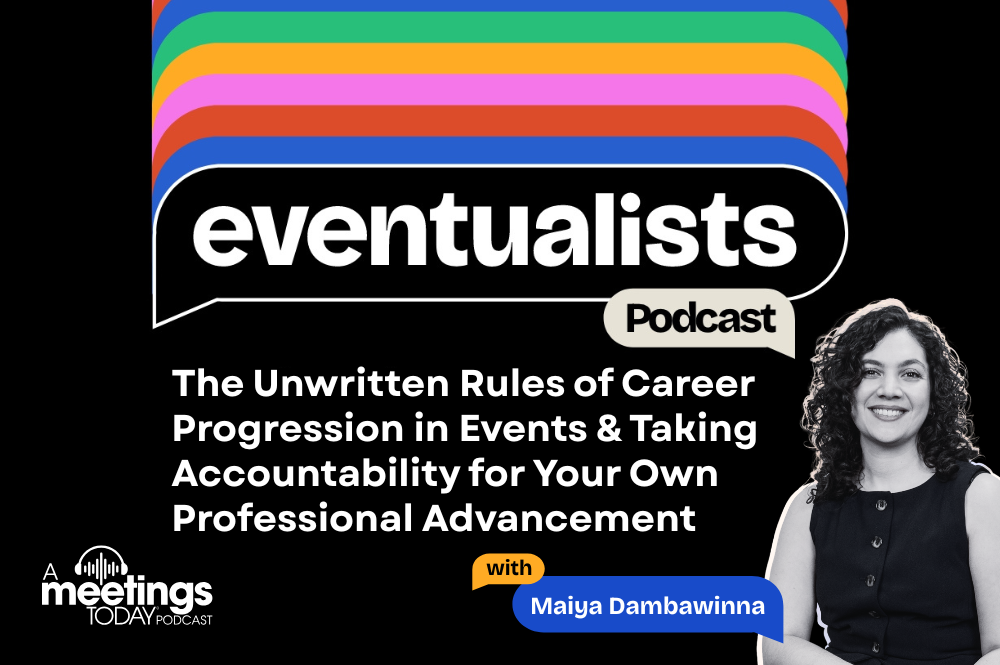
The Unwritten Rules of Career Progression in Events & Taking Accountability for Your Own Professional Advancement
There’s no formal roadmap for career progression, both in the events industry and almost all others. Nobody gives entry-level employees a clear checklist to follow that will lead them to their next promotion, or a map showing them how to climb the corporate ladder rung by rung. Yet somehow, some people figure out how to progress quickly while others compare themselves and wonder what they’re doing wrong and why they’re so “behind.”
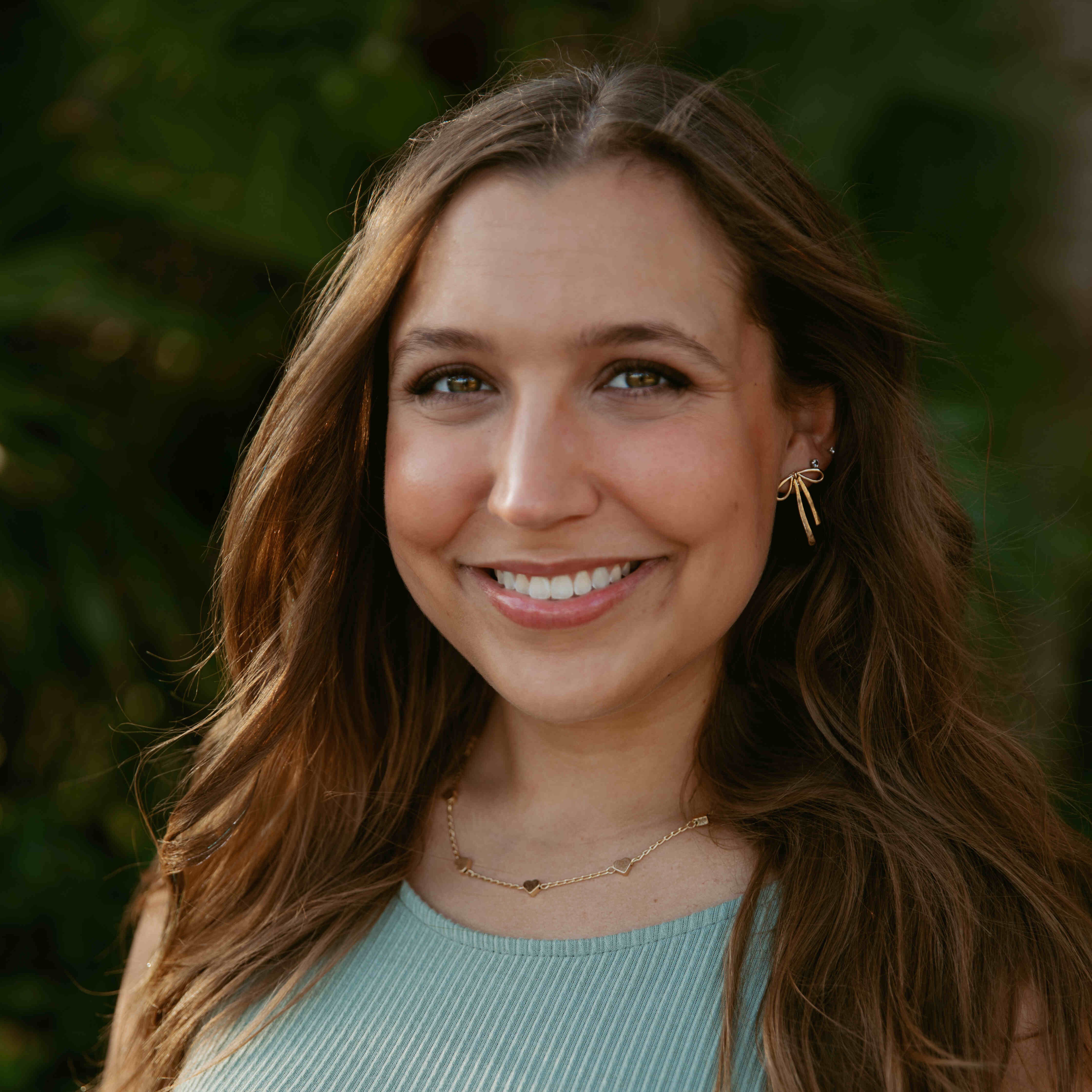
In this episode of Eventualists, co-hosts Taylor Smith and Hannah Elston are joined by Maiya Dambawinna, event producer at Make Events, host of the Beyond the Verse podcast and a Tomorrow’s Talent 2025 winner, to lay out the unwritten rules that shape career progression in the events industry and remind listeners that there is no set timeline to follow. Just because someone else is getting ahead doesn’t mean you’re falling behind.
Weaving in thoughtful remarks and relatable anecdotes from her own personal experiences in the industry, Dambawinna joins the Eventualists co-hosts to unpack the factors that influence career advancement beyond job descriptions and performance reviews, from visibility and trust to reputation, relationships and the thief of joy that is comparison.
The goal: to uncover how careers actually evolve, and what professionals can do to navigate progression with greater clarity and intention. Success in the events industry isn’t just about what you do; it’s about how you grow, who you know and the things you do to position yourself for progression over time.
Listen now:
Meet Our Guest:
Maiya Dambawinna, Event Producer, Make Events
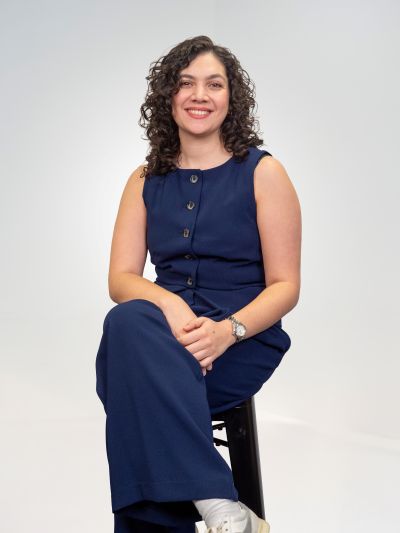
Maiya Dambawinna is a Project Manager at Make Events, where she orchestrates conferences, incentives, large-scale meetings, and bespoke events from conception to delivery.
Maiya's journey in events began as creative and logistics lead for Walk On Charity Fashion Show 2023, raising over £46,000 in charitable fundraising, an achievement that established her foundational skills in creative event production, large-scale coordination, and stakeholder management. From there, she joined agency Pure Communications Group, progressing to Event Coordinator by 2024. During this time, she was awarded as a Tomorrow's Talent Award 2025 winner - recognising her role in the industry as an up-and-coming event professional.
2026 finds her a few months into her Project Manager role at Make Events, where she brings her creative expertise to bespoke event strategy as the team expands into London. Her work at Make is reflective of how she has distinguished herself throughout the past few years, leading on bespoke event creation from conferences to incentives, developing client relationships and curating compelling pitches and proposals. As a young biracial woman in the industry, Maiya is vocal about the importance of authentic representation in events spaces and champions ambitious young professionals - particularly those from underrepresented backgrounds - believing that authentic voices and diverse lived experiences are essential to how the industry innovates and connects.
Beyond her work, Maiya is a self-confessed bookworm with a Master's degree in Twentieth & Twenty-First Century Literary Studies from Durham University. She co-hosts Beyond The Verse, a poetry podcast featuring poem analysis, further reflecting her commitment to creative storytelling alongside her strategic role.
[Related: Why So Many Event Professionals Burn Out and Don’t Talk About It]
Transcript:
Editors note: The following transcription was exported from Microsoft Teams and proofed by our editors. Although it is very accurate, there inevitably will be some mistakes, so please consider that when reading. Thank you.
Taylor Smith
Welcome to Eventualists, real stories, eventual experiences, a new Meetings Today podcast for tomorrow's talent and today's leaders, co-hosted by me, Taylor Smith.
Hannah Elston
And me, Hannah Elston. The eventualists sheds light on the unexpected realities of life as a business events industry professional. And today we're excited to welcome our next guest to the podcast. But before we do, Taylor, today is a very special day for us. Do you want to explain why?
Taylor Smith
Today is a super special day, more special for you than me, so I won't steal your thunder. You have to go.
Hannah Elston
Thank you. Well, today is my three-year work anniversary with ELX, which is really exciting. It actually marks five years since I've been in the industry, which obviously being the age I am now means that 20% of my life I've spent working in events, which is such a crazy thing to say out loud. And it's somebody else's special day tomorrow. Taylor, what's happening?
Taylor Smith
Tomorrow is my four-year work-aversary at Meetings Today, which is also crazy to think about. When I think about it, I think about how it's been four years in my job as a professional and I spent that exact same amount of time in college learning how to be this person, and the time that I've spent in my role at meetings today has absolutely flown by so much faster than college did. It just feels so weird. I'm like, what do you mean it's been four years? I'm still learning and I'm still figuring stuff out, but at the same time, I've got some experience now. I have some lessons I've learned. So, it's a very reflective time, I think, for both of us.
Hannah Elston
Definitely. And I think, you know, you say that we've had some lessons we've learned. I mean, we have started a podcast to share most of those lessons, so I would think so. And we have something else coming up, which is very exciting. We're going to be reunited in San Antonio for MPI WEC. I've never attended before. Taylor, you've attended a couple of times, right?
Taylor Smith
I have attended a couple of times and I love it. I think it is one of the most hard-hitting educational shows I've been to in our industry, MPI does such a great job at really reinventing what education looks like in this industry and trying new education formats.
I'm super excited. If anyone is attending, definitely attend the general sessions. They're doing something new this year. So those will be awesome. But I'm really just super excited to see all my friends and work colleagues and everyone. When you get together at those big industry trade shows, you get to connect to so many people and knowing you'll be there now, I'm even more excited.
Hannah Elston
I know it was so last minute, but I'm so glad that I can join and it's gonna be a new place on the map that I can visit. So, I have got my cowgirl boots ready. I'm very excited to hop on that plane, or should I say planes to San Antonio. It's a long journey. So Taylor, meet me at the bar when I land, okay?
Taylor Smith
Oh, deal. I will have it all laid out for you. You can take your pick. Margarita, martini, let me know.
Hannah Elston
You know how I feel about a margarita. So, with that, I say let's dive into this conversation. Taylor, do you agree?
Taylor Smith
I'm ready.
Hannah Elston
Well, today, we're excited to bring on a new eventualist Maiya Dambawinna, event producer at Make Events. Maya and I met last year as winners of Tomorrow's Talent in the UK, and today she is joining the eventualists to unpack the factors that influence career advancement beyond job descriptions. From performance reviews to trust, reputation, relationships and the thief of joy that is comparison.
Taylor Smith
Maya shares thoughtful and relatable remarks from her own personal experiences in the industry and begs the question why nobody gives entry-level employees a clear checklist to follow. There's no map showing them how to climb the corporate ladder rung by rung, yet somehow some people figure out how to progress quickly while others compare themselves and wonder what they're doing wrong and why they're so quote unquote behind.
Our goal from this conversation is to uncover how careers actually evolve and what professionals can do to navigate progression with greater clarity and intention. Maiya, thank you for joining us today.
Maiya Dambawinna
Thank you for having me. It's so nice to be here. And also congrats on both work anniversaries. That's so exciting.
Taylor Smith
Thank you. We just found out this morning that we're a day away from each other with those dates. So a little celebratory moment that we had.
Maiya Dambawinna
Love that.
Hannah Elston
Now, Maiya, we're going to have to ask you this question that we ask everyone when they first come onto the podcast. How do you personally define yourself as an eventualist?
Maiya Dambawinna
It's such a tough question and I spent so long thinking about this before the podcast, I'll be so honest. It's so hard because it branches over such a huge range of categories. I think, you know, you can be an eventualist whether you're in-house, whether you're agency. I think for me, it's about your immersion, I suppose, because for us, being in events isn't just a job. It's kind of everything. Everyone that you speak to, they have some sort of investment that goes a little bit past how I think normal people care about their jobs. I think it's what keeps you going. It's the energy. And I think that's how I define myself as an eventualist. I think it's the energy that I carry through in my work, you know?
Taylor Smith
Oh my gosh, Maiya, I'm obsessed with that. I think that's a new take people have taken on eventualists. Correct me if I'm wrong, Hannah, but I think we have to add that to the definition, the love that you have for it. I totally agree, Maiya, that this industry, it's a passion. It's not just a profession for a lot of people.
Hannah Elston
Absolutely. I think in an industry that is so busy, that passion is so important to carry you through, right? If you're coming into events just for finding something to do or the sake of it, you're not going to last very long. You got to have love for the game over here. So no, I think that's such a good take.
Taylor Smith
And I think that love for the game helps when it comes to that unclear career progression timeline because you're doing it because you love it, not because you necessarily know what's going to happen next. Maiya, at what point did you realize that career progression wasn't going to come with a checklist or timeline for you?
Maiya Dambawinna
I remember when I first entered events and was so excited about all the new things that I was going to be experiencing, we sat down to talk about what progression looked like, and it was said to me in a meeting, ‘well, it's so different because... our agency is going to look really different to another agency. We're going to work on different events. The scale of it's going to look very different.’ So, it was told to me in person, which is something I never thought I would have to experience.
I don't think that's the wrong thing or the right thing to do, and I appreciated the clarity in saying, ‘well, we actually don't have the answer for you. We can't say it's going to take you a month to get to this point and then a year to get to this point.’ I think what really struck me was that it's so diverse across all of our different companies that it's really hard to actually find peers who are in the same position as you because there's always going to be movement within that. Someone will have done an event that you haven't done, but they've also managed clients that you haven't managed, and they've also led an account perhaps that you haven't managed. So, it's not necessarily a case-by-case basis of going, ‘okay, well, it's a checklist I've completed. X number of events. I've managed three clients and now I can move on from an event assistant to an event coordinator because the titles aren't even the same either.’
It's an ongoing conversation in the industry I know at the moment in terms of equalizing to try and get to a point where we say, ‘okay, well, at least a baseline looks like this.’ But there's so many different titles because there's so many different coveralls. You can be slightly more creative, you can work for an agency that's a little bit more corporate, and just by virtue of those tiny changes on a business scale, you're also going to have the kind of trickle down effect on what the titles look like. I think it's such a tough thing to navigate.
Hannah Elston
Oh my gosh, absolutely, and I think, again, with the titles, I know that I personally struggled with for a while really wanting to be a manager. What does that take to be a manager? Am I a manager of people or am I a manager of events or am I a manager of marketing? Just that overwhelm of where does that go? Like you said as well, it can be specific to brand or it can be specific to communications. If you're going to look on LinkedIn and see all these different event titles that are available, you're like, well, which one do I fit into? Because you can shape-shift.
Maiya Dambawinna
100%. And I think when I was looking at jobs initially on LinkedIn, if you type in event manager or event coordinator, it completely ignores project titles. So, you actually are missing out on a huge sector of events just by virtue of the word that you're using to search for it, which is really tough because it makes it quite hard to navigate the sort of companies you want to go into because you could be looking at, let's say you want to work for a creative agency. Half of them will use project manager, half of them will use event producer, half of them will use something entirely different.
It really makes the initial search quite tough, especially for people trying to enter the industry or at that early stage in their career. Because, like you say, if you want to be a manager, you might want that, but it's actually the title that will impact how you navigate your next steps in your career.
Hannah Elston
Exactly. And I think you've touched on an interesting point there because when we're looking at the events industry specifically, why do you think it is in our industry that we are lacking that clear roadmap for advancement compared to other fields. Our titles are all so vast and also different, like we're saying, but why do you think that is compared to others?
Maiya Dambawinna
I think in a way it's partially down to the sheer volume of things that we do. I mean, ultimately, what an event producer is, a project manager, is a multitasker. So instead of just having an office salary job because you have the changeability of what your day looks like, it makes goal setting a lot harder. I think that's one thing that comes up consistently with at least my peers. when we talk about PDPs and things like that.
When you're setting goals that are short term, midterm and long term, having concrete achievements becomes really tough because it's one dependent on the clients that you're working with and the events that you're bringing in. So, even if you wanted to say develop conferencing skills and you wanted to work on a thousand-person conference, if the company that you're working for isn't able to bring that business in, it also can't support you in that development piece. So, It's a kind of two-way street, but just because you don't achieve that, it doesn't mean that you're not able to progress and that you're not still growing and learning.
I think that's one of the struggles that our industry has more so, because obviously if you compare it to a finance role or a standard marketing role where you have achievable targets, that's very different. I don't know many industries like events where the staff and the people that work on a day-to-day basis aren't necessarily targeted in the same way that you would be if you were in a salary job that just kind of does a nine to five in the office.
Taylor Smith
I think another thing to consider and one thing you said, Maiya, was the sheer volume of what we do. I didn't study events and I've said it a million times in our podcast. I studied journalism and my career progression in this industry looks totally different than yours and Hannah's and everyone else's that I've met because I wasn't even supposed to be here, right?
I didn't even know it existed. Even for me, there was content developer, there's managing editor, there's freelancers and writers and you just never know what you're looking for. And for me, it was very unclear and overwhelming because I don't know what half of these titles even mean or what they entail. And then you go down to the job descriptions and everything is just totally different than what you thought it was going to be reading the job title. It really is this huge learning curve where we're all just kind of thrown in and not given that direction. I think it comes down to a little bit of speaking up for yourself, knowing what you need, telling your boss or your hiring manager when you start a role, make sure you get those guidelines and kind of look and see what is possible for me here. That leads into my next question, which is when those things like promotions, next steps, new titles aren't clearly defined in environments and work environments, how can young professionals advocate for themselves in those situations?
Maiya Dambawinna
It's a really tough question because I think it's so much easier said than done. You can say, ‘okay, you should advocate for yourself, speak up, say what you want,’ but ultimately you need to be given the tools to do that. I've been very lucky in my career that when I've raised my ambitions, when I've talked about what I wanted, it was never really shut down. It wasn't a case of, ‘okay, well, this is too much. We don't want to hear that from you.’ It was always an open conversation. I think that's where it's very much a learning piece, I think for managers now as well, Gen Z is such a huge topic of conversation, and I am very proudly Gen Z here. But when you talk about ambition, it's never at the cost of not wanting to work hard. It's not just ambition for ambition's sake. So many people that I know that are in my age bracket that are working through, you know, Hannah, we talked about this on the Tomorrow's Talent panel. Everyone I know has either a side hustle or they're working on something that's so different to what their day-to-day looks like or they're supporting in areas that they never would have imagined they would have been supported in.
Especially in our industry, it's about being vocal. right? It's making the space for yourself. So even if you are shy, you don't feel like you can be comfortable asking the questions or saying, ‘hey, I've been working here for a year and I've not really seen any progression. Can I at least get a conversation started about this?’ It's about putting yourself in a position where you can't be ignored anymore.
I think that's one thing that fear massively plays into because you spend a lot of time being told in school or in university or in your first career steps that you need to follow a specific route. This is the way that things work, and you can't really question it. You just have to kind of put your head down and work, but actually, if you're then not being given the roadmap, you're kind of lost.
It's on employees to frame for managers what they want as much as it is on managers to frame for employees how they can help them get there. I think I was at a talk the other day and someone said that ‘the best managers are the ones that surround themselves with amazing people and allow them to be a mirror.’ So, it's about elevating the people around you as well.
One of the things that I, advice wise, I guess I would say is that you have to make sure that the company you're working for suits you as well as you suiting it. I think we spend so much time thinking, ‘oh my gosh, I need a job, especially in first stages. I need to get a role. I just need to get my foot in the door.’ But if you're putting your foot in the door or the wrong place, somewhere that's not going to support you, that's not going to push you forward, it's not worth it. It's very much about taking care of yourself, but it's also about making sure that you can thrive in that company as well. If you're not doing your best work for them, they're definitely not going to be doing their best work for you either. I mean, I'd love to know about your path into the industry as well and how that's impacted your first steps.
Taylor Smith
My path into the industry started as an intern for St. Louis magazine my senior year of college, which was in 2021 into 2022. And around February of ‘22, I was like, ‘okay, I'm graduating in a couple months. Let's start applying to jobs. Let's see what's out there. I was like, I could write for anything. I could write for a newspaper, I could write for a magazine, I could write for a community, small publication, wherever was willing to take me right after the pandemic.’ Companies were just getting back into the swing of things, and I applied to over 100 jobs, and I heard back from none of them. Not even ‘oh, thank you for the application, but, you know, we've gone a different direction.’ It was just silence. And I was like, ‘what am I going to do? I have no idea why people aren't getting back to me.’
I reached out to my editor at St. Louis magazine, and she had a friend who was writing for Meetings Today who had gotten hired at a different publication, and the job that I am in now opened up, I applied. Thankfully, because I had that connection, my editor at St. Louis magazine told the team at Meetings Today, ‘hey, we have this intern, she just applied if you could look at her application.’ They interviewed me and hired me before I even graduated.
I was like, ‘oh my God, this was a dream come true.’ And obviously, I started in the role and I was like, ‘what the heck is an RFP? What the heck is an IMEX? What the heck is any of this stuff? I had no idea. I was like, hotels have ballrooms? I don't know any of this.’ So, I had a lot of learning to do. The only reason I did not totally just go into fight or flight mode is because I had a mentor and a manager in my boss, Tyler Davidson, who just lifted me up from the first moment. He saw my potential and he made sure to connect me with all the people. Courtney Stanley is one of the first names I could think of. She runs the Dare to Interrupt podcast on the Meetings Today site and by him being so willing to share his network and to introduce me to people who had helped me I just felt so welcome and accepted and supported in this industry.
I was a baby in this industry, I had no idea what anything was and people weren't letting that prevent me from getting opportunities they saw it as an opportunity to shape the next generation of events and that was ultimately what became what I do now so it really was a very full circle moment for me, and I would not be here today if it weren't for that leadership and mentorship.
Hannah Elston
I love that. Oh my gosh, Taylor, I think hearing that story and we're talking about advocation here, that it goes all the way back to that magazine that you first started working at and them advocating for you when it came to Meetings Today to help you get that role.
I think, Maiya, you hit it so well that it's easier said than done to advocate for yourself. I think a lot of us get the courage to be able to do that from having really great managers or being in a good place that can uplift us first and give us the confidence to feel like, ‘actually, why wouldn't I advocate for myself?’ I am great at what I do, and I mean, if you don't mind me sort of sharing as well. It just reminded me of like when I started at ELX, obviously three years ago, I was 22 and this was my first sort of full-time marketing role because I came from an agency side. So, you know, agency, you wear 20 different hats. I was just whatever you wanted me to be that day. So, this was my first time doing it full-time. And then learning more about ELX as a community and our audience. These are people that have made it to the very tops of their careers in events, head of global events, directors of marketing, all of this. And all of a sudden, I'm supposed to be in the room with them sharing my opinions or having my voice heard. Obviously the imposter syndrome was outrageous, but I was like, ‘there's no way I feel like I can advocate for myself here right now. I feel like I'm an imposter.’
Then, when Nicola Kastner, my CEO, started with ELX, I remember this so well. We had a big strategy meeting with our senior leadership team, and I sat there taking notes because I kind of felt like that's all I'm good for here is taking notes right now, let the grownups speak their truth. Halfway through the day, she came up to me and said, ‘don't you think we could have an AI note taker do that? Because I'm really interested to hear your thoughts on a lot of things.’ I was like, ‘my thoughts? Me?’ I think at this point now I was 23 and I was like, ‘why do you care what I think? I've only been in the industry three years and all of this.’ I remember actively thinking, ‘oh my gosh, what am I gonna say?’ Now she said that, I need to live up to the hype in a way. I can't remember exactly what I said, but I remember surprising myself, actually, I do have something to share that I've learned in the past year of being here. I do have a little bit of knowledge and nobody's looking at me like I'm an idiot or that I don't deserve to be here. Hey, they hired me. I think having her advocate for me in that moment and being like, stop just sitting there and taking notes, we want to hear from you, allowed me to advocate for myself across all aspects of my career, not just within my organization, but outside of that.
So, it is important that we do advocate for ourselves, but I think it's extra special when that can come from a place of knowing that other people would advocate for you and knowing that you're in such a good place. And Maiya, I want to bring it back to you because actually, when we speak about Tomorrow's Talent and what that did for us, that was because a member of your team advocated for you, correct?
Maiya Dambawinna
Yeah, correct. You hit the nail on the head with what you were talking about in terms of how you are supported from kind of from the top down. I think one of the things that I've always found really interesting is how in that one moment, you just felt like your confidence was really boosted. It's a bit of an ego boost to be like, ‘oh, I actually want to hear your opinion.’ Feels amazing, but it's also an opportunity for you to then say, ‘oh, well, actually, I spoke in that meeting two weeks ago. So, I'm going to speak in this one as well.’
If you don't mind, I've actually got something to say. It's actually the justification. It's not just the feeling. I remember when, sorry, before I go on to the Tomorrow's Talent piece, I remember I was sent to IBTM, which is obviously a huge trade show. I was one year into the industry, and I felt like such a baby as well. I felt like I was walking around. I was being trusted to talk about my company and our growth and our business. I had no idea internally what I was talking about. I thought, ‘oh, I'm going to have to do this. I'm going to have a script. Everyone's going to ask me questions that I don't know.’ But actually, you find amazing people. They bring the right answers out of you, and then when I came back, and I was at future fams talking to people. I thought back to when I was actually at IBTM, I met this incredible supplier who did X, Y, and Z. Oh, I was talking to this venue about that. Immediately I felt like my knowledge base had just grown.
I think it's the exact same thing with Tomorrow's Talent. I was so lucky. I had an amazing supportive team. I've been very lucky with the jobs that I've had, my current job, my team is so supportive and I hate that that's a rarity. I don't want that to be a rarity for people. But I was put forward for Tomorrow's Talent by our marketing lead at the time and my MD and they really pushed me. I remember I walked into the office one day and everyone was just kind of looking at me and I was like, ‘what's going on?’ Then suddenly we used to have this bell and they'd always ring it when there was good news, but it was good news whether we won a pitch, we won an award, someone had personal news to share. Someone rang the bell and everyone's heads just turned towards me. I was like, ‘what have I done? Oh my God, something horrible is gonna happen.’
They announced it in the office, and I just remember feeling so supported and so welcomed into the fold that the opportunities we got from Tomorrow's Talent, it was just, it was so much more than just feeling like,’ okay, I've got an award that I can showcase a little bit and this is quite cool.’ It gave us the chance to emcee on the stages at the meeting show. That was a skill that I never thought I would learn. Hannah, I know that's massively springboarded you as well into some of the amazing opportunities that you've had, and it's just such a lovely opportunity to see its effect.
[Listen to more podcasts from Meetings Today: Dare To Interrupt]
Hannah Elston
Yeah, absolutely. I would say it was a key driver that accelerated our growth. Speaking of that, Maiya, I want to ask you, has there been another maybe risk that you've taken or a decision that you made that significantly accelerated your growth other than Tomorrow's Talent? What's another thing that you did for yourself?
Maiya Dambawinna
I mean, I recently changed jobs, so that would probably be number one. I'm someone who throughout my career has really been an advocate for myself. I always would go into interviews and I'm kind of unapologetically myself, which probably works for some people, maybe it doesn't for others, but I'm not ashamed of it. I think there's a case to say that I have probably been more outspoken than the majority of people who will be looking at our job.
I remember walking into my first interview with the older role I had. I spoke about my ambition from the get-go. I said, ‘you know, I'm someone who is list oriented. I love tasks. I need a guideline. I need to get to ABC so I know that I'm doing well. And also, it's not that I need positive affirmation, but I need to know that I'm succeeding at what I'm doing.’ So, I asked about their measures of success. I asked about what success would look like to them and how they would measure it against me.
Whenever I've had interviews, I've always asked that question about how they reward ambition. When you have goals, you need to be able to achieve them, because if you're just kind of floating around and saying, ‘oh, yeah, I kind of want to do this, but don't worry it can come later. It's never going to come.’ So, for me, specific things that I've wanted to learn, have had to come at the risk of making some kind of tougher decisions. I was at my last company for 2.5 years and there was a roadmap that I could see, but it wasn't the progression that I was really looking for. Though I was so grateful for the opportunities I'd had while I was there, I actually had to make the move for my own sense of skill development and wellness because I wanted to grow.
So, making that jump was a really tough decision, and I felt so torn up about it in that I took a bit of time off in between. I remember it was over Christmas. I was just thinking, ‘oh, have I made the right decision? I'm about to go into a team that I don't really know that well. I'm going to have to start from kind of scratch again.’ You forget that everyone else has gone through that before as well, and the whole team that I've come into at Make Events now, they are just the most wonderful team. My project team as well, my manager, they're all just so incredible at navigating those conversations. PDPs have been such a seamless experience. So, for me, knowing that I went into that interview, talked about my ambition, talked about the things that I wanted, and now I'm seeing them come to fruition. I'm like, ‘okay, yeah, that was a risk 100% worth taking.’
Taylor Smith
It comes back down to that advocating for yourself that we talked about, right? Because you clearly laid out to your company what you needed, the kind of employee you are, what makes you want to stick around and succeed and grow and thrive in a company. When you saw that it wasn't necessarily what was happening, you had to put yourself first. I think that's what a lot of Gen Zers are doing more so now where previous generations, maybe they valued loyalty to a company a little bit more where we value loyalty to ourselves, I think, and that's not a bad thing.
The other thing that you said that stood out to me was everyone else has gone through this too. Just because I'm the new person in the room now, they were all the new person in the room at one point too. They all had to learn and grow. I think that's where the imposter syndrome comes in, the comparison comes in, and it is such a big issue in fast moving industries, comparing yourselves to others and seeing, ‘oh my gosh, Hannah's rising in the ranks at ELX. Why am I not rising in the ranks at Meetings Today?’
There's stuff that even subconsciously you can't prevent yourself from feeling and thinking. When you do feel that comparison and kind of tearing you down or making you feel less confident in yourself and your roles. How do you navigate that personally? What have you found helpful?
Maiya Dambawinna
I think it's kind of a two-part answer, I suppose, which is one, talking to people about it and talking about the imposter syndrome because everyone does experience it. When you're having a tough week at work, it's going to happen. You're going to have a week where client deadlines are running over, you feel like you're not going to deliver and being able to talk to a team member, even a friend, though I think maybe it's a little tougher because our industry is so specific to understand certain aspects of it. But talking to someone who can say, ‘okay, yeah, completely heard. I know what you're going through right now. Let's just talk through it.’ That's a massive mental load that you can just absolutely brush off. It helps you to organize. It helps you to get your head back on, and it also allows them to give you a chance or a space to say, ‘well, no, you're still doing a great job.’
I think imposter syndrome, at least for me, and I'm hoping that maybe it's not like this for everyone, but I think imposter syndrome isn't just a case of, ‘okay, I feel like maybe I shouldn't be here, but I'm doing my job.’ It also comes with the fear of, I'm not good at this. I'm not good enough or I'm doing something wrong or the feedback's going to be really terrible. Obviously, things always pay off in the end, but it kind of starts to stack up. I think if you can address it at the point where you're just thinking, ‘okay, I'm starting to feel like things are a bit uncomfortable.’ You can nip it in the butt and you can make sure that you're kind of set back onto the right track again.
I think in terms of just pre-planning for it is knowing that you can support yourself with your own achievements. One of the things that I did when I was really, really early starting out was anytime I got good feedback, or a nice teams message or something like that, I would just make a little note of it, and I would use it when I was having a really rough day. I'd be like, ‘okay, I'm having a tough time with a client right now, but I'm going to go in and I'm going to have a look because the feedback was actually really great last time.’ So, we went through this before, I know exactly how it's going to happen again, but they're going to have a great time and they're going to know that I've put my all into it. So, just the little things are a way that support you through it.
Talking about it is absolutely the most important thing because if you don't communicate, you're just going to get into your own headspace and you're never going to be able to escape it. Also, just like celebrating yourself as well. I don't think enough people are good at saying, ‘okay, I'm actually good at this.’
Hannah Elston
Maiya, I love that. I have a folder in my inbox called ‘positive vibes.’
Taylor Smith
Yeah, mine is my ‘little wins.’
I think Maddie, our producer, hers is called a ‘brag box.’ We all have that. I love that we all have something like that, and it's helpful for not just increasing your confidence, but when you got to argue for a promotion later on, you're like, look at all this amazing feedback I've gotten.
Hannah Elston
That falls into the advocating for yourself piece, and actually what is really important as well, and I didn't mention this earlier, is actually having data to be able to help you to advocate for yourself. So, this is obviously a great example of having evidence of, ‘hey, I'm obviously a very great team member because someone told me six months ago on November 13th at 4 p.m., that.’
There's other data that you can collect. So, for me, when I was advocating for getting a promotion at ELX, I was sharing, ‘okay, well, this is a list of the projects that I saw through beginning to end this year. This is how many more visitors we had come onto our website versus what we did last year. This is the rate that our social media grew from this campaign that we came up with at the beginning of X.’
Showing that data and showing how much more throughout the year you've been able to manage or you've been able to grow is a huge way to advocate for yourself. Everyone's going to have a little bit of data like that if you look in the right place. One of the great things about data is that it can be used to tell the story you want it to tell. I think a lot of the time we need to get people to use the data from their work to tell the story of how I did a really good job and this is where I want to grow. This is what went well for me. This is where I could improve on. Let's see where that takes us. So, keep your receipts in your inbox folder and then also make sure you're using data from other things maybe you haven't thought about. That can be more than just attendee numbers.
I feel like in events sometimes everyone's like, I had 20 people attend this one and then I had 30 people attend this one. That really doesn't tell as much of the story as you might think it does. But, I absolutely love that and I think it is important at a time where we are also comparative of each other. I mean, I think it does come with being raised in the era of social media and comparing. It goes all the way back to how many likes my post about my Starbucks that I ordered on Saturday got compared to my friend's post about Starbucks that she posted. I just think it goes all the way back then.
It's like we said in the beginning of this episode, comparison is the thief of joy. Everyone's on their completely different journeys, and like we've been saying in events, there are so many different paths you can take. It's not linear, nobody's looks the same. So, we have to make peace with that. And just like you're saying, give yourself comfort in other ways on those times where you're thinking, ‘damn, things aren't going the way they should be.’ Jump into your bragging box or your positive vibes. Have a look at that, and yeah, I just think that was really important to touch on, Maiya. Yeah.
Maiya Dambawinna
And I think on the flip side as well, it's quite interesting about comparison in the sense that I do think social media has had a massive part to play in it. I'm sure LinkedIn and me being a LinkedIn warrior on the weekends has a huge part.
I really don't think enough people are comfortable with failing either. I use failing kind of loosely in the sense that making a mistake is not the end of the world. It feels like it is sometimes. But being prepared to go into a review, for example, and saying, ‘you know what, this section of things for example, let's say budgeting is weak, I'm actually not great at this. I'm working on developing it.’ But you being the one to kind of control that conversation when you go into the room is really important because it just, it's so hard to self-evaluate in a positive way.
Everyone is always going to focus on the negative. But actually if you do focus on the negative and say, ‘well, yeah, okay, I'm not great at this, but I've got time to work on it. I've got space to work on it.’ But also in balance, I'm a little weaker on this. But by comparison, like my client relationship skills are amazing. It's just having the confidence to say that you're not great at some things and that you are great at some things because it shows self-awareness as well. I think managers probably also find it really hard to evaluate people who don't evaluate themselves. If you walk in and go, well, what do you think of me? That's not a fun conversation to have for anyone. If I was mentoring someone and they said, well, what am I doing wrong? I'd be like, I don't want to answer that.
Hannah Elston
That's horrible. That's so funny. I actually did one of my first performance reviews with a member of my team, and the prep before was a self-evaluation because it makes everyone in the room feel a little bit more comfortable, like you just said. But also, they're pulling up things that I wouldn't even have thought about because I don't live in their head. I don't know what it is that they think they want to improve on. It's the biggest help I think a manager can get when you evaluate all those things for yourself and think, this is how I want to progress.
I think we worry sometimes about this whole entitlement stereotype that comes with Gen Z. It doesn't fall under that. You're not being entitled if you're knowing where you want to progress and what you want to go. If anything, you're impressing your manager. That's a sign of respect. Okay, you can think for yourself, you can evaluate yourself, and you know what you want. You've got to respect it, right?
I think, Maiya, you pretty much covered that very well. But if you did just have to say to someone who maybe feels like everyone else is racing ahead while they're just standing still, what are a few signals that they should look for to indicate that they're still actually progressing? What advice would you give to someone that feels like everyone's running ahead and leaving behind a bit?
[Read more: The Z: Planning for the Industry’s Next Generation]
Maiya Dambawinna
I think one, looking at your own personal achievements, tracking those, super important because the only way you're going to grow is if you personally feel like you're growing. If all you're doing is focusing on other people, you are going to feel stagnant. So, one, focusing on your own personal growth.
Two, giving yourself the little wins and kind of shouting about them for yourself, even if that's a message to your tiny team, if it's three people and you say, ‘hey, I just wanted to shout. I actually got some really good feedback today. It was really nice. They're a lovely client. They're a lovely customer.’ That's such a nice opportunity, and remember that you don't see everyone else's journey, and you don't know what they're going through to get there.
One of my really good friends, she's been applying for events jobs for ages and I'm sure she wouldn't mind me sharing. She has been really struggling to get responses like what you were saying, Taylor, like zero responses to objectively amazing applications. And I've worked with her before, and I know she's incredible. She went into an interview and someone didn't even show up. They just left her on the screen and she was messing me like, ‘is this normal?’ I was like, 'that is not normal. That's not okay.’ But also, that feeling that you can carry when you leave that space where you're like, well, it's just me. It's just me. The reason they didn't show up is because I'm not good enough and I just don't feel comfortable doing this anymore. I don't want to apply for anything. I feel like I should just give up. That is where I think you have to look at other people's roles. I mean, I moved to London, lived with my grandparents, was trying to find a job. I was finishing my dissertation for my master's and thinking, ‘I'm not going to get a job. This is going to be horrendous. I'm just going to have to live rent free for a bit and see what I can ground.’
I started my job with no money in my current account. Do you know what I mean? My first day, I was terrified, but all of the things that I did to get to where I am now, I wouldn't have been able to do without that experience. You know, yes, it was horrible at the time and I was worried, but every day made me feel a little bit more secure, a little bit safer, and it's only recently that I've been like, ‘oh yeah, I am a project manager. I can do this.’
You could give me something and I could run with it. It'd be fine. I was so worried about that for such a long time. So, talking to people and understanding that they also had a tough time getting to where they are, or the interview process wasn't super smooth or they had a rubbish manager, for example. There's always going to be someone who has experienced something that you haven't. You may look at someone and you're like, ‘wow, you are just the image of success. You're amazing. I wish I could be in your shoes.’ But it's like you said, Hannah, you don't live inside their heads. You don't know what their self-doubt is or how hard they're working to get there, whether they're pulling 12 hour shifts every day. It's never that simple. So, I think it's really important to remember that you're just one fish in a very big pond and the other fish are also having a hard time.
Taylor Smith
I think that is so important to remember, and it goes back to everyone has had to do this before, and maybe the job market wasn't looking as hard as it is for us right now. But think about 2008 when the market crashed. This is something that other generations have experienced and have gone through. They have been unemployed and wondering when their next paycheck is going to come in.
For me, it was a little bit like I almost felt like all those no's led to the perfect yes, because I've said it in a past podcast, Gen Z, the average amount of time they're staying at their jobs right now is 2.2 years. As I look toward four years tomorrow, I'm like, ‘wow all those no's, all that hardship, all that beating myself up for not being good enough, for not getting those interviews. It wasn't that I wasn't good enough. It was that the role that was good enough for me, just hadn't fallen into my lap yet.’ When it did, it all just started to make sense again.
I think that's something to, being patient is so tough, especially when you need money or you need to move on and get something figured out in your life. I think it comes back to just waiting for the moment and the right opportunity for you. As someone who's always chasing opportunities, I'm a person who has that ambition. I want to grow. I want to move up. I want the next job. But when I started in my role, there was no clear path for me to move up. Those roles were filled. They weren't going anywhere anytime soon, and I was in my role. So, I had to look outward at okay, how can I make my role more my own? How can I progress as the person I am right now? Maiya, how do you think professionals can grow in their careers even when their job title hasn't changed? Do you think it's possible?
Maiya Dambawinna
I definitely think it's possible. I think a lot of it has to do with what you're looking for, right? You know, part of where I am now, I'm very, very lucky. We’ve got an incredible design team. We've got a venue team. So, I have the opportunity to sit in on calls for things that I don't know. I have the opportunity to ask questions. I think that's one of the ways which you can grow when you are in a company that maybe doesn't have the space for you is by saying, ‘well, actually, can I just sit in on that pitch? I don't want to be on camera. I just want to listen in,’ because it’s about the information you learn.
One of the things that I always, always say about events just as a whole is that fundamentally, regardless of what seniority you are, you do the same job. You are all running an event. You are all managing the pre-production. You are all managing the onsite. Even though seniority allows you different avenues to manage that, whether it's taking on slightly bigger things, managing all of the actual production stuff, you are doing the same job. So, all you can do is open yourself up to learning more about that job. and I think when you're in the thick of it, the heavy delivery, it's really hard to just sit and say, ‘okay, well, I'm just trying to get my job done on a day-to-day.’ But when you do have breathing room, I’d like take an opportunity.
There's so many amazing mentorships, classes, courses and LinkedIn certifications. You can do so many things that will support your own sense of learning, and even if that space isn't available for you at your job, you can do those things outside and then present it and say, ‘okay, well, I've actually done all of these things. So, I've supplemented my job in X, Y, and Z. So how can we actually look to bring this in house? Because I don't want to be doing this outside anymore. I'd rather do this with you guys.’
I think it's a case of just grabbing every opportunity you can, right?
Taylor Smith
One thing that, just to jump in quickly, associations, like joining my local chapters. If anyone out there hasn't joined local chapters of Site or MPI, Site Chicago is like, those are my people. Shout out to Site Chicago. Love you guys. But those associations were the perfect opportunity for me to find a community of people outside of my role. Now I'm on a committee and I'm working toward maybe one day being on the board, and those are things that weren't possible for me in my role, but are showing that career progression outside of it. So big shout out, big plug for those associations. Definitely join them, everyone. They are worth it.
Hannah Elston
I feel like I have my own story in that kind of sense as well, because Taylor, I don't know if you remember, but I actually made it known that I wanted to speak at an event and to help grow my career just outside of, I guess, the usual day-to-day. And so, the first offer I was given was to speak with you at IMEX Vegas. And if I hadn't said yes to that opportunity, I dare to think on what I would have missed out on. I don't want to say this friendship because I'm sure we would have found each other.
Taylor Smith
I would have found you.
Hannah Elston
But that projected this whole podcast and this journey we've been on together and we've introduced each other to such amazing people through this connection as well.
Maiya, that includes you. It's been so phenomenal to be a part of this and I guess build success outside of just sitting behind your desk. And I think that's something that the events industry actually does do very well is give you opportunities to get outside, outdoors, touch the grass, as people say and meet your people and just bond over, ‘hey, I'm going through this on my day-to-day. How are you handling this? How could I do better at this? And also, let's just go out for a drink and debrief.’ Sometimes you need a therapy session too. Every little bit helps. For sure.
so, when we talk about that feeling of success and working towards that, Maiya, I'd be interested to know just as a last question because we're coming to time, but what does success actually look like to you compared to when you first started out in events? What does success for Maiya look like now?
Maiya Dambawinna
That's such a tough question because I think it develops a little bit. I think success, or my view of success when I first started was quite narrow. I thought it was probably more corporate than it actually is. I thought that the bandwidth of success was, ‘okay, I need to make X amount of money and I need to drive margin for this amount of things.’ But now I think what you've touched on with the community element is really important to me now.
I think that's what makes the difference with our industry and maybe leads back to what we were talking about right at the start, Taylor, as well with that concept of what makes you an eventualist is that it's so much more than just a job because actually it's about the people outside of it. And you do all of that stuff outside of work hours. You travel, you go to fam trips, you spend time at evening events, you meet suppliers and it's all off of the official work clock. So, all of that I think massively kind of contributes to your feeling of immersion within the industry as a whole.
I think for me now, I spent so long thinking, ‘okay, I just need to be good at my job. I just need to be great. I need to make no mistakes.’ But actually now I feel that it's about the collaboration. For me, knowing that I've supported part of my team through the process, they've been able to support me. I've had a problem. We've actually managed to fix it. The clients turned around and said, ‘oh, you know what? Last year we didn't really feel like we were that supported. Now we've used you guys. We can't wait to have you next year. Can you do more for us, please?’ It's 100% a feedback loop because ultimately, we really care about our jobs. I want to do a good job for the people that I'm working for, and we get the opportunity to go to some amazing places and put on some amazing events. So, I think grabbing that opportunity as just a whole has become really important to me.
Success is definitely harder to define, I think, the further I get into my career because it just doesn't seem to be one specific thing. It's a whole range of things. It's my manager saying to me, ‘oh, I got great feedback on you this week.’ And I'm like, ‘thanks, that's really nice. That makes me feel good.’ But it's also being onsite and reaching wrap up day and going, ‘oh, yeah, I managed to do that somehow. I don't know how.’ It's a whole combo of things. I mean, what does success look like to you guys? Can you define it?
Hannah Elston
Okay, well, I think success is perception, right? I think it comes from the bigger sense of fulfillment. Sometimes I'll think, OK, that was a success. Or I feel like I'm really exceeding right now, and this is great. And then literally, the next day, I burn my porridge, and all of a sudden, I feel like I'm a failure.
I guess what I'm just trying to say is that the definition of success is changing for me all the time, and it's about how I'm perceiving things in that moment, and I choose to perceive things as success sometimes. I think having a goal and then reaching that goal, no matter how big or how small, really helps feel that sense of success.
I want to feel like a successful person. I don't want to look back and be like, ‘oh, I did this wrong and I did that wrong because I'm human. I do a lot of things wrong.’ If I hyperfixate on those all the time, then I'm not going to think about all the great things in my career that I've also achieved. To me, success is more just about perception and finding that sense of fulfillment and being proud, I guess, about what you've done.
Feeling proud and pride, that's being successful to me.
Maiya Dambawinna
It's nice as well that you're kind of touching on it more general. It's not like an achievement. It's not something you feel at one time. It's a sense of every day I'm actually in a successful aura, I suppose in that moment.
Taylor Smith
I think success is very subjective. Like you said, it comes down to perception and when I was in school, student success was straight A's and a 4.0 GPA. I quickly realized, no one's going to grade my work when I'm in this role. Those grades were like my signs of success.
I had to really reshape how I saw success. A lot of it was my little wins box, those emails that I would get. I really appreciate any type of words of affirmation. So, when I see those, I'm like, oh, that was a little win for me. But success over the years, now that I'm looking at four years at Meetings Today, is as long as I can get out of bed and look forward to what I'm doing every day, I am successful. I can truly say that I love what I do. I know that not many people can say that, and so as long as I can say that with truthfulness behind it, I believe that I am successful.
Hannah Elston
Maiya, thank you for a successful podcast. This has been fantastic. Thank you so much for joining us. I've thoroughly enjoyed listening to what you have to share, and I know that our listeners will too.
Maiya Dambawinna
Thank you for having me.
Hannah Elston
Thank you for listening to this episode of eventualists and diving into real questions and experiences shared by us and our listeners. For more eventualists content, follow Meetings Today's social media platforms and @eventualists.podcast on Instagram.
Taylor Smith
Whether it's a bold question, an anonymous confession, or a candid conversation with a courageous podcast guest, the eventualists are here to unpack it openly, honestly and without judgment to help teach emerging professionals and leaders lessons they will find useful in their careers, eventually. We're your co-hosts, Taylor Smith.
Hannah Elston
And Hannah Elston. This episode was produced by Meetings Today's Maddie Willis. If you like this conversation, add to it. Email Maddie at eventualists.podcast@gmail.com.
Taylor Smith
New episodes of eventualists will air every third Thursday of the month. Thanks for tuning in. We look forward to sharing more experiences and conversations with you eventually.